
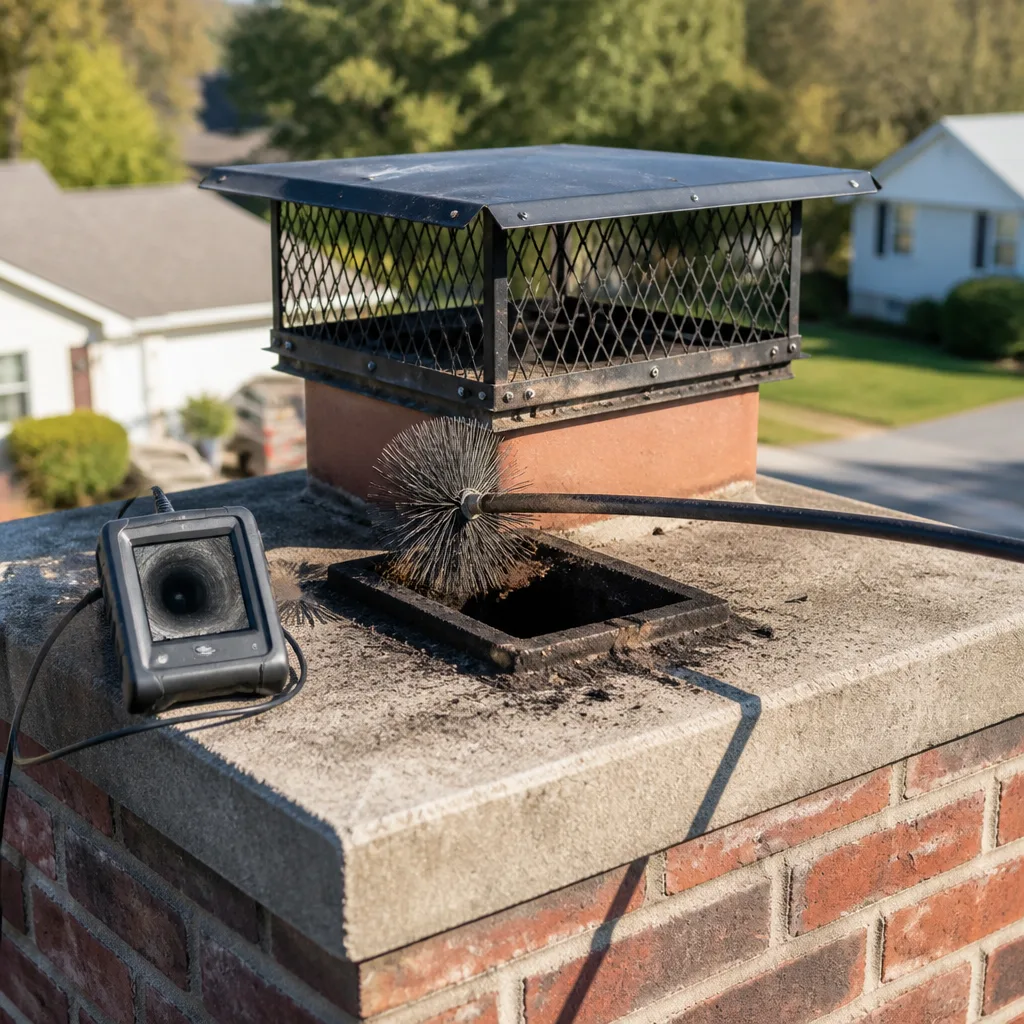
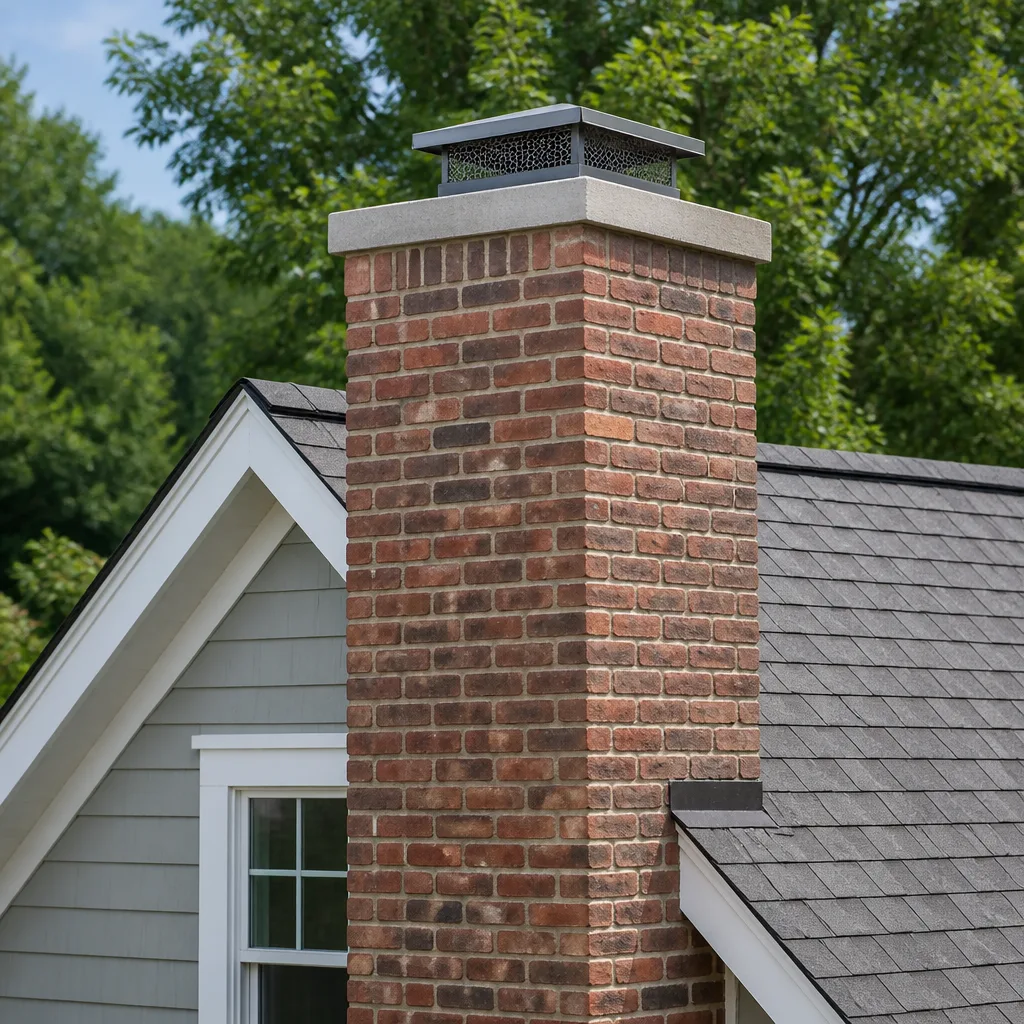
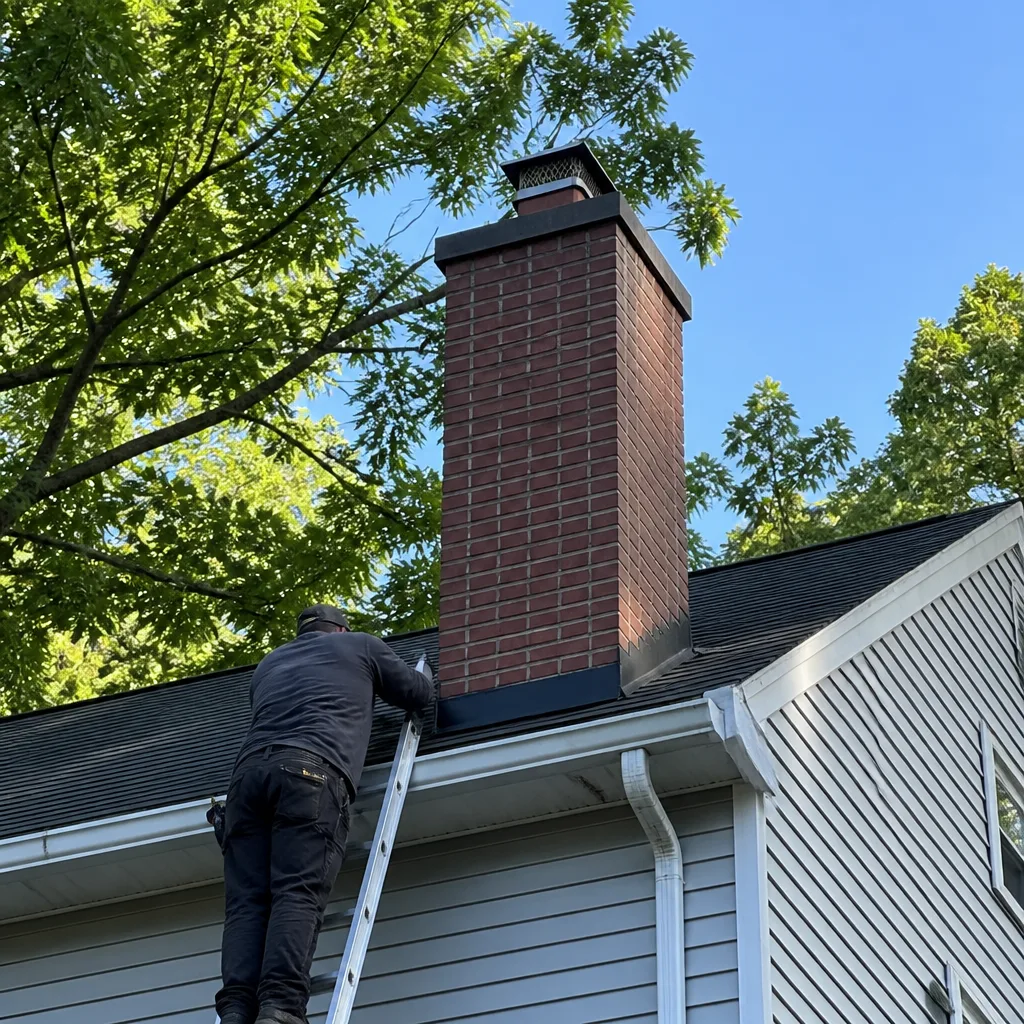
Level 1 sweep and inspection to the NFPA 211 annual standard - flue, crown, cap, and flashing checked and photographed
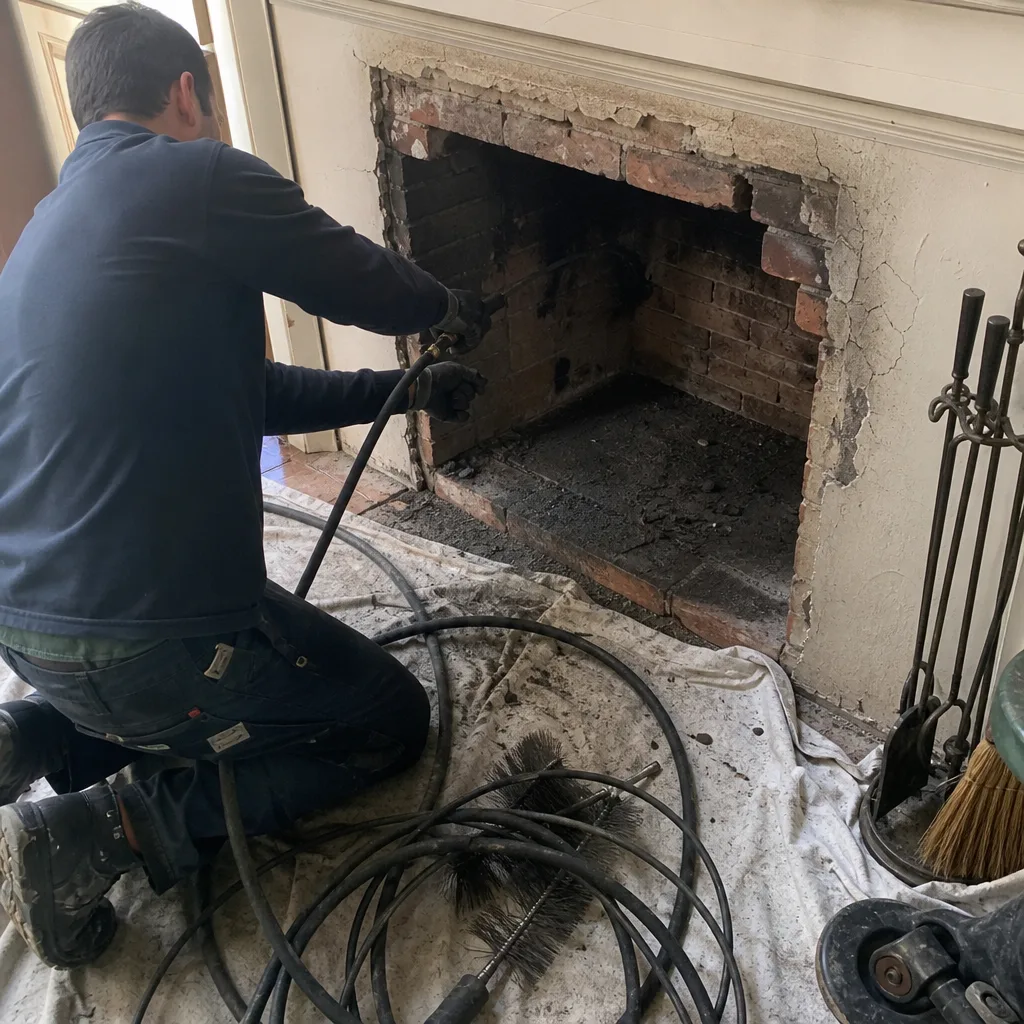
Chimney sweep logs do not sweep chimneys. They loosen some creosote - which then falls where a brush and vacuum still have to collect it.
 Before
 After
After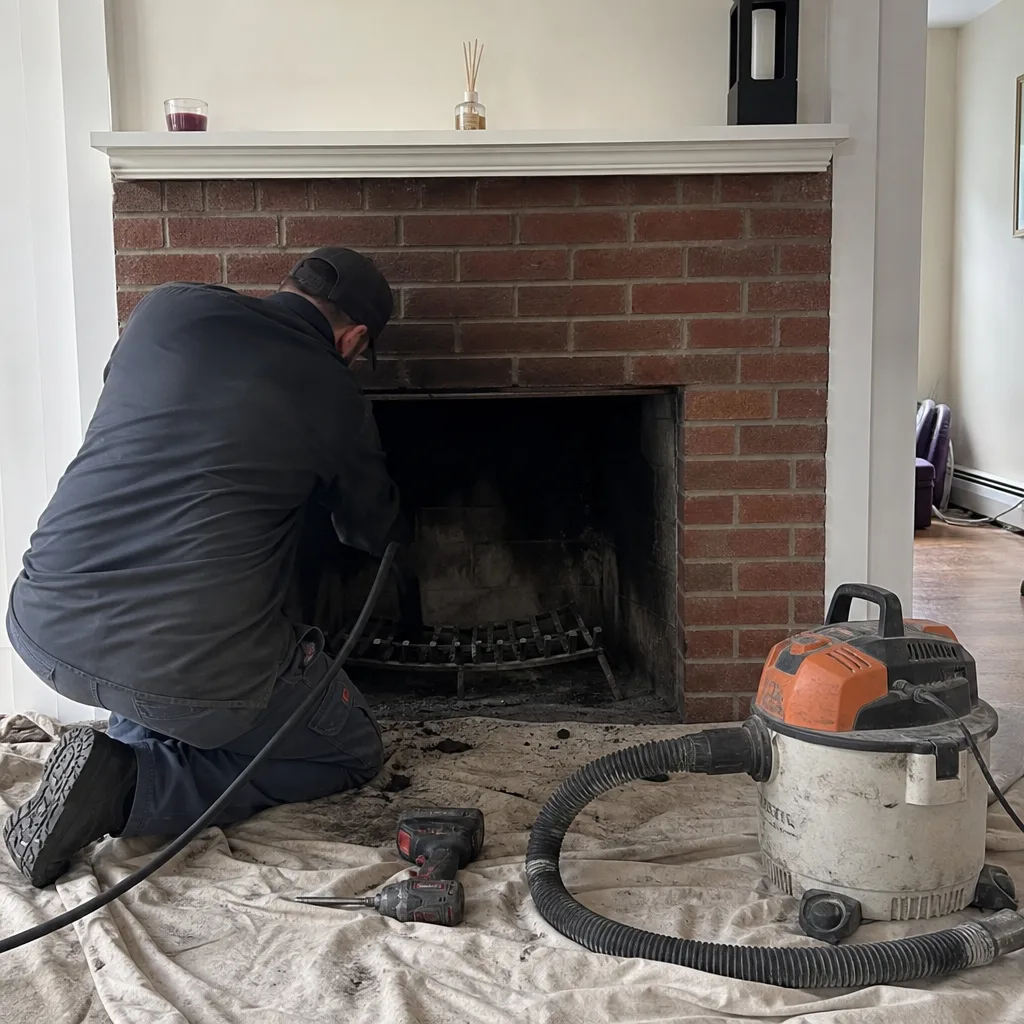 Before
 After
After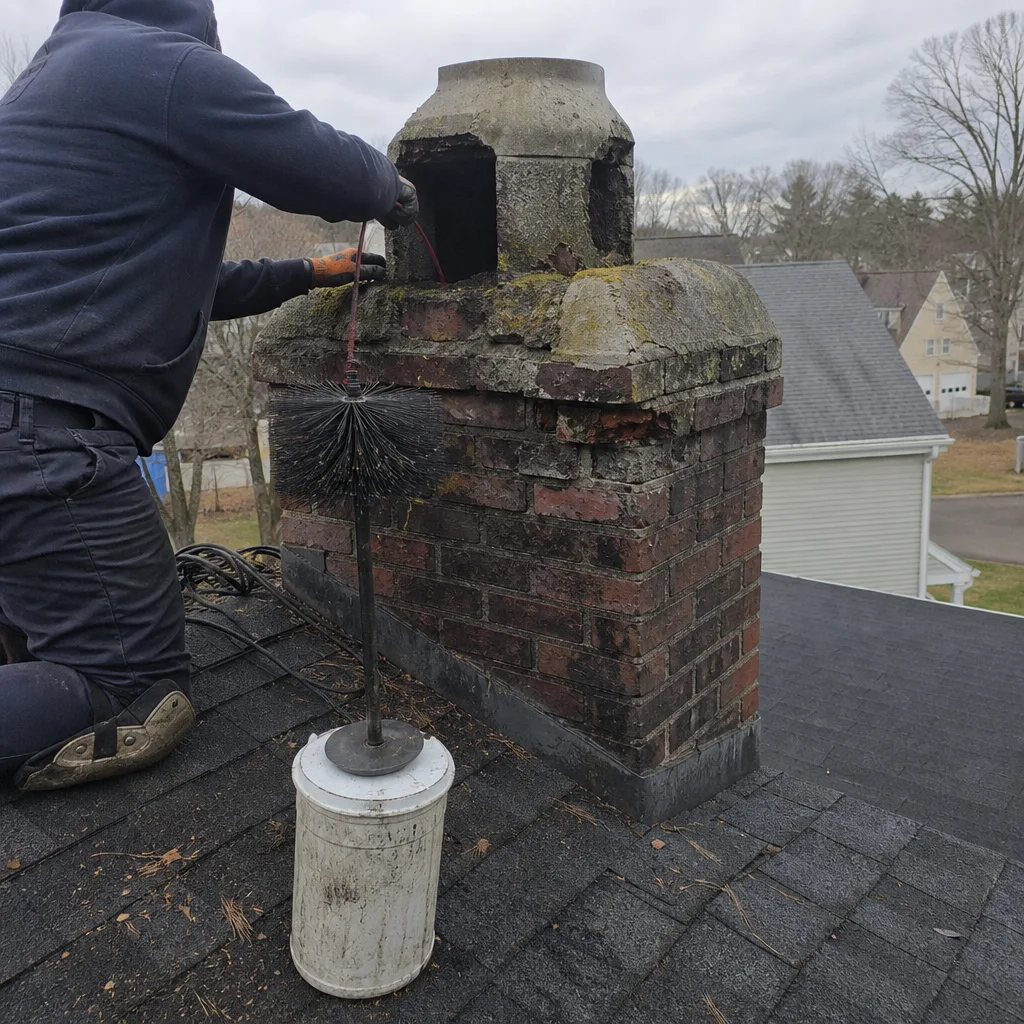 Before
 After
AfterHeatShield Chimney Cap Installation: The Hamden Owner’s Guide
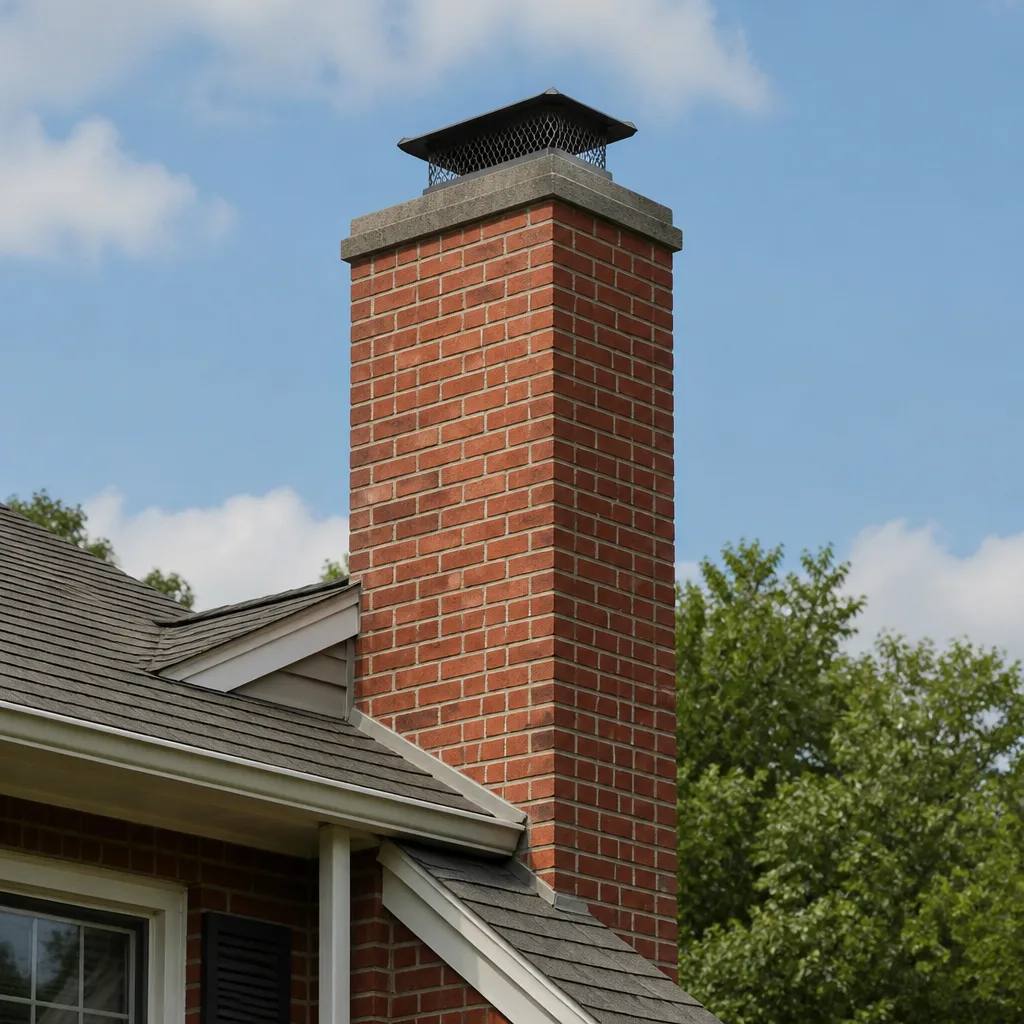
HeatShield chimney cap installation in Hamden typically runs $340-$580 for most single-flue setups, including the cap, collar, sealant, and labor. We stock HeatShield-compatible caps on our trucks and can usually complete the job in one visit. Most Hamden homeowners discover the problem after a storm blows through the Quinnipiac Valley and they spot rust streaks on the brick or water pooling in the firebox.
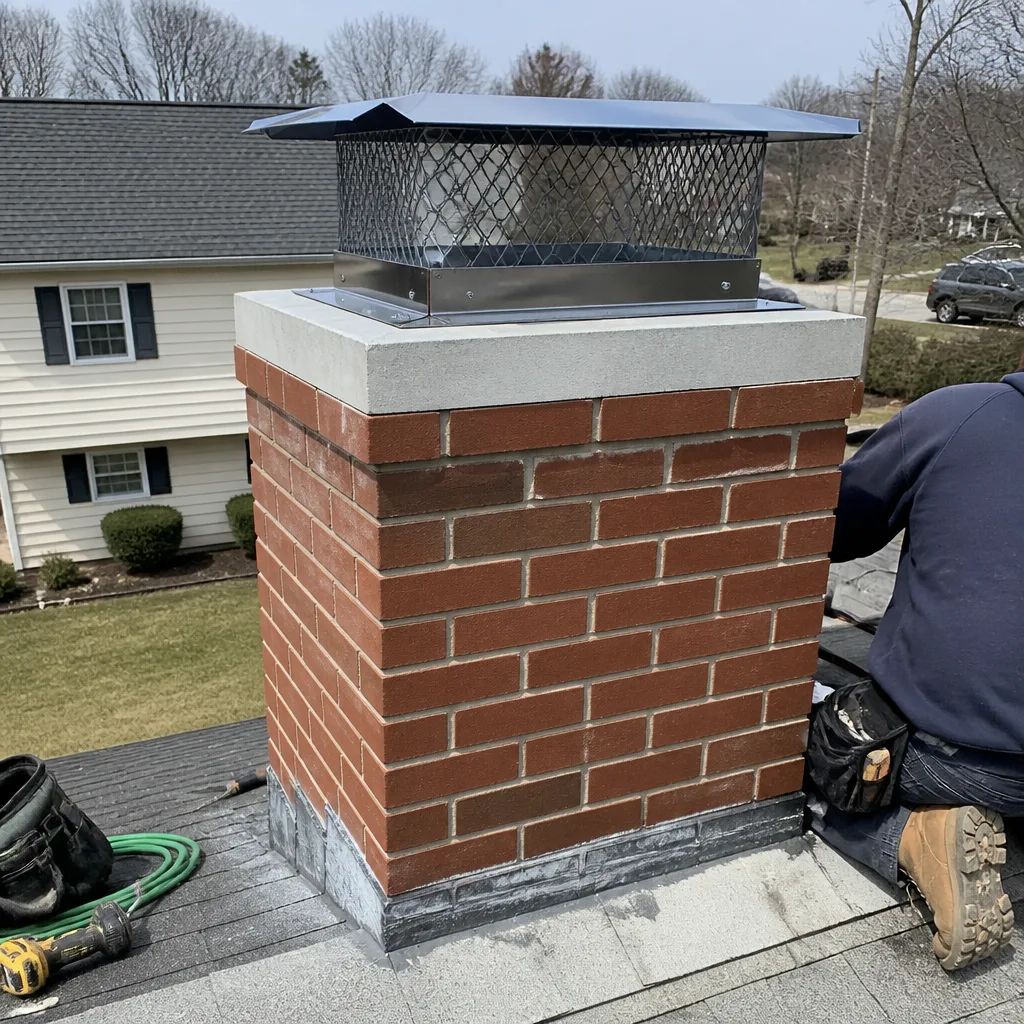
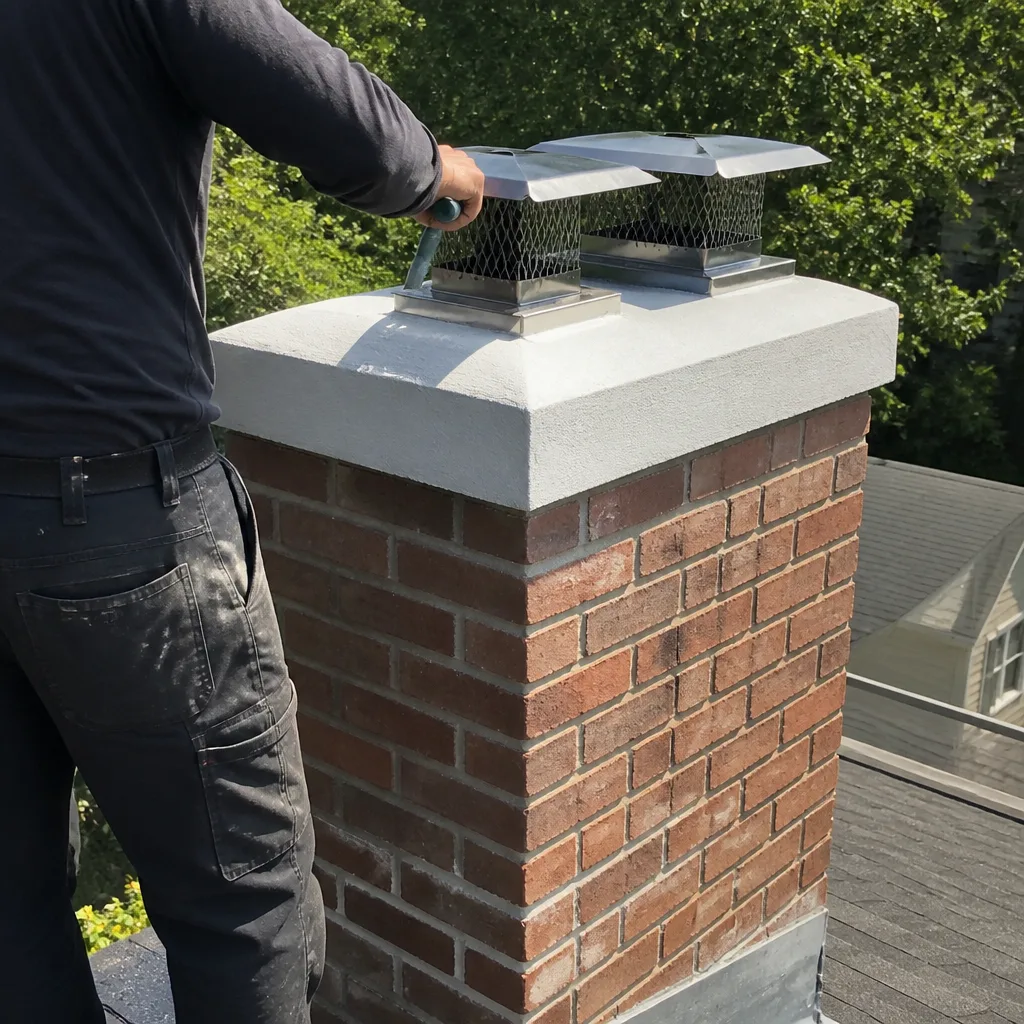
The cap sits at the top of your flue, and on HeatShield systems it’s doing double duty: keeping rain out while letting the liner system vent properly. When it fails, water gets past the crown and starts working on everything below.
Which HeatShield Models This Applies To
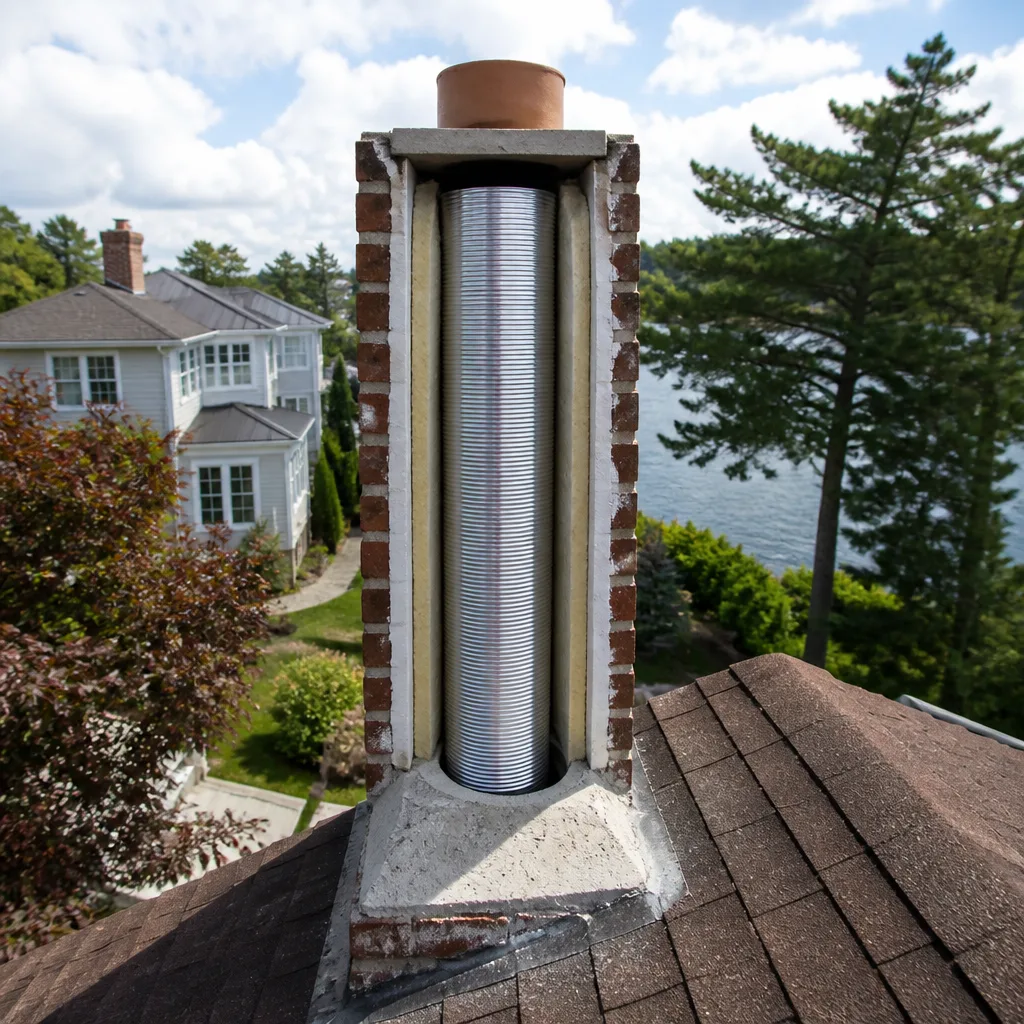
HeatShield uses a few different cap configurations depending on which liner system you have. The Cerfractory Foam liner system, common in Hamden homes from the 1980s and 1990s, typically takes a standard single-flue cap with a 13″ × 13″ or 13″ × 17″ base dimension. The HeatShield Sleeve system, used for relining damaged clay flues, sometimes requires an extended collar or adapter because the sleeve adds diameter at the top.
Here’s how to tell what you’ve got: look for a stamped metal tag on the cap itself, or check your original installation paperwork for “Cerfractory,” “Sleeve,” or “TJ-42” (their joint repair system). If the cap is original to a HeatShield job done in the last 15 years, it’s likely a Gelco or Famco cap that was spec’d for the job, not a HeatShield-branded part. HeatShield doesn’t manufacture caps; they specify compatible components from partner foundries.
We carry OEM-spec caps from Gelco and Famco, plus our own cross-referenced equivalents that match the stainless steel gauge and mesh spec. The aftermarket route saves roughly $60-$90 on parts without giving up the 316-alloy stainless that holds up to Hamden’s freeze-thaw cycles. One compatibility gotcha: some early HeatShield Sleeve jobs used a custom-fabricated collar that’s slightly oversized. A standard cap won’t seat properly without an adapter ring, and forcing it cracks the crown. We measure before we quote.
Signs Your HeatShield Chimney Cap Installation Is Failing
- Rust-colored staining below the cap. The 316 stainless on a quality cap shouldn’t rust through, but the spot-welds at the corners are the weak point. Once moisture wicks in, it travels down the flue and leaves telltale streaks on the exterior brick. In Hamden, we see this accelerate after winters with heavy ice damming.
- Water in the firebox after rain. This means the cap is either missing entirely, lifted in wind, or the mesh has collapsed inward. On HeatShield systems, water past the cap can pool on the smoke shelf and degrade the Cerfractory coating from the inside out.
- Animals or nesting debris visible from below. A cap with compromised mesh, or no mesh at all, lets squirrels and starlings straight into the flue. We’ve pulled nests from HeatShield-lined chimneys in Spring Glen and Mount Carmel that completely blocked draft and created a fire hazard.
- Draft problems or smoke backup. The cap’s design creates a slight venturi effect to help draw. When the lid warps or the mesh gets clogged with creosote, that assist disappears. You’ll notice it first on cold-start fires when the flue hasn’t warmed.
- Cap sitting crooked or loose after high wind. The mounting hardware on older installations loosens over time. A cap that shifts even half an inch breaks the seal against the flue tile or crown wash, and the next storm finishes the job.
Replacement Cost & What’s Included
| Component | Typical Range (Hamden) |
|---|---|
| Single-flue cap (316 stainless, standard mesh) | $180-$280 |
| Extended collar or adapter (HeatShield Sleeve systems) | $45-$85 |
| Crown seal / refractory caulk | $35-$65 |
| Labor: removal, fit, seal, documentation | $180-$240 |
| Total installed | $340-$580 |
What drives the range: height of roof access (single-story ranch vs. three-story colonial on Ridge Road), whether the crown needs patching before the new cap seats, and if we’re adapting a non-standard collar. We photograph the existing setup before we quote, so you see what we see. The number on the estimate is the number on the invoice. Every cap installation carries our 90-Day Done Right Promise, in writing, no arguing.
DIY or Call Us?
There’s one thing a homeowner can safely check from the ground: whether the cap is still present and sitting level. Binoculars work fine. If it’s missing, crooked, or you can see daylight through rust holes, the diagnosis is done.
Everything after that belongs on a roof with proper fall protection. HeatShield caps mount with stainless steel screws into the flue tile or a compression band around the outside. Stripped threads, cracked flue tile, or a loose band all require tools and know-how most homeowners don’t keep around. More importantly, a cap that isn’t sealed correctly channels water straight into the gap between flue and brick, where it freezes, expands, and turns a $400 cap job into a $3,000 crown rebuild. We’ve done that repair on too many Hamden homes where the previous owner “saved” money with a ladder and good intentions.
We’re not affiliated with HeatShield, but we’ve installed and serviced their systems for two decades. Call (475) 369-1614 and we’ll get you a time.
FAQs
A 316 stainless cap should last 15-20 years, but Hamden’s location in the Quinnipiac Valley means more freeze-thaw stress than inland Connecticut. The mesh and corner welds usually go first; plan on inspecting at year 12. Call (475) 369-1614 and we’ll check it during your annual sweep.
Spot-welding rusted mesh or straightening a warped lid costs nearly as much as a new cap and leaves you with compromised metal. We only recommend repair if the cap is a custom size no longer manufactured. For standard HeatShield-compatible caps, replacement is the sounder spend.
Most installations run 45-90 minutes from ladder set to final photo. Sleeve systems with adapters add 20-30 minutes. We complete most jobs in a single visit because we stock the common sizes on our trucks.
We carry Gelco and Famco caps in the four sizes that cover 90% of Hamden’s HeatShield installations. For odd sizes or custom collars, we order overnight and return the next business day. You’ll know before we book whether yours is a same-day or next-day job.
Written by Russell Haines, Owner, Hearthstone Chimney Co. at Hearthstone Chimney Co., serving Hamden and nearby areas.