
Last updated September 10, 2026
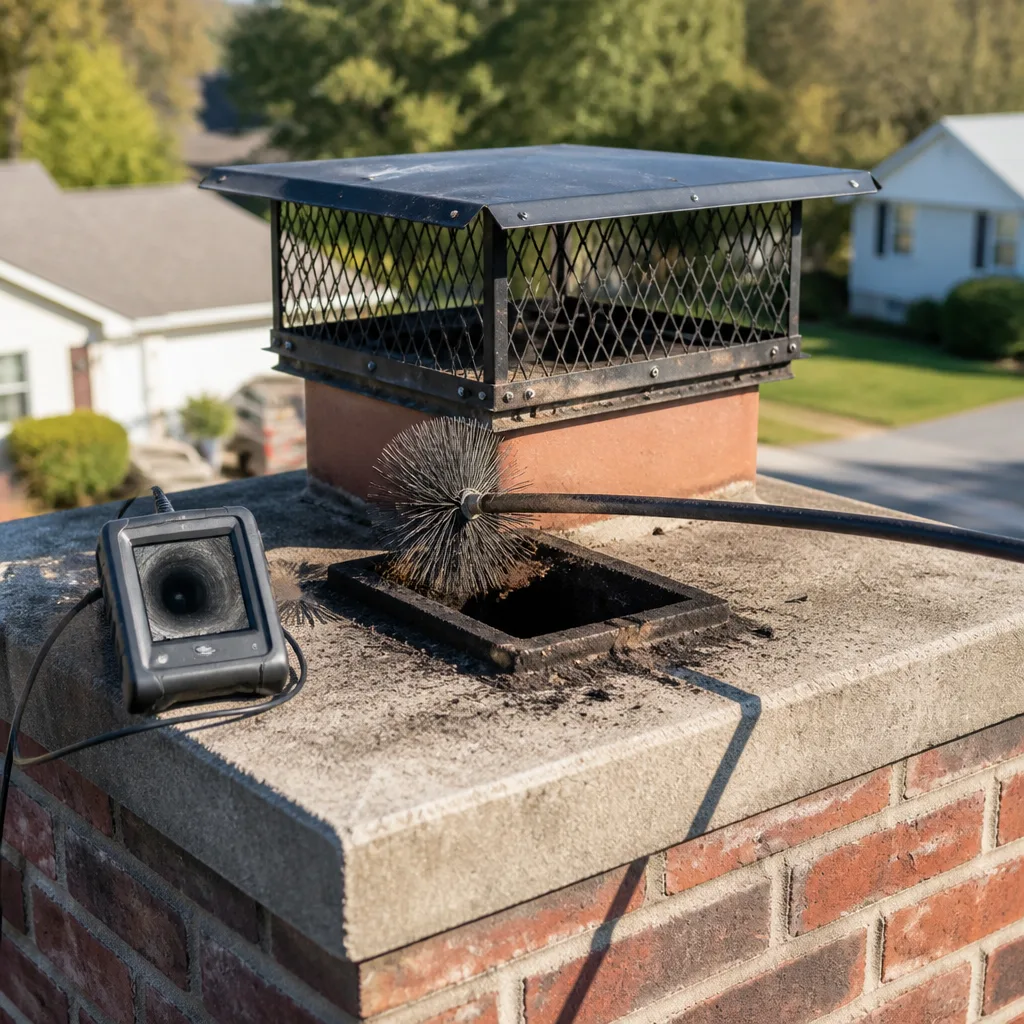
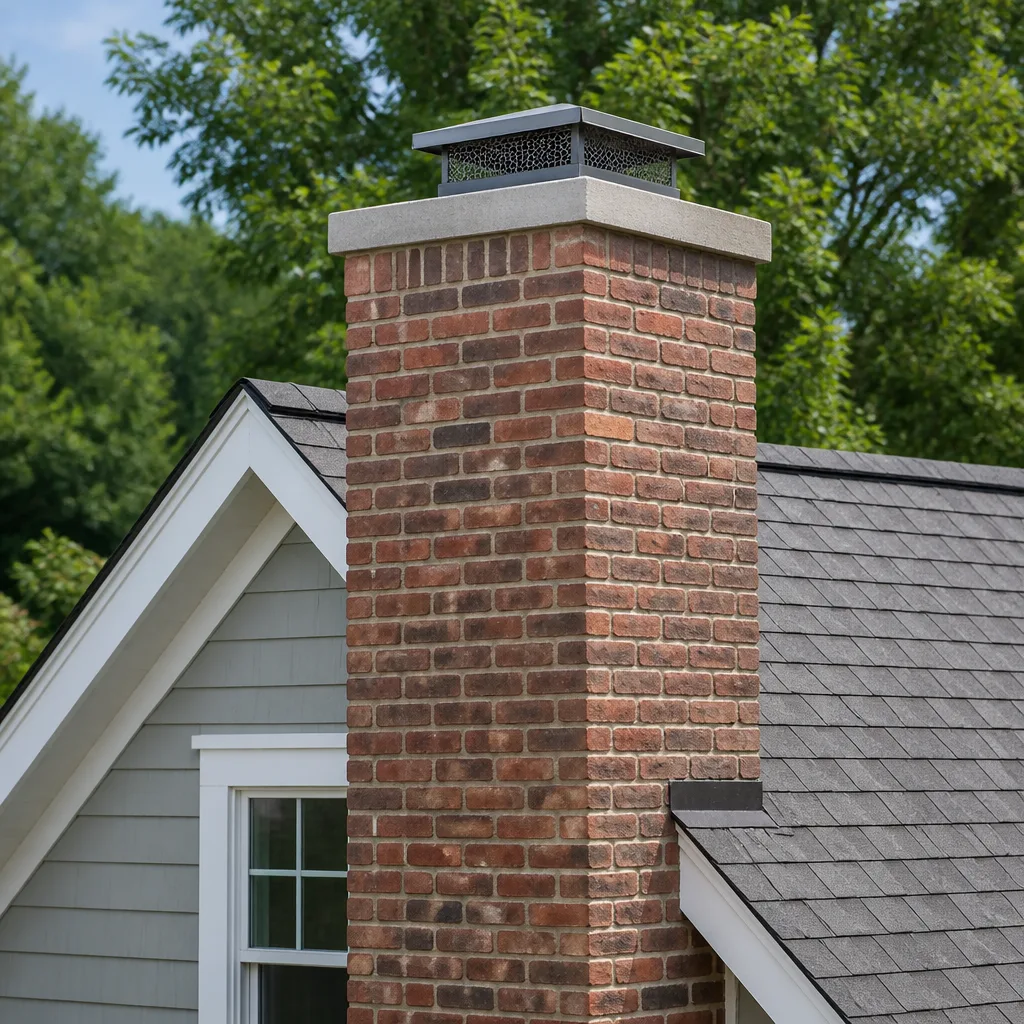
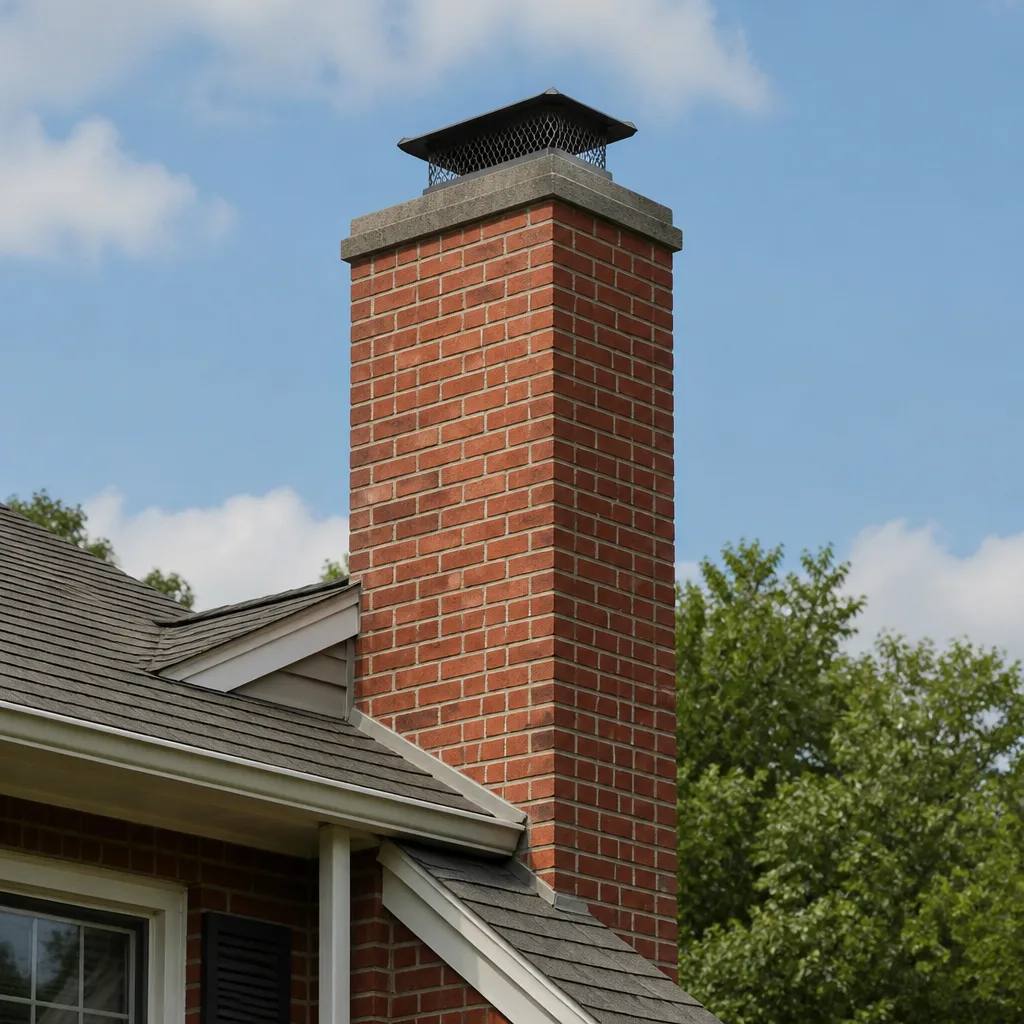
Level 1 sweep and inspection to the NFPA 211 annual standard - flue, crown, cap, and flashing checked and photographed
Chimney sweep logs do not sweep chimneys. They loosen some creosote - which then falls where a brush and vacuum still have to collect it.
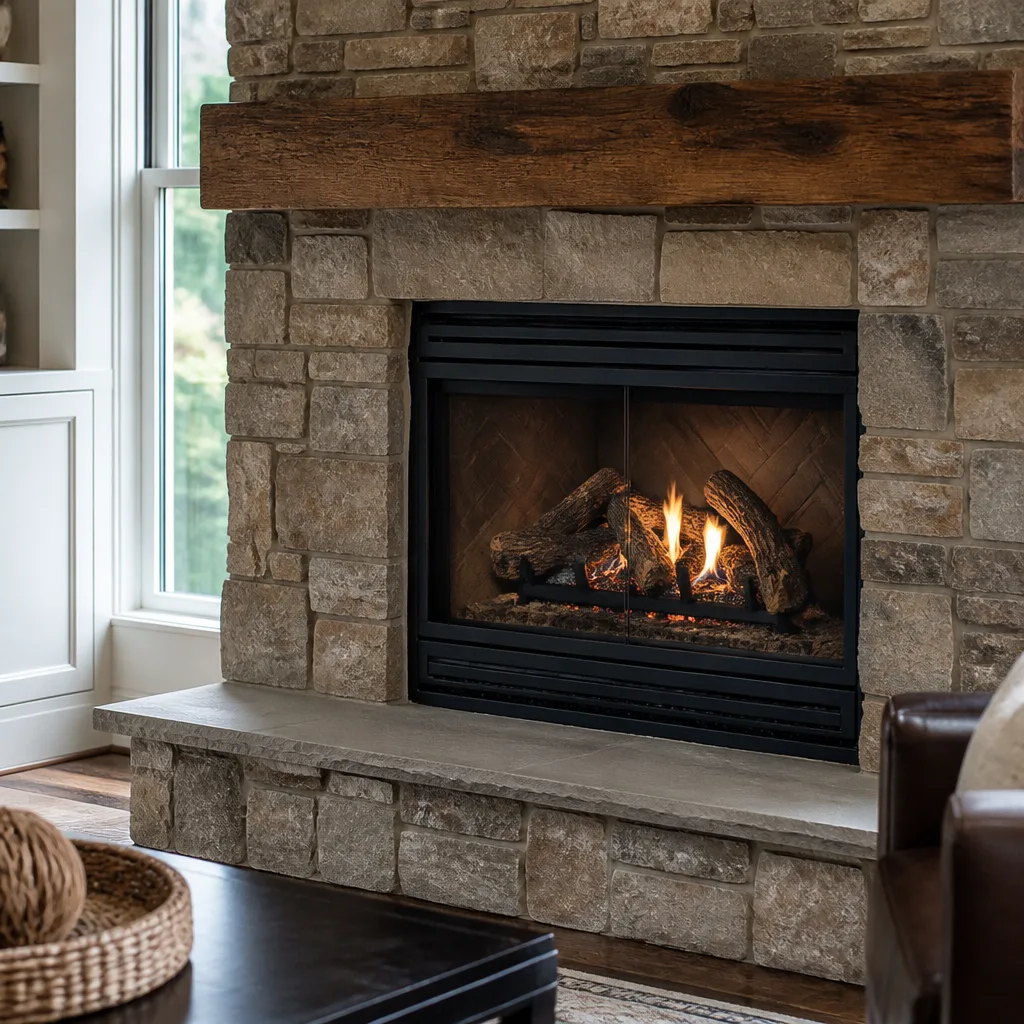
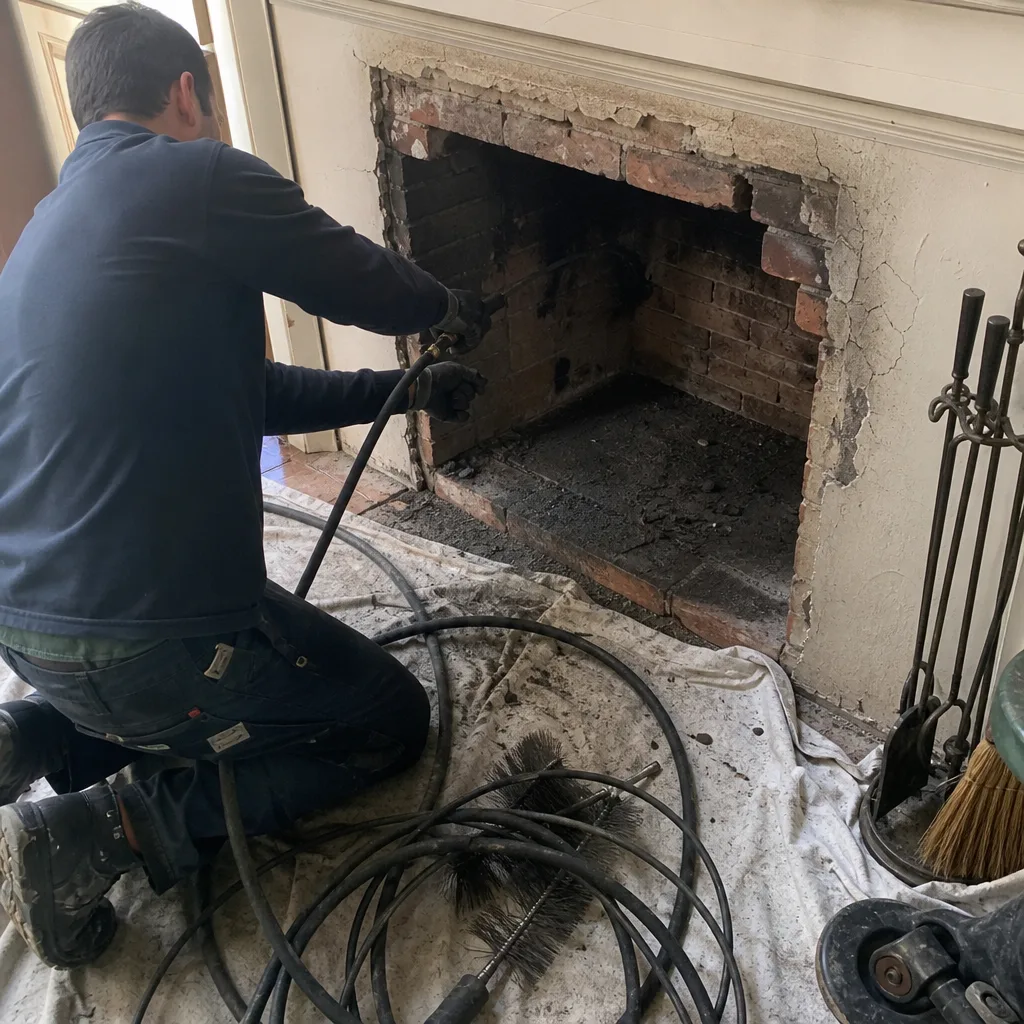 Before
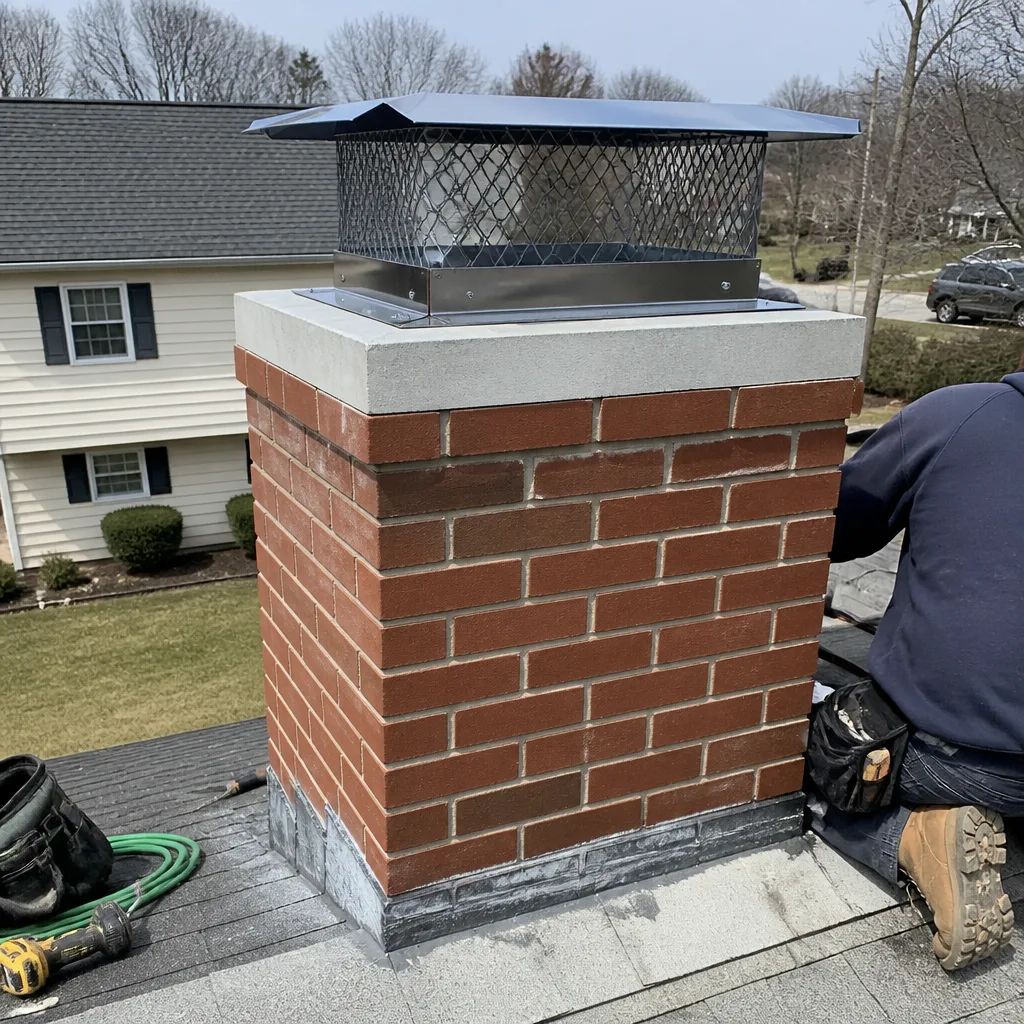 After
After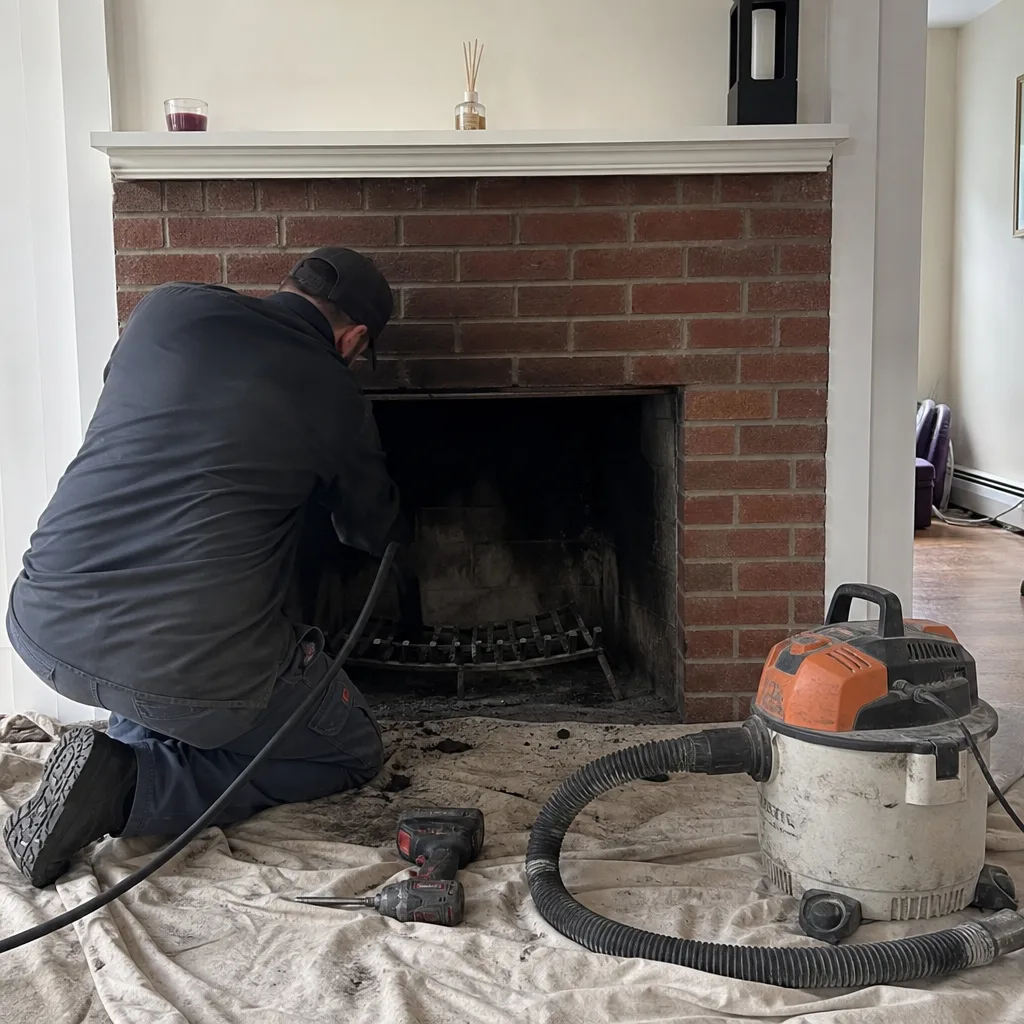 Before
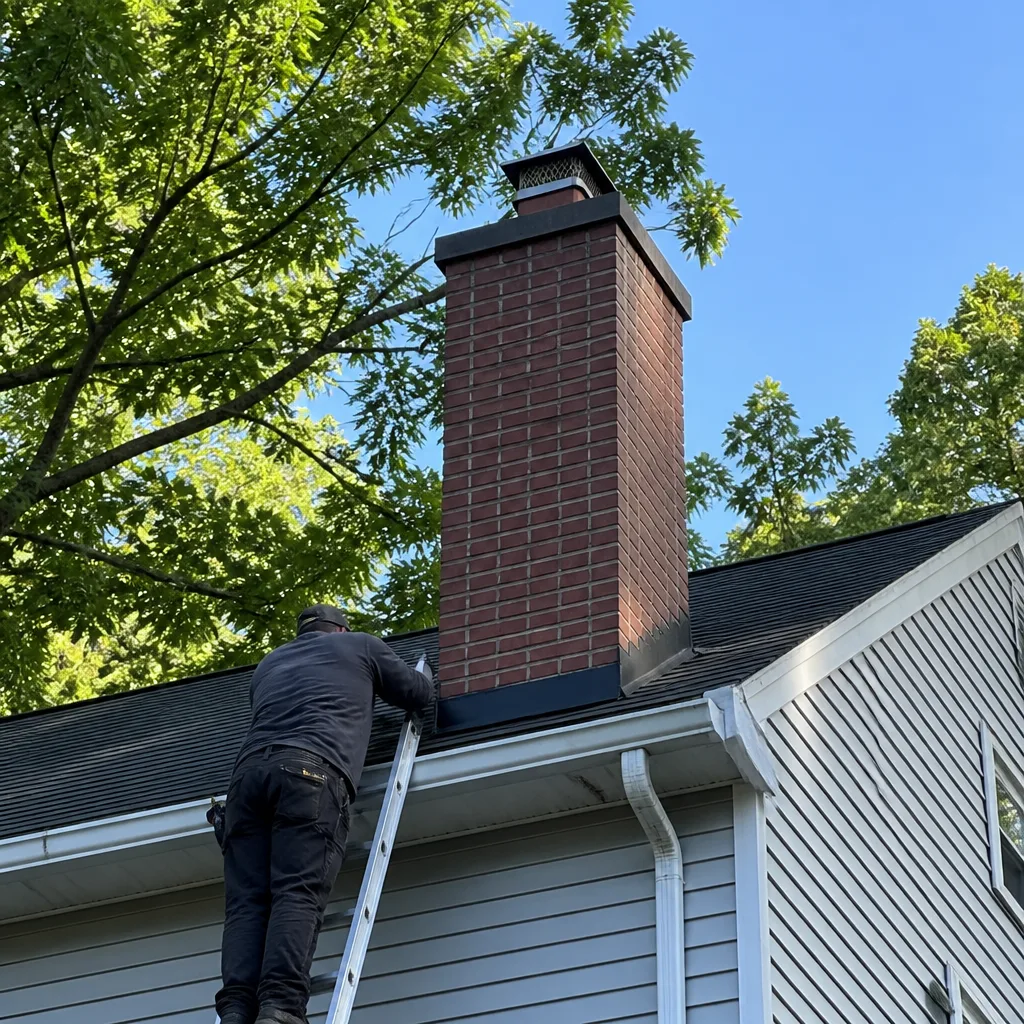 After
After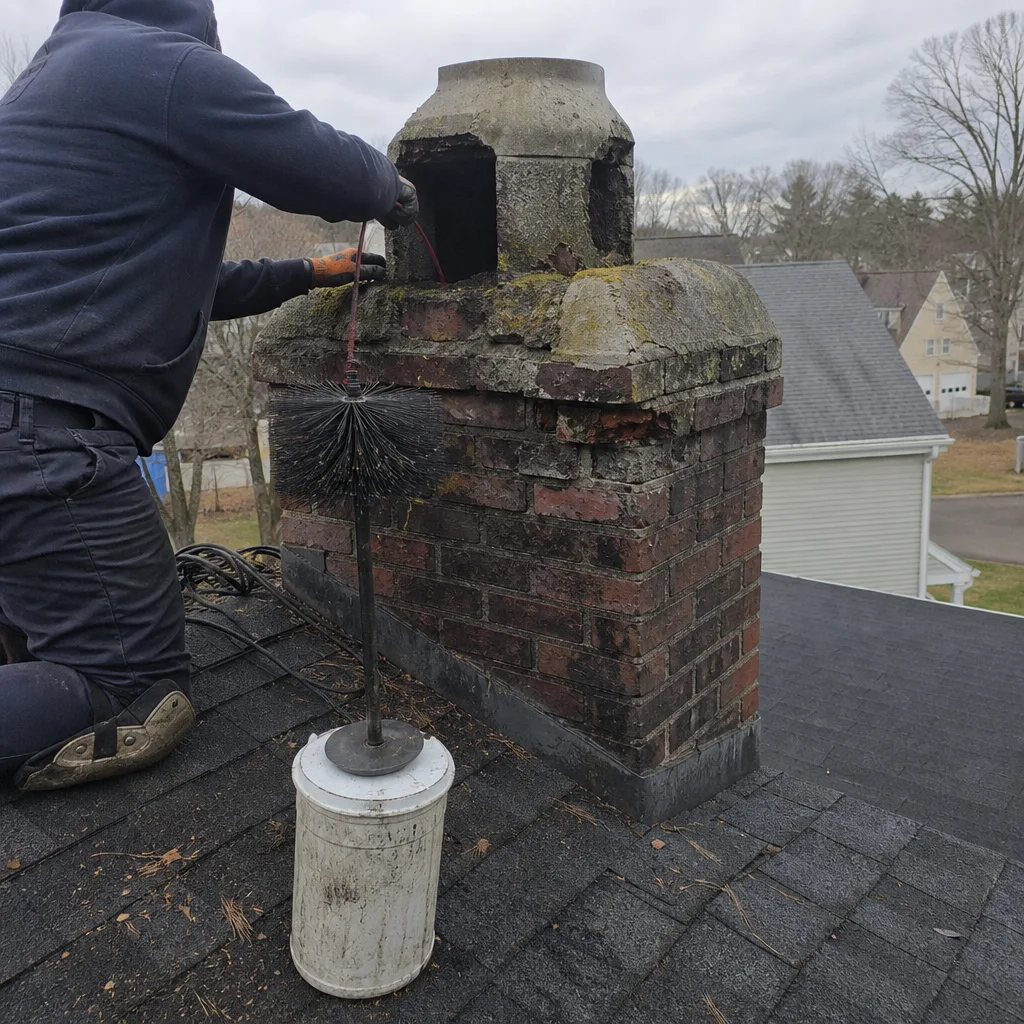 Before
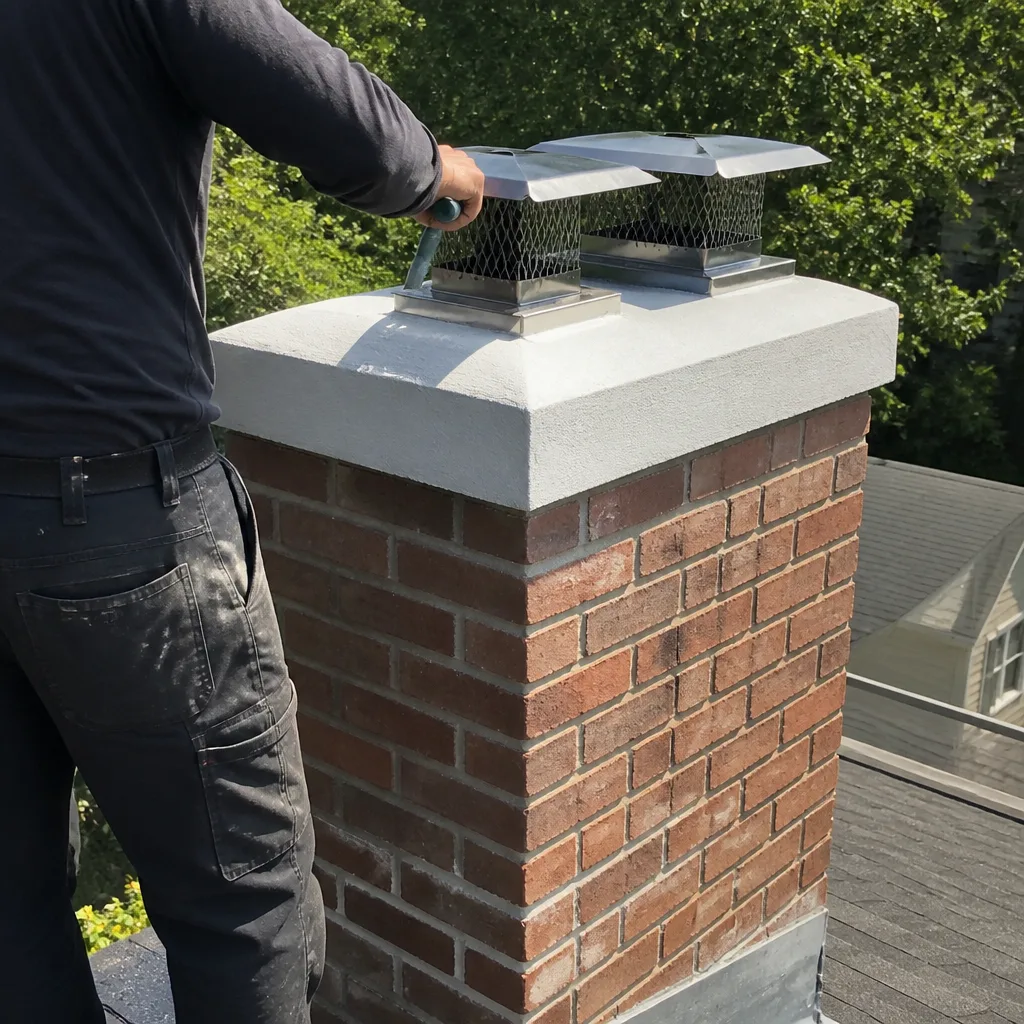 After
AfterDIY vs Professional Chimney Cleaning: The Hamden Homeowner’s Decision Guide
A chimney brush kit costs $80 at the hardware store, and a homeowner can absolutely move creosote from a flue with it. But moving creosote is roughly 20% of what a professional cleaning involves. The remaining 80% is where every preventable chimney fire and carbon monoxide incident begins. In this guide, we’ll walk through exactly what a trained sweep sees that a brush-and-flashlight homeowner cannot, why that gap in knowledge matters more than the gap in skill, and how to make the right call for your Hamden home. For more guides & resources, see our blog.
Quick Answer
DIY chimney cleaning can remove light, accessible creosote from a straight flue, but it cannot inspect liner condition, detect hidden blockages, or produce the documentation your insurance may require. For most Hamden homeowners, especially those with older clay tile liners or wood-burning systems used as primary heat, professional cleaning with video inspection is the safer and more complete choice.
Table of Contents
- What DIY Chimney Cleaning Actually Accomplishes
- What Professionals See That You Cannot
- The Tools That Change What’s Discoverable
- The Hamden Housing Factor: Age, Liners, and Hidden Risk
- The Insurance and Liability Reality
- When DIY Makes Legitimate Sense
- Cost Comparison: DIY vs Professional in Hamden
- Common Mistakes to Avoid
- When to Call a Professional
- Frequently Asked Questions
What DIY Chimney Cleaning Actually Accomplishes
Let’s start with what a motivated homeowner can genuinely do. A basic chimney cleaning kit from a hardware store includes a flexible rod system, a wire or poly brush sized to the flue, and a plastic sheet to contain debris. With patience and a ladder, you can run that brush from the top down or bottom up and knock loose accumulated soot and flaky creosote. If your flue is straight, relatively short, and the creosote is powdery or flaky (what we call Stage 1), you’ll see material fall. The fireplace will look cleaner. You’ll feel accomplished.
That is not nothing. Stage 1 creosote is the most common buildup in regularly used systems, and removing it does reduce fuel for a chimney fire. For a gas fireplace with minimal debris, or a wood stove with excellent dry fuel and a straight stainless liner, a homeowner’s annual brush-out between professional visits is not inherently foolish.
But here’s where the limitation becomes structural. DIY cleaning addresses only the material you can reach with a brush, and only the material loose enough to brush away. It tells you nothing about:
- Whether the flue liner has cracked, shifted, or detached at a joint
- Whether the smoke chamber has corbeled joints creating dangerous ledges
- Whether the damper seals fully or has warped from heat cycling
- Whether the crown has hairline cracks admitting water that will freeze and expand this winter
- Whether the cap’s mesh is clogged with creosote flakes, restricting draft
- Whether the flue is properly sized for the appliance connected to it
In our 42 years of work in Hamden and surrounding towns, we’ve found significant defects in roughly one of every three chimneys that the homeowner believed was “fine” because the brush moved freely. The brush moved because the obstruction was above it, or because the defect was lateral (a cracked tile) rather than accumulative (creosote buildup). A brush is a blunt instrument. Most chimney failures are subtle.
What Professionals See That You Cannot
The core difference between DIY and professional cleaning is not the brushing. It’s the inspection that accompanies it, and the judgment that inspection requires.
A certified chimney sweep is trained to read a flue the way a mechanic reads an engine bay. We don’t just see soot. We see color variations that indicate burning temperature, texture changes that signal creosote stage progression, and patterns of deposition that reveal draft problems. We know that heavy glazing on the upper third of a flue often means the chimney is too cold at the top, a common issue in Hamden’s older homes with exterior masonry chimneys exposed to northwest winter winds. We know that creosote concentrated on one side suggests a tilting flue or offset liner joint.
More importantly, we know what we don’t know until we look. Every chimney cleaning and sweep in Hamden we perform includes a Level 1 or Level 2 inspection per NFPA 211 standards. The Level 2 inspection, required for real estate transactions and recommended for any system change, includes video scanning of the flue interior. This is not a gimmick. It’s how we found the detached liner joint in a Mount Carmel home last winter that was dumping combustion gases into the wall cavity. The homeowner had cleaned the flue herself for three years. The brush passed through easily. The joint was separated six inches above the smoke chamber, invisible from below and above.
The smoke chamber itself is another blind spot for DIY. This is the area above the damper where the fireplace narrows into the flue. In many Hamden homes built 1950-1980, this area was constructed with corbeled brick, creating sharp ledges that collect creosote and slow draft. A brush doesn’t reach these ledges effectively. A professional uses specialized hand tools and visual inspection to identify whether the chamber needs parging smooth (a service we provide using professional-grade materials). Left unaddressed, a rough smoke chamber is a significant contributor to chimney fires and poor draft.
The Tools That Change What’s Discoverable
Professional chimney cleaning involves equipment that most homeowners will never purchase, maintain, or learn to interpret. Here are the tools that fundamentally change what can be known about your chimney:
- Rotary cleaning systems. For Stage 2 creosote, which has hardened into tar-like flakes, a hand brush is nearly useless. We use rotary systems with chains or whips driven by a drill at controlled speed, matching the tool to the flue material. Used incorrectly, these tools can damage a liner. Used correctly, they remove deposits that would otherwise progress to Stage 3 glazed creosote, which often cannot be removed without chemical treatment or liner replacement.
- Video scanning equipment. Our camera systems send a lighted head up the flue, recording high-resolution footage of every liner tile, joint, and transition. We can pause, zoom, and document cracks as small as 1/16 inch. For Hamden homeowners, this footage becomes part of your home maintenance record. You see what we see. There’s no trust-me moment.
- Smoke pencils and draft gauges. Draft testing reveals whether your chimney draws properly under operating conditions. A chimney can be clean and still fail to draft due to house pressure imbalances, competing exhaust appliances, or insufficient flue height. We test this with the fireplace operating, not just theoretically.
- Combustion analyzers. For gas inserts and fireplaces, we verify that the appliance is burning efficiently and venting safely. Incomplete combustion produces carbon monoxide. A brush won’t detect this.
- Professional-grade repair materials. When we find damage, we repair with materials from Olympia Chimney, Famco, and Copperfield - products specified for their durability and code compliance, not whatever was on the hardware store shelf. A DIY repair with the wrong mortar or an uncertified liner can create worse problems than the original defect.
The investment in these tools reflects the investment in the knowledge to use them. A rotary chain whip in untrained hands can shatter a clay tile. A camera you don’t know how to interpret just shows you walls you don’t understand. The tools enable the inspection, but the inspection requires the training.
The Hamden Housing Factor: Age, Liners, and Hidden Risk
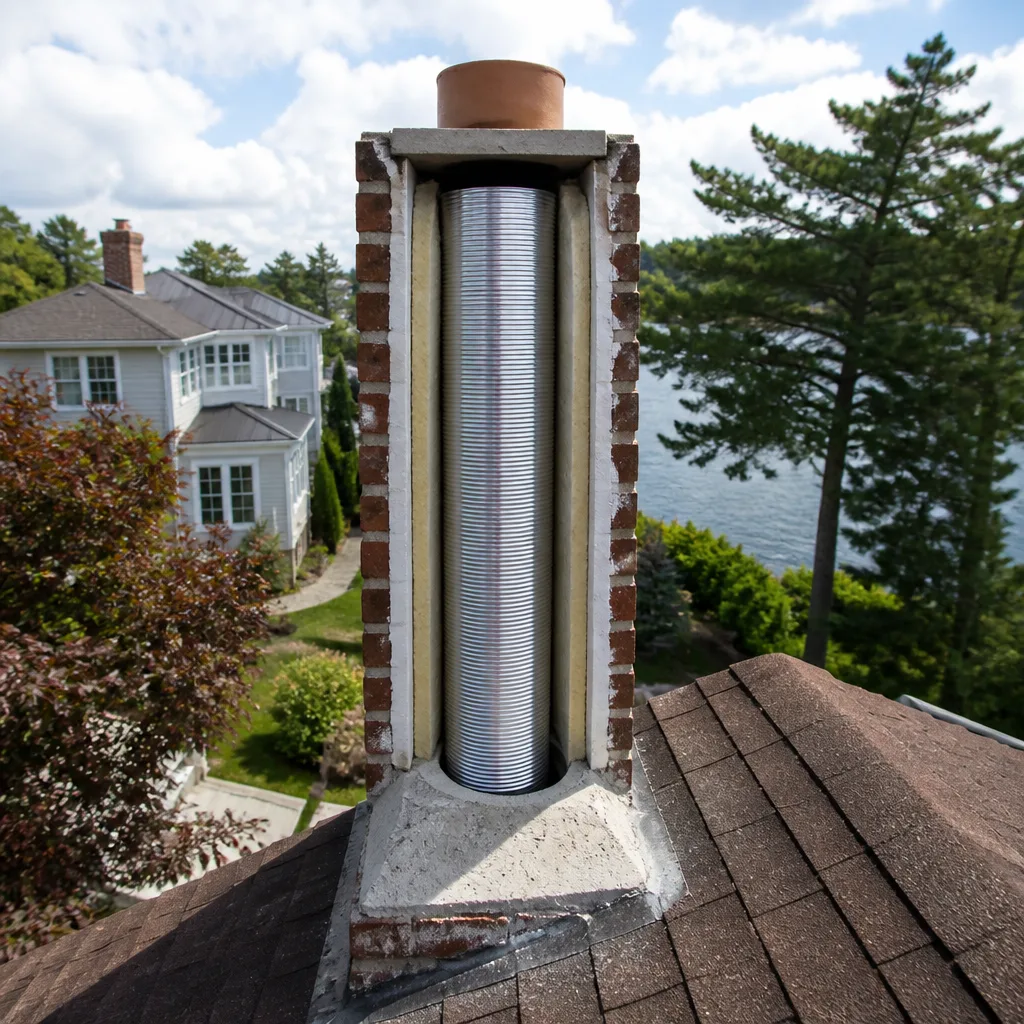
Hamden’s housing stock carries specific risks that make DIY chimney cleaning more hazardous here than in newer construction markets. Many neighborhoods, particularly Spring Glen, Whitneyville, and parts of West Woods, have significant concentrations of homes built 1940-1970 with original clay tile flue liners. These liners were never designed for the extended use patterns of modern heating, and after 40-60 years of thermal cycling, they become brittle and prone to cracking. For seasonal maintenance tips, see our Seasonal Chimney Cleaning Care for Hamden: Year-Round Homeowner’s Guide.
The problem is calibration. A professional sweep develops feel for how much resistance indicates normal creosote versus a damaged liner. We vary brush pressure based on liner age, material, and condition. A first-time DIYer has no baseline. We’ve responded to calls in Hamden where aggressive brushing dislodged a section of deteriorated clay tile, creating a blockage that required emergency removal. The homeowner was trying to do the right thing. The liner was past its service life, but there was no way to know that without inspection.
Hamden’s climate compounds this. Our freeze-thaw cycles are hard on exterior masonry. Water enters through crown cracks, freezes, expands, and widens the crack. By the time interior staining appears, the damage is extensive. A professional inspection catches crown and flashing issues before they destroy the chimney structure. A DIY brush-out tells you nothing about water intrusion.
The town’s mix of hillside and valley topography also affects draft. Homes in higher elevations like those near Sleeping Giant State Park experience stronger winds that can create downdraft conditions. Homes in valley pockets may have poorer natural draft due to surrounding tree cover and air pressure patterns. These are not theoretical concerns. They’re specific conditions we evaluate during professional service, and they affect whether your chimney will perform safely this winter.
The Insurance and Liability Reality
This is the point many homeowners miss until it’s too late. Homeowner’s insurance policies are increasingly specific about chimney maintenance requirements. After significant chimney fires in Connecticut and neighboring states, underwriters have tightened language around documentation. Many policies now require evidence of professional inspection and cleaning within a specified period, typically 12-18 months, before covering chimney-related fire claims.
A DIY cleaning with no written record, no inspection report, and no certification may not satisfy this requirement. If a fire originates in your chimney and the adjuster discovers you performed your own maintenance without professional documentation, your claim can be denied or reduced. This is not hypothetical. We’ve worked with Hamden homeowners who faced this exact situation. The $200 saved on professional cleaning became a $15,000 out-of-pocket rebuild.
Professional service from Hearthstone Chimney Co. produces dated, documented records: inspection photos, condition reports, and recommendations. If you ever need to file a claim, you have evidence that due diligence was performed by a certified technician. That documentation has real financial value beyond the cleaning itself.
There’s also liability if your DIY work affects neighboring property. A chimney fire that spreads, or carbon monoxide that migrates to an attached unit, raises questions about maintenance standards. Professional service demonstrates reasonable care. DIY work, particularly on multi-unit buildings common in Hamden’s older neighborhoods, carries liability risks that most homeowners don’t consider.
When DIY Makes Legitimate Sense
An honest guide must acknowledge where DIY is reasonable. Here are the specific scenarios where a homeowner’s limited cleaning is appropriate:
- Mid-season visual check on a gas system. If you have a direct-vent gas fireplace professionally serviced annually, a mid-season mirror-and-flashlight look at the firebox and visible flue section can reassure you without creating risk. You’re looking for obvious debris, animal nesting material, or soot accumulation that seems abnormal. Anything you find triggers a professional call.
- Cap and crown maintenance between visits. Removing leaves from a cap screen, or applying a crown sealant product if you’ve been shown how, is reasonable homeowner maintenance. It does not replace professional evaluation of crown integrity.
- Wood stove ash removal. Regular ash cleaning is homeowner maintenance, not chimney service. Keep it up. It improves efficiency and reduces acidic condensation.
- Known simple systems with recent professional all-clear. If a Level 2 inspection within the past 12 months found excellent liner condition, proper construction, and minimal creosote, a homeowner brush-out before the next professional cycle is lower risk. The key is that the “all-clear” was recent and documented.
What unites these exceptions is that they’re maintenance between professional evaluations, not replacements for them. The professional evaluation established baseline knowledge. The DIY work operates within known parameters. Without that baseline, you’re working blind.
Cost Comparison: DIY vs Professional in Hamden
Cost is where many homeowners begin this decision, so let’s address it directly with numbers that reflect the Hamden market. For detailed pricing information, see our Chimney Cleaning Cost Breakdown: The Hamden Homeowner’s Reference for 2026.
| Item | DIY Cost | Professional Cost (Hamden) |
|---|---|---|
| Basic brush kit | $60-$120 | Included in service |
| Extension ladders (if needed) | $150-$400 rental or purchase | Included in service |
| Personal protective equipment | $30-$80 | Included in service |
| Debris containment and disposal | $20-$50 | Included in service |
| Video inspection equipment | $300-$800 (consumer grade, limited function) | Included in service |
| Professional cleaning with Level 1 inspection | N/A | $200-$350 |
| Level 2 inspection with video | N/A | $350-$550 |
| Documented report for insurance | N/A | Included in service |
The DIY column totals $560-$1,450 for equipment that performs a fraction of the professional service, produces no documentation, and requires storage and maintenance. The professional service includes trained judgment, insurance documentation, and the discovery of defects before they become emergencies.
Our chimney cleaning and sweep in Hamden includes the Level 1 inspection, debris containment, and written condition report. The $89 Seasonal Tune-Up we offer seasonally makes the professional option even more accessible. For most Hamden homeowners, the professional route is not dramatically more expensive, and it carries substantially less risk.
Common Mistakes to Avoid
- Brushing without inspecting first. We’ve found bird nests, deteriorated liner sections, and even active wasp colonies that a brush would have damaged or disturbed dangerously. Always visually assess from below before inserting tools.
- Using the wrong brush size or material. A brush too small skips the flue walls. A wire brush on a stainless liner can scratch and corrode the surface. Poly brushes melt if they contact active embers. Match the tool to the flue, or don’t proceed.
- Ignoring the smoke chamber and damper. These areas collect creosote and affect performance, yet many DIY efforts stop at the flue. A clean flue with a stuck or warped damper is still a hazardous system.
- Climbing a roof without proper equipment. Hamden’s older homes often have steep pitches and deteriorated flashing that creates slip hazards. Falls from roof height are a leading cause of home maintenance injury. If you cannot work safely from a ladder with fall protection, do not access the chimney top.
- Assuming “no creosote” means “no problem.” We’ve inspected chimneys with minimal creosote but severe liner damage, improper construction, or draft failures. Clean does not mean safe. Only inspection confirms safety.
- Using household vacuums for soot removal. Standard vacuums lack HEPA filtration for fine particulate and can disperse combustible dust through the exhaust. Professional equipment is specifically designed for this hazard.
When to Call a Professional
Call a professional if your chimney serves a wood-burning appliance as primary or significant heat, if your home was built before 1990 and has not had a Level 2 inspection in the past five years, if you’ve noticed draft problems, odors, or staining, if you’re preparing to sell or have recently purchased, or if your insurance policy requires documented maintenance. Not sure where to start? Read How to Hire a Chimney Cleaning Contractor in Hamden: A Step-by-Step Guide. These are not optional considerations. They’re the baseline for safe operation.
Hearthstone Chimney Co. offers free estimates in Hamden. Our technicians are background-checked, uniformed, and complete most jobs in a single visit. We provide no-hassle upfront pricing, so the number on the estimate is the number on the invoice. Every job is backed by our 90-Day Done Right Promise, in writing, with no arguing. Call (475) 369-1614 to schedule, or reach us through our chimney repair in Hamden page for more information on our full range of services.
Frequently Asked Questions
Professional chimney cleaning with Level 1 inspection in Hamden typically runs $200-$350, while a Level 2 inspection with video scanning ranges from $350-$550. Our seasonal $89 Tune-Up offers reduced pricing during early booking periods. Call (475) 369-1614 for current availability and an exact quote for your system.
You can remove light, accessible creosote with a proper brush kit, but you cannot inspect liner condition, smoke chamber geometry, or draft performance. For regular wood burning in Hamden’s climate, professional cleaning with video inspection annually is the safer practice. The inspection component matters more than the brushing.
NFPA 211 recommends annual inspection for all chimney systems, with cleaning frequency determined by use and fuel type. Most Hamden homeowners with wood-burning fireplaces or inserts need annual sweeping due to our extended heating season and the creosote-friendly cool temperatures of exterior masonry chimneys. Gas systems typically require less frequent cleaning but still need annual inspection for venting integrity.
Skipped maintenance allows creosote accumulation, which increases chimney fire risk, and permits undetected liner damage, which can allow combustion gases including carbon monoxide to enter living spaces. In Hamden’s older housing stock, water intrusion from uncaught crown or flashing damage can destroy chimney structure over several seasons. The cost of deferred maintenance is typically multiples of preventive care. Call (475) 369-1614 for a free estimate if your chimney is overdue.
A liner recommendation should always be supported by video evidence you can see yourself, with a plain-English explanation of the specific defect. At Hearthstone, we show you the footage and explain whether the issue requires immediate action or can be monitored. No work is recommended without documentation you can evaluate. Our fireplace services in Hamden include liner evaluation as part of comprehensive assessment.
Increasingly, yes. Many Connecticut insurers now require documentation of professional inspection within 12-18 months before covering chimney-related fire claims. A DIY cleaning with no written record may not satisfy this requirement. Check your policy language, and maintain professional service records as you would any other home system maintenance documentation.
The Bottom Line
The DIY vs professional question is not about whether you can run a brush up a flue. Most Hamden homeowners physically can. The question is whether you can know what the brush cannot tell you: whether the liner is cracked, whether the draft is sufficient, whether the crown will fail this winter, whether your insurance would honor a claim. That knowledge requires training, tools, and experience that develop over years, not a Saturday afternoon with a hardware store kit.
Professional chimney cleaning is not primarily a cleaning service. It’s an inspection service that includes cleaning, backed by documentation, performed by technicians who know what Hamden’s housing stock and climate do to chimneys over decades. Done right, it prevents the emergencies that no brush kit can address. And we stand behind it.
Written by Russell Haines, Owner at Hearthstone Chimney Co., serving Hamden since 2014.