
Last updated September 10, 2026
Level 1 sweep and inspection to the NFPA 211 annual standard - flue, crown, cap, and flashing checked and photographed
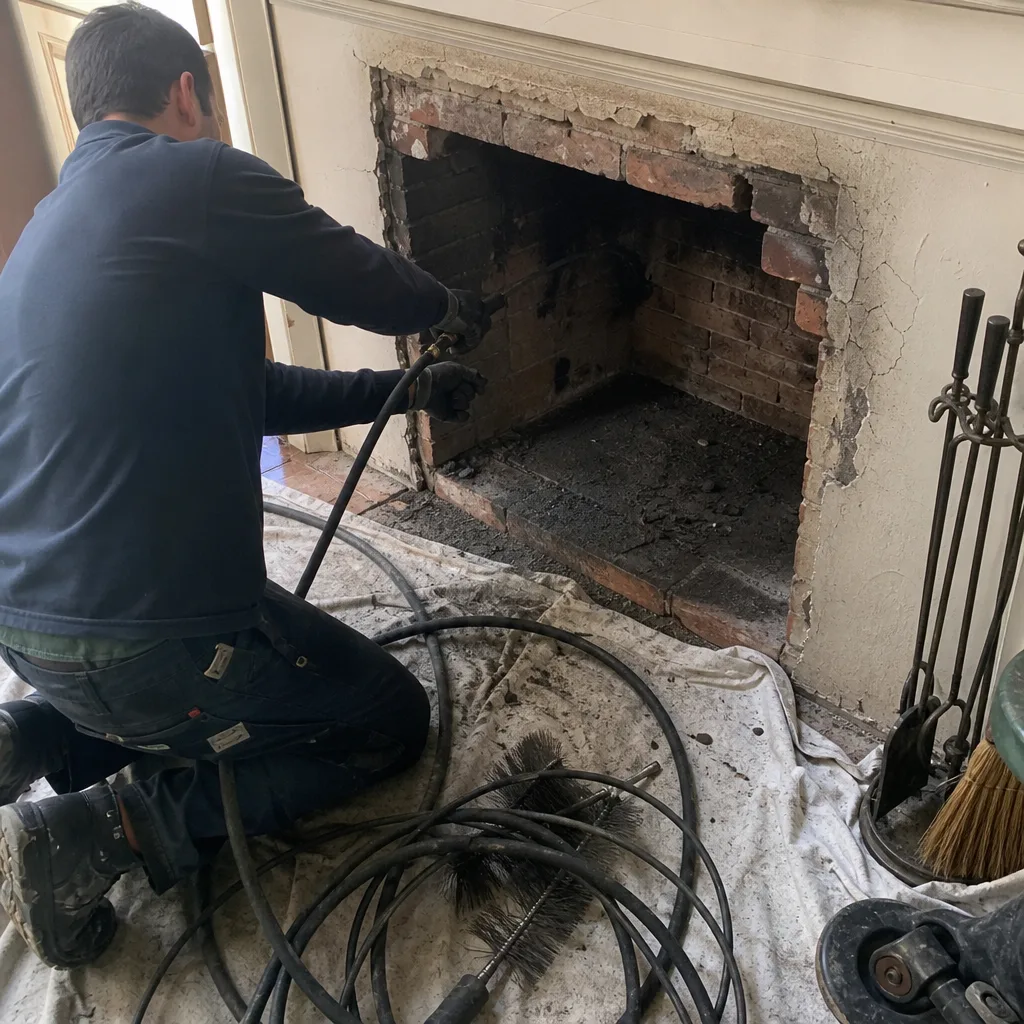
Chimney sweep logs do not sweep chimneys. They loosen some creosote - which then falls where a brush and vacuum still have to collect it.
 Before
 After
After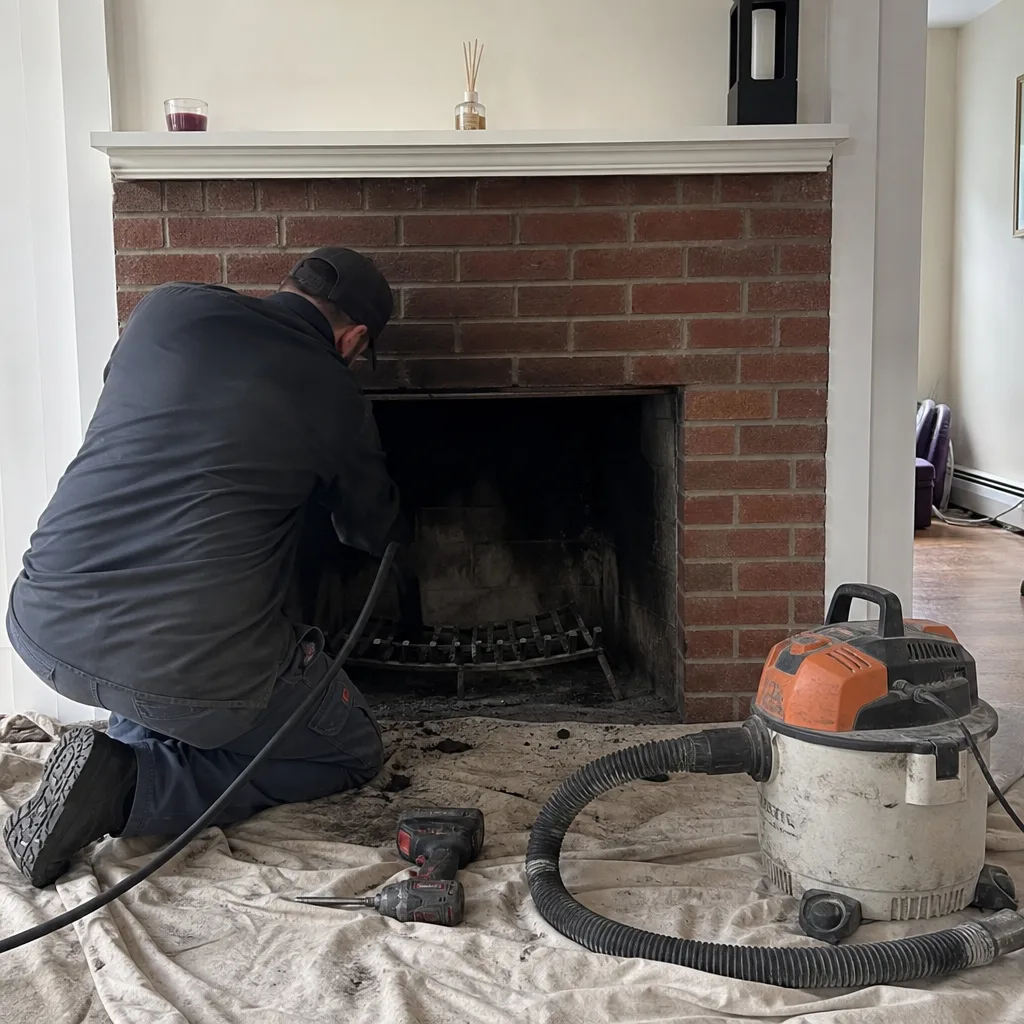 Before
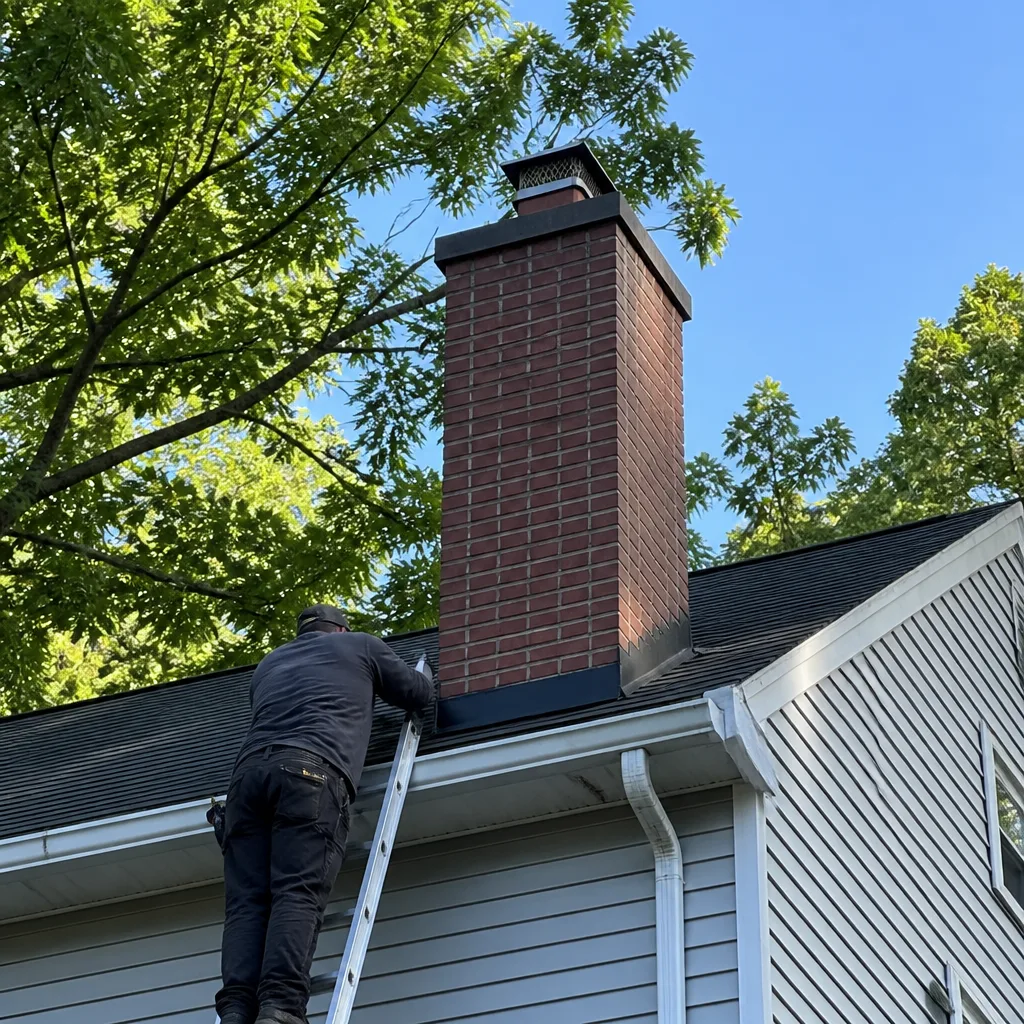 After
After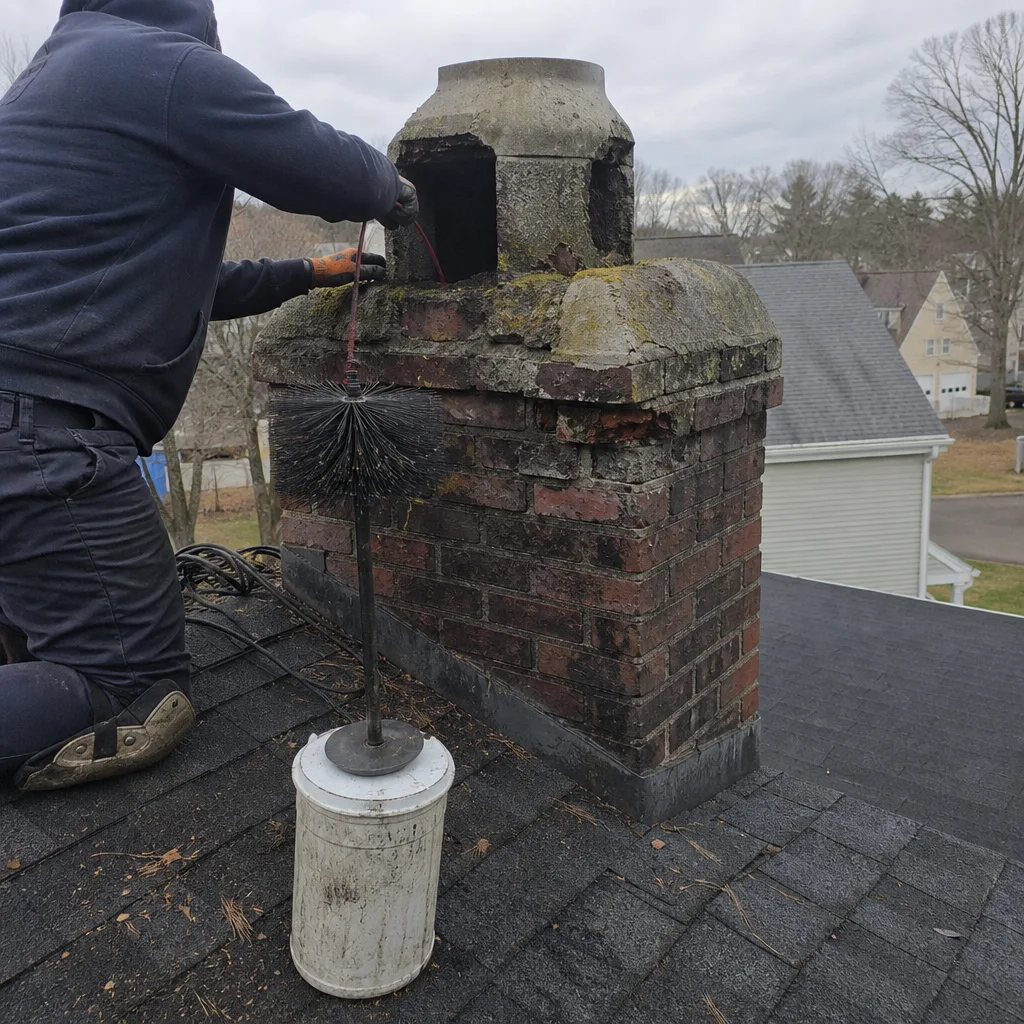 Before
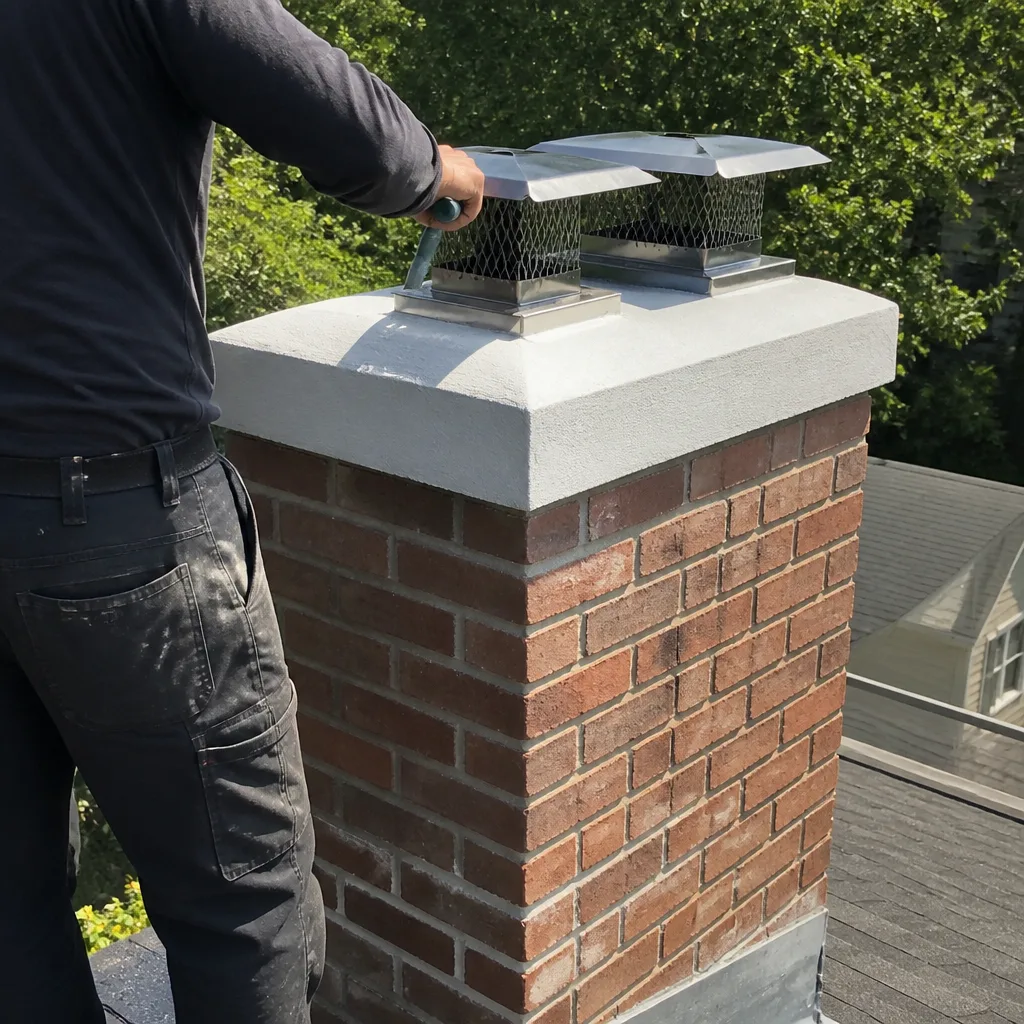 After
AfterSeasonal Chimney Cleaning Care for Hamden: Year-Round Homeowner’s Guide
Most Hamden homeowners think about their chimney exactly once a year, usually the afternoon they smell smoke backing up into the living room. Here’s what we’ve learned in 42 years of sweeping chimneys across New Haven County: the chimneys that fail expensively are almost never the ones that were used hard and maintained annually. They’re the ones that sat ignored through three seasons while moisture, freeze-thaw cycles, and nesting animals did slow damage no one watched for. Summer is the season most Hamden homeowners ignore their chimney entirely, and it’s also the season when moisture from a cracked crown or missing cap does its most aggressive damage to mortar joints, because heat and humidity accelerate freeze-thaw erosion even without a freeze. In this guide, we’ll walk through what your chimney actually needs each season, why Hamden’s particular climate makes year-round attention worth the effort, and how to spot the warning signs that separate a small repair from a rebuild.
Quick Answer
Chimney care in Hamden should follow a four-season rhythm: fall sweeping and inspection before the first fire, winter monitoring for draft and odor changes, spring post-season inspection for freeze-thaw damage, and summer cap, crown, and waterproofing maintenance during the off-season. For a detailed Chimney Cleaning & Sweep Maintenance Checklist for Hamden Homeowners, see our dedicated guide. Year-round attention prevents the moisture and masonry damage that leads to expensive rebuilds.
Table of Contents
- Fall: The Pre-Season Inspection That Prevents First-Fire Surprises
- Winter: Mid-Season Warning Signs Homeowners Can Monitor
- Spring: The Post-Season Inspection Most Homeowners Skip
- Summer: Off-Season Maintenance That Extends Masonry Life
- How Hamden’s Microclimate Accelerates Chimney Damage
- A Practical Year-Round Chimney Routine
- Common Mistakes to Avoid
- When to Call a Professional
- Frequently Asked Questions
Fall: The Pre-Season Inspection That Prevents First-Fire Surprises
September and October in Hamden bring that particular New England urgency, the first crisp evenings when the thermostat drops and the fireplace seems like the most sensible heat in the house. The mistake we see every year, especially in neighborhoods like Spring Glen and Whitneyville where older colonials dominate, is waiting until after the first fire to call for a sweep.
Here’s why that timing matters. A chimney that sat unused since March has had six months to become something other than a clean flue. In our experience across Hamden, roughly one in three off-season chimneys we inspect in early fall contains an active obstruction. Bird nests, particularly from chimney swifts, are common through August and early September. Paper wasps build substantial colonies in flue liners that went cold in spring. We’ve pulled squirrel caches from smoke shelves in Mount Carmel homes where the owners had no idea anything had moved in.
More concerning is what summer disuse allows to develop unseen. A liner that settled slightly last heating season may have shifted further. A small crown crack from winter’s last freeze-thaw cycle has likely widened after months of rain penetration and summer humidity expansion. The first fire of the season, with its sudden temperature spike and draft pull, is exactly the wrong moment to discover these problems.
What a proper fall inspection covers:
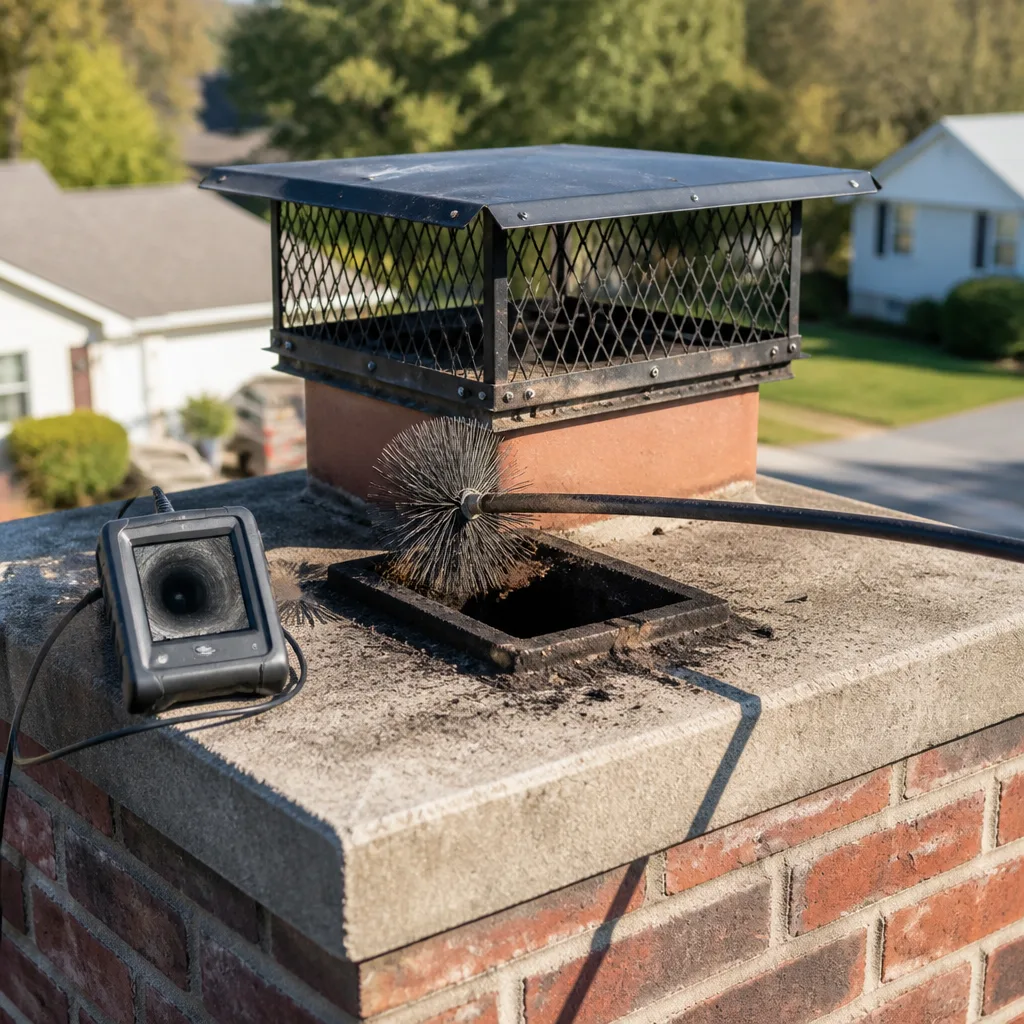
- Level-2 camera inspection of the flue interior. We document every foot with photos you can see, looking for liner gaps, creosote glazing, and structural cracks that a basic flashlight sweep would miss.
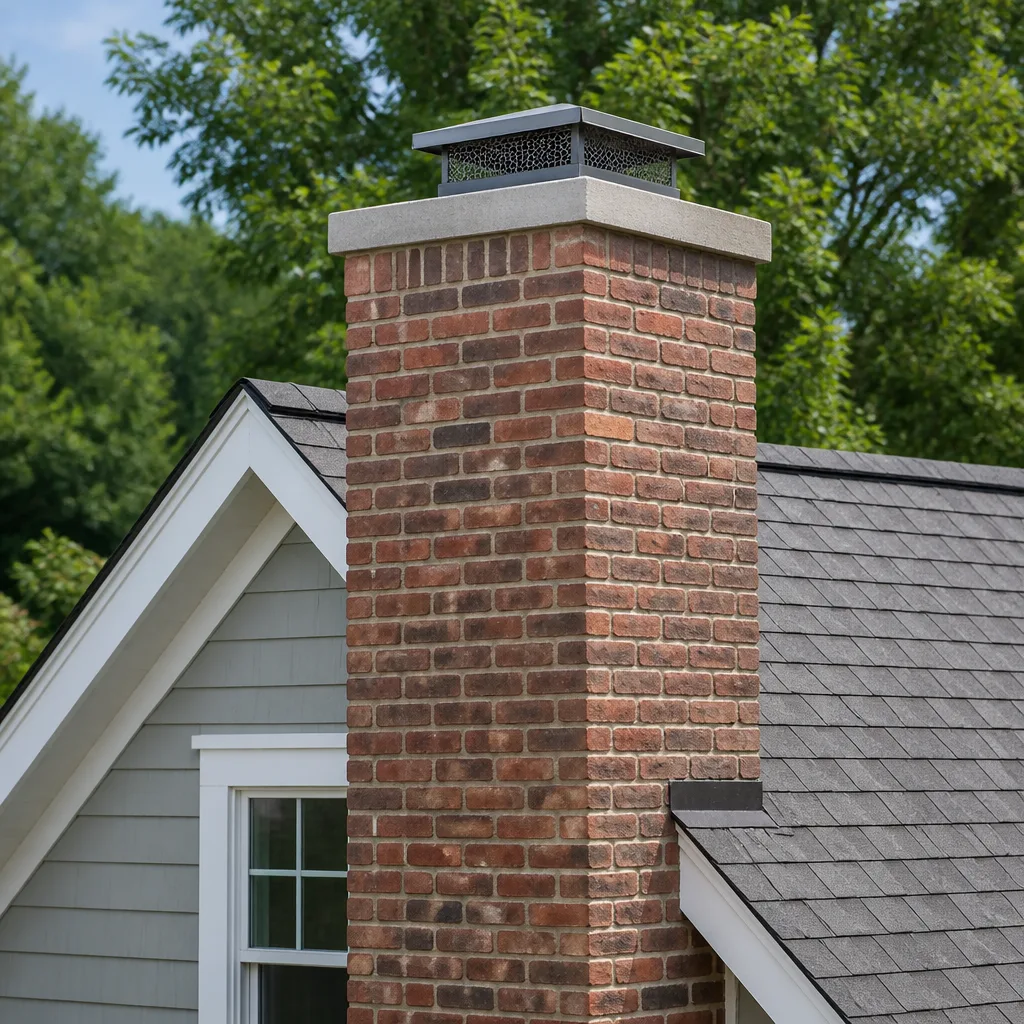
- Cap and crown condition assessment. In Hamden’s humidity, crown deterioration accelerates noticeably. We flag cracks before they channel water into the chimney body.
- Combustion clearance verification. Shifts in framing or added insulation in older homes can reduce clearances that were adequate decades ago.
- Damper operation and seal test. A damper that won’t fully close costs heating dollars all winter; one that won’t fully open risks smoke spillage.
- Firebox and hearth visual inspection. We look for firebrick spalling, hearth extension cracks, and signs of previous overheating.
The chimney cleaning and sweep itself removes creosote buildup, but the inspection is what prevents the emergency call at 7 p.m. on the first cold night. We schedule fall appointments through October, and we always recommend booking before you need the heat. The $89 Seasonal Tune-Up covers the sweep and basic inspection; if camera work reveals something concerning, we’ll show you the photo and explain what it means before any additional work is discussed.
One specific Hamden note: homes in the Mill River valley floor, particularly near the Sleeping Giant State Park approach, experience heavier morning condensation in flues due to cooler air pooling. This accelerates creosote formation and can corrode metal liners faster than homes on higher ground. We factor this into our inspection protocol for those addresses.
Winter: Mid-Season Warning Signs Homeowners Can Monitor
Once the heating season is underway, most homeowners assume the chimney is a settled matter. In fact, winter is when certain problems become visible to an observant homeowner, and catching them early can prevent the kind of damage that requires chimney repair in Hamden once spring arrives.
We’ve learned to ask homeowners specific questions when they call with mid-season concerns, and the answers usually point to one of several predictable issues. Here are the warning signs to watch for between your fall inspection and spring shutdown.
Draft changes you can feel. If a fireplace that drew well in November suddenly spills smoke into the room in January, the cause is rarely the chimney itself changing. More often, it’s a combination of factors: house pressure balance altered by new weatherstripping, a bathroom exhaust fan running more frequently, or the chimney cooling below the draft threshold because of an extended period without use. But draft reduction can also signal a partial blockage, a liner collapse, or exterior damage that’s opened a leak path. The key distinction: gradual draft weakening over weeks suggests structural or blockage issues; sudden change after a specific event suggests environmental factors.
Increased odor, especially on warm winter days. A chimney that smells like an ashtray when the fireplace isn’t in use is telling you that creosote deposits are interacting with humidity. Warm, wet winter air in Hamden, particularly before a rain system moves through, can reverse the normal stack effect and push chimney odors into the house. This is more than a nuisance. Heavy creosote odor indicates glazing, a hardened deposit that standard sweeping may not fully remove and that increases fire risk. If you notice this smell consistently, the chimney needs attention before next season’s use intensifies the buildup.
Visible efflorescence on exterior masonry. That white, powdery staining on brickwork is mineral salts carried out by water moving through the masonry. In winter, it indicates active moisture penetration, usually from a failed crown, deteriorated mortar joints, or missing cap. Hamden’s freeze-thaw cycle means every water intrusion expands when it freezes, progressively widening cracks. Efflorescence you can see in January represents damage that started earlier and is accelerating. By March, those same joints may have spalled face brick that requires repointing or rebuilding.
Unusual sounds from the flue. Popping, ticking, or rushing air sounds when the fireplace isn’t in use can indicate liner separation, animal activity, or debris dislodged by wind. We’ve responded to winter calls in West Woods and Hamden Hills where homeowners heard what they thought was a bird, only to find a substantial liner gap that had opened since fall inspection.
What homeowners can safely check: visual observation of exterior masonry from ground level, damper operation, and obvious smoke spillage. What requires professional assessment: anything involving the flue interior, roofline access, or combustion performance. Our technicians carry Olympia Chimney inspection cameras for mid-season diagnostic calls, and most winter concerns can be evaluated in a single visit with photos you can see and a plain-English verdict on what, if anything, needs doing now versus what can wait for spring.
Spring: The Post-Season Inspection Most Homeowners Skip
March through May is the most neglected window in chimney maintenance, and it’s arguably the most informative. After a full heating season, the chimney has experienced its maximum thermal cycling, maximum moisture exposure from combustion byproducts, and the full brunt of Hamden’s late-winter freeze-thaw pattern. The damage that will define next year’s repair needs is visible now, not in September when everyone’s scheduling at once.
We understand the psychology. The fireplace is going cold, spring projects compete for attention and budget, and the chimney feels like a problem for future-you. But future-you, facing a September appointment that reveals substantial masonry damage requiring weeks of work before the first fire, will wish present-you had looked in April.
What spring inspection specifically targets:
- Freeze-thaw mortar damage. Hamden averages 25-30 freeze-thaw cycles annually after precipitation, more than coastal Connecticut towns because of our slightly higher elevation and inland position. Each cycle stresses mortar joints, and the cumulative effect shows as surface cracking, joint recession, and face spalling. Caught in spring, repointing preserves the wall. Ignored through summer, water penetration accelerates, and by fall you may need partial rebuild.
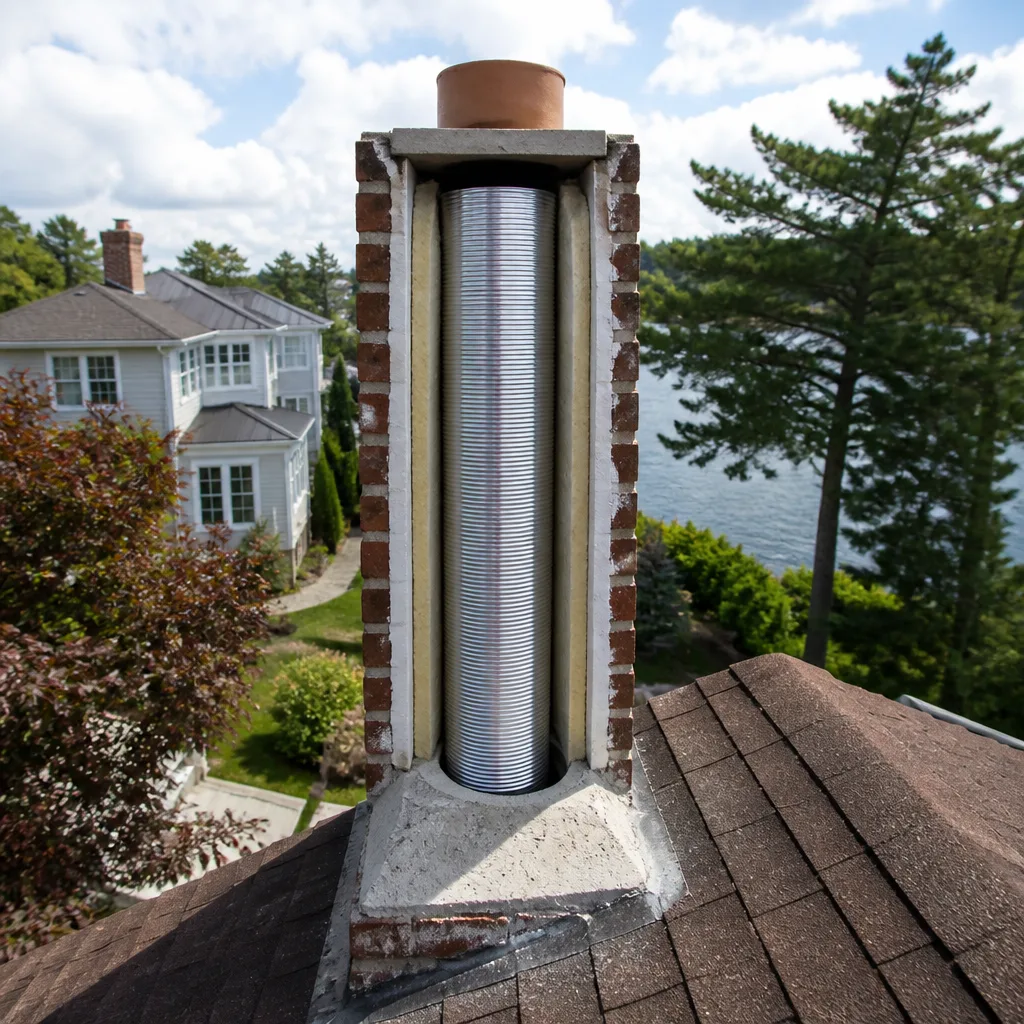
- Liner condition after thermal cycling. Metal liners expand and contract with every fire. Spring inspection checks for new gaps at joints, corrosion spots, and deformation that developed over the heating season. Clay liners are checked for thermal cracking and flaking. We document with camera photos; you see what we see.
- Creosote accumulation assessment. Knowing how much deposited over one season tells us about your burning habits and whether glazing is developing. This informs fall scheduling and whether chemical treatment is warranted.
- Moisture intrusion paths. Spring rains reveal active leaks that winter’s snow and ice may have masked. We trace water paths to their source, crown, cap, flashing, or masonry absorption.
The post-season inspection is also the optimal timing for certain repairs. Tuckpointing and crown rebuilding need moderate temperatures for proper mortar curing. Waterproofing treatments require dry, warming masonry for absorption. Scheduling this work in April or May means it’s fully cured and tested before fall demand peaks, and you’re not competing with the September rush for appointment slots.
In our 42 years, the homeowners who never face emergency chimney situations follow a simple pattern: they inspect in fall before use, monitor through winter, and inspect again in spring after use. The spring inspection is the one that separates maintained chimneys from deteriorating ones.
Summer: Off-Season Maintenance That Extends Masonry Life
June through August is when Hamden chimneys are most vulnerable and least watched. The combination of high humidity, occasional heavy thunderstorms, and sustained heat creates conditions for accelerated masonry degradation that only becomes visible once damage is substantial.
The critical insight: moisture damage in summer is not about rain entering the flue, though that happens. It’s about humidity-driven vapor movement through porous masonry, salt crystallization behind the brick face, and the slow dissolution of mortar binders that weakens joints before any crack is visible. By the time you see a problem, the internal damage is advanced.
Specific summer maintenance tasks:
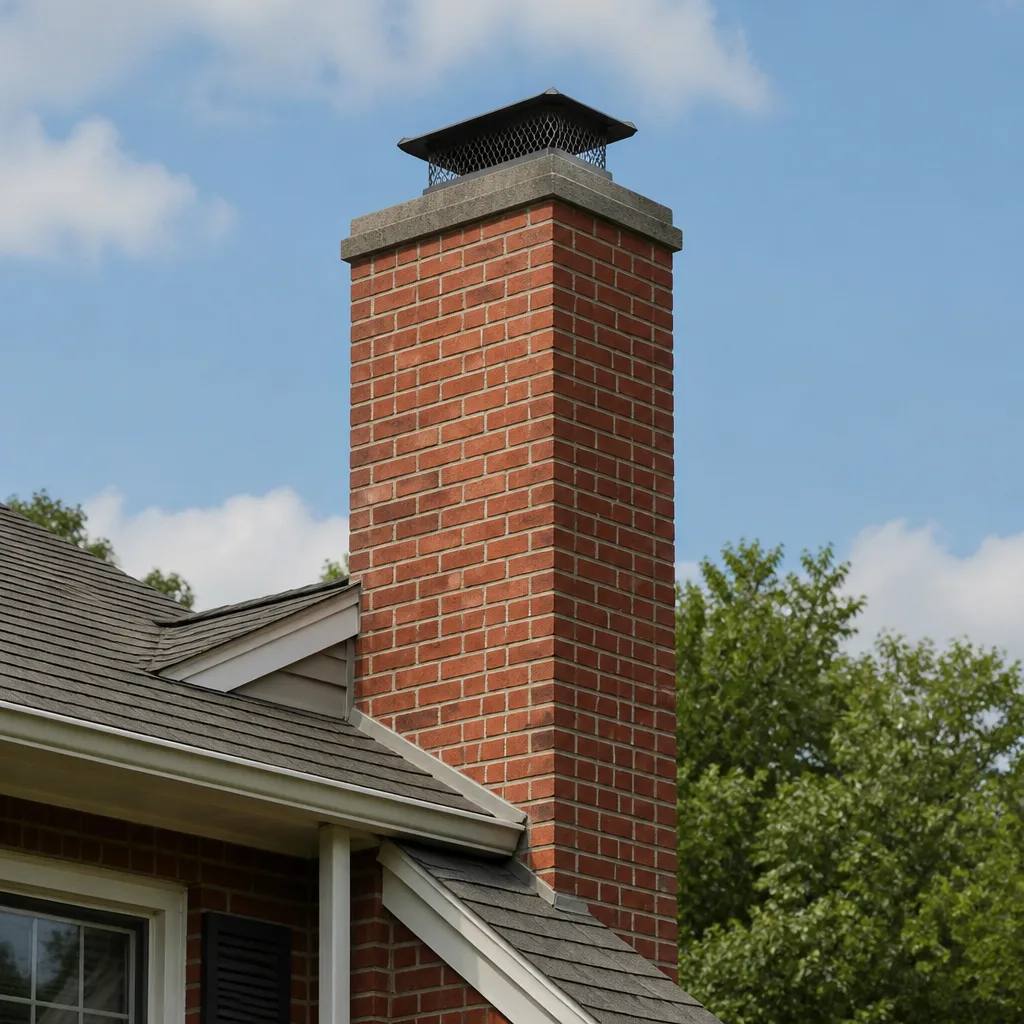
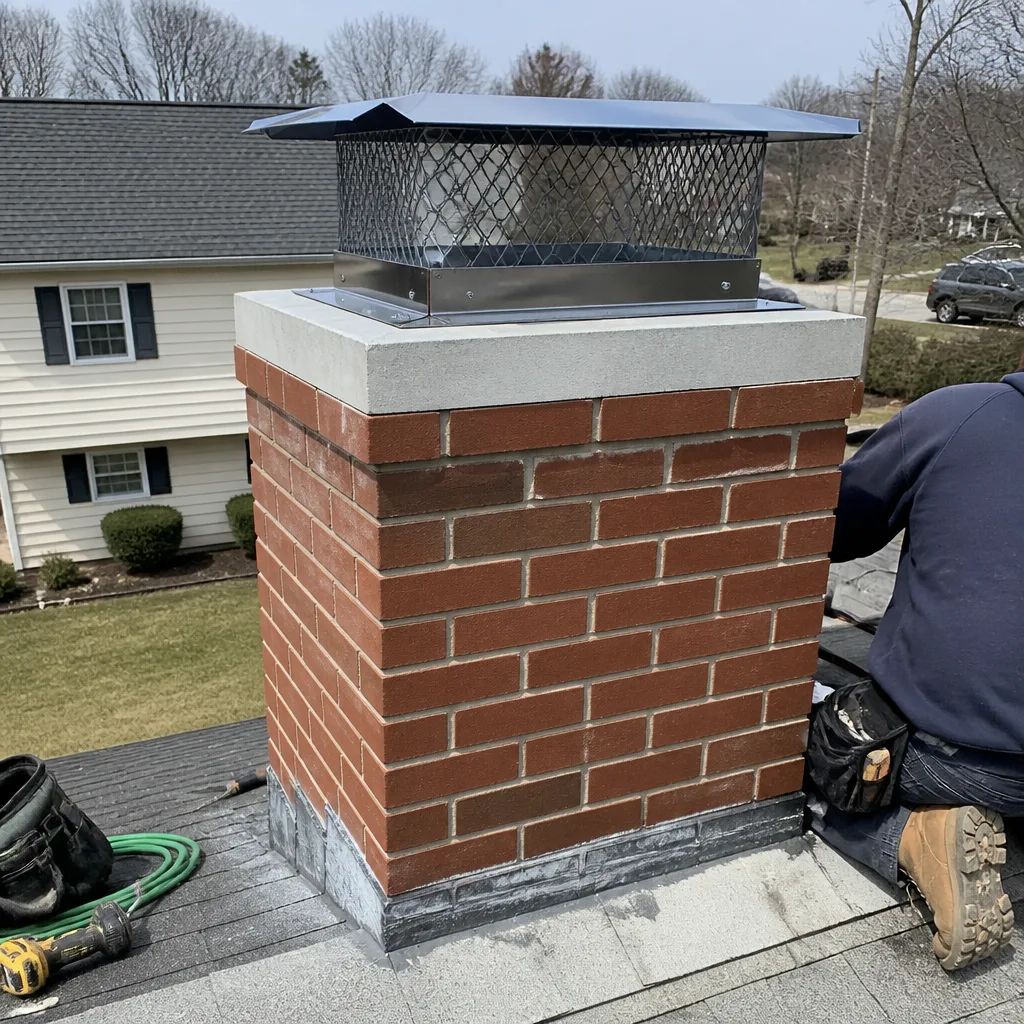
- Cap and crown integrity verification. The crown is the concrete or mortar wash that sheds water from the chimney top. A sound crown is beveled, overhangs the brick by at least two inches, and is free of cracks. Summer heat causes expansion that opens hairline cracks from winter; subsequent rain penetrates and begins saturating the chimney body. We inspect crown condition, repair minor cracking with flexible crown sealant, and recommend rebuild when structural cracks exceed 1/8 inch or when the crown has lost its positive slope.
- Waterproofing application. Professional-grade masonry waterproofing, applied to clean, dry brick, creates a vapor-permeable barrier that repels liquid water while allowing the wall to breathe. We use products from Copperfield and Famco that carry 10-year performance warranties when properly applied. The key is application during dry summer weather when masonry moisture content is lowest; this ensures proper penetration and bonding. Waterproofing done right can extend masonry service life by a decade or more.
- Flashing inspection and seal. The metal interface where chimney meets roof is a common leak point that summer storms test severely. We check for lifted edges, corroded fasteners, and separated sealant. Repair in summer means testing under controlled conditions, not during a November rain.
- Damper lubrication and seal test. A damper that sat open all winter may have corroded slightly; one that was closed may have stuck. Summer is when we service, adjust, and lubricate so the mechanism operates smoothly when needed. We also verify the seal, a closed damper should hold a dollar bill snugly, to prevent air conditioning loss and humidity intrusion.
- Firebox and hearth deep cleaning. Ash residues are acidic and, combined with summer humidity, can etch firebrick and hearth stone. Complete removal and neutralizing wash protects these surfaces during the off-season.
For Hamden homeowners considering fireplace services like insert upgrades or gas conversion, summer is the practical planning season. Permits, material ordering, and scheduling all move more smoothly when demand is lower. We’ve completed full fireplace refacing and insert installations in July and August that would have required six-week waits in October.
One neighborhood-specific note: homes in the southern Hamden areas nearer New Haven, where the elevation drops and summer humidity peaks higher, show measurably faster crown deterioration than those on the north side toward Cheshire. We adjust our inspection frequency recommendations accordingly.
How Hamden’s Microclimate Accelerates Chimney Damage
Connecticut’s four seasons are genuine, but they’re not uniform across the state. Hamden occupies a specific position, inland enough to experience more freeze-thaw cycles than the immediate coast, but with enough elevation variation to create localized humidity patterns that affect how chimneys age.
The Mill River valley, running through the center of town from Sleeping Giant toward New Haven, creates a cooler air drainage pattern on calm nights. Chimneys in these neighborhoods, particularly in the historic districts between Whitney Avenue and the river, experience more morning condensation in their flues than homes on the ridges. Condensation wets creosote deposits, making them more acidic and more adherent, and accelerates corrosion in metal liners. We’ve replaced stainless liners in valley-floor homes that were half the expected service life of identical installations on higher ground.
Freeze-thaw exposure is the more widely recognized factor. Hamden’s USDA hardiness zone placement and inland position mean we average more sub-freezing nights after precipitation than Milford or West Haven. Each cycle, water in masonry pores expands approximately 9% in volume. The pressure micro-fractures mortar, eventually spalling brick faces. A chimney in Hamden’s climate, unprotected by cap, crown, and waterproofing, will show measurable deterioration in 5-7 years that might take 12-15 in a drier, more stable climate.
The specific masonry mix matters too. Many Hamden homes built 1920-1960 used softer, more porous mortar than modern specifications. This was appropriate for the era’s firing practices and coal-to-oil transitions, but it means those chimneys are more vulnerable to modern moisture exposure. Repointing with appropriate historical mortar, not standard Type N, is essential for preservation. Our technicians match mortar composition to construction era; we’ve learned the local building stock well enough to identify likely mix types by neighborhood and construction date.
Local experience in reading this damage matters because the same crack pattern can indicate different problems depending on exposure. A vertical crack on the south face of a Hamden chimney, where sun exposure drives thermal cycling, may be thermal expansion stress. The same crack on the north face, never sun-warmed, more likely indicates moisture saturation and freeze damage. We’ve seen generalist inspectors misread these patterns and recommend unnecessary structural work, or miss active damage that needed immediate attention. The difference is knowing what Hamden’s particular combination of sun, shade, humidity, and freeze exposure does to masonry over decades.
A Practical Year-Round Chimney Routine
A sustainable maintenance rhythm doesn’t require constant attention. It requires attention at the right moments, with the right tasks assigned to each. Here’s what we recommend for Hamden homeowners, based on what we’ve seen work over four decades.
| Season | Timing | Homeowner Action | Professional Service |
|---|---|---|---|
| Fall | September-October | Schedule before first fire. Clear hearth area of summer storage. | Level-2 inspection with camera, sweep, damper service, combustion check. Address any obstruction or damage before use begins. |
| Winter | December-February | Monitor draft, odor, exterior staining. Burn only seasoned hardwood. | Diagnostic calls for draft, odor, or visible changes. Mid-season camera check if warning signs appear. |
| Spring | March-May | Note any performance changes from peak season. Plan budget for needed work. | Post-season inspection for freeze-thaw damage, liner condition, moisture paths. Schedule repointing, crown work, or waterproofing. |
| Summer | June-August | Keep cap and screen clear of debris. Visually check exterior after storms. | Crown repair, waterproofing application, flashing service, damper deep maintenance. Plan upgrades or conversions. |
The annual investment in this rhythm, typically the $89 Seasonal Tune-Up in fall plus any spring or summer repair needs, averages far less than the emergency rebuild or liner replacement that deferred maintenance eventually requires. More importantly, it eliminates the uncertainty. You know the condition. You know the timeline. You make decisions on your schedule, not in response to smoke in the living room or a contractor’s emergency premium.
Our 90-Day Done Right Promise applies to all seasonal work. If we sweep in October and you notice a performance issue we should have caught, we return. No paperwork, no arguing. In writing. That’s how we’ve operated since 1984, and it’s why we’re still answering the phone with a live person 42 years later.
Common Mistakes to Avoid
- Waiting for the first cold night to schedule. By mid-October, quality sweeps in Hamden are booked two to three weeks out. The first fire happens on the homeowner’s schedule, not the chimney’s readiness. We see emergency calls every year from families who lit a fire, had a problem, and then faced cold nights while waiting for an appointment.
- Assuming no fireplace use means no maintenance needed. Gas fireplaces and even sealed wood inserts still vent through chimneys that experience condensation, debris accumulation, and liner corrosion. Annual inspection applies to all vented appliances, not just active wood-burning fireplaces.
- Hiring based on lowest price without verifying what’s included. A $79 sweep that doesn’t include camera inspection, doesn’t document findings with photos, and doesn’t provide a written condition report may leave serious problems undetected. We quote upfront with no surprises on the bill, and we show you what we find.
- Ignoring exterior masonry until interior leaks appear. By the time water shows inside, the chimney has typically sustained substantial damage. Exterior inspection in spring and summer catches problems when they’re crown cracks and joint erosion, not wall saturation and structural compromise.
- Using the chimney as a vent for new appliances without professional assessment. We’ve seen boiler replacements in Hamden’s older homes where the new high-efficiency unit was improperly vented into an existing flue, creating condensation damage and carbon monoxide risk. Any appliance change requires flue suitability verification.
- Attempting crown or flashing repairs from a ladder without proper equipment. Chimney work at height involves genuine fall risk, and improper repairs often accelerate damage by trapping moisture. This is trained professional work, not a weekend project.
- Skipping spring inspection because “it was fine in fall.” Fall inspection confirms readiness for use. Spring inspection assesses what the heating season actually did. They’re complementary, not redundant. The most expensive repairs we perform are on chimneys that were “fine” last year and weren’t checked again for three years.
When to Call a Professional
Certain situations require prompt professional assessment and should not wait for the next scheduled maintenance. Call for immediate inspection if you experience smoke spillage into living spaces during normal fireplace use, visible flame or sparking from chimney top, sudden draft collapse after storm or seismic event, water dripping into firebox or adjacent framing, or animal sounds or odors from the flue during inactive periods.
For routine seasonal service, Hearthstone Chimney Co. offers free estimates in Hamden. Our phones are answered by a live person 24 hours a day, 7 days a week. Call (475) 369-1614 to schedule. Background-checked, uniformed technicians complete most jobs in a single visit, with no-hassle upfront pricing so the number on the estimate is the number on the invoice. We document every inspection with photos you can see and a plain-English verdict, and all work is covered by our 90-Day Done Right Promise, in writing, with no arguing.
Frequently Asked Questions
A standard chimney sweep and basic inspection in Hamden typically runs $150-$250, with Level-2 camera inspections adding $100-$150 depending on flue accessibility and number of appliances served. See our Chimney Cleaning Cost Breakdown: The Hamden Homeowner’s Reference for 2026 for full pricing context. Hearthstone’s $89 Seasonal Tune-Up covers the sweep and basic visual inspection for qualifying systems during scheduled fall appointments. Call (475) 369-1614 for an exact quote, estimates are free.
The National Fire Protection Association recommends annual inspection for all chimneys, with sweeping frequency based on use and fuel type. Wood-burning fireplaces used regularly during Hamden’s heating season should be swept annually before first use. Oil and gas systems should be inspected annually and swept as indicated by deposit accumulation. Even unused chimneys need periodic inspection for animal intrusion, moisture damage, and structural deterioration.
Whether a liner can be repaired depends on material, damage type, and extent. Small gaps or cracks in stainless steel liners can sometimes be patched or section-replaced. Clay tile liners with isolated cracking may be repairable with HeatShield cerfractory foam resurfacing if structural soundness is verified by camera. Extensive cracking, spalling, or displacement usually requires replacement. We show you the camera footage, explain what we see, and recommend only what’s supported by visible evidence. Work that can safely wait, we say so plainly.
Deferred maintenance typically progresses through predictable stages. Years 1-2: creosote accumulation increases fire risk and reduces draft efficiency. Years 2-4: moisture intrusion begins degrading mortar; crown and cap damage widens. Years 4-7: freeze-thaw cycling opens structural cracks; liner damage may allow heat transfer to combustibles. Beyond year 7: partial or full rebuild becomes likely, with costs often exceeding ten years of proper maintenance. In Hamden’s climate, this timeline compresses by roughly 20% compared to drier regions.
Properly seasoned softwood burns hotter and faster than hardwood, producing less total creosote but more rapid flue temperature rise. The key is moisture content, not species. Wood burned in Hamden should be split, stacked, and covered for minimum 12 months, with moisture below 20%. Unseasoned wood of any type produces dangerous creosote glazing. We check wood moisture during fall inspections and can recommend local seasoned suppliers.
Summer chimney odor usually indicates creosote deposits interacting with humidity, often amplified by negative house pressure on warm, still days. The smell is a warning sign that creosote load is substantial. Solutions include thorough sweeping to remove deposits, waterproofing to reduce masonry moisture absorption, and ensuring proper damper seal to prevent house air from pulling across the chimney throat. Persistent odor after sweeping warrants camera inspection for hidden deposits or liner gaps. Call (475) 369-1614 if you’re experiencing this, we can diagnose the specific cause.
The Bottom Line
Your Hamden chimney is not a fall-only appliance. It’s a masonry structure exposed to four genuine seasons, each with distinct stresses: fall’s pre-use preparation, winter’s thermal cycling and performance demands, spring’s freeze-thaw damage assessment, and summer’s moisture protection. Treating it as a one-season concern means three seasons of incremental damage accumulate unnoticed, until the repair is no longer optional and no longer small.
The homeowners we serve longest follow a simple discipline. They inspect before use, monitor during use, assess after use, and protect during disuse. They make decisions based on documented evidence they can see, not on fear or deferral. And they work with craftsmen who plan to be in Hamden for decades more, because that long view shapes how every job gets done.
Done right, and we stand behind it. A square deal: no surprises on the bill. We’ll be there when we say. Photos you can see, a plain-English verdict. In writing, no arguing.
Written by Russell Haines, Owner at Hearthstone Chimney Co., serving Hamden since 2014.