
Last updated September 10, 2026
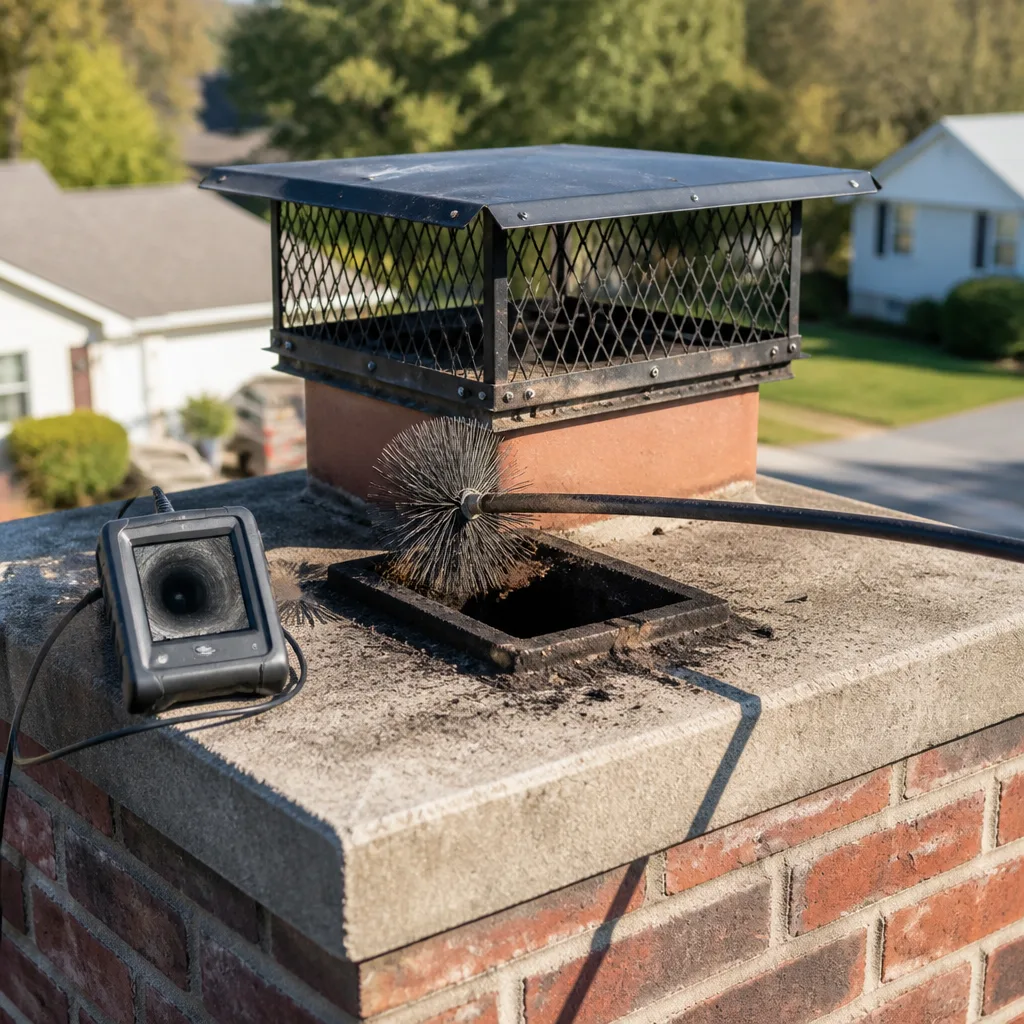
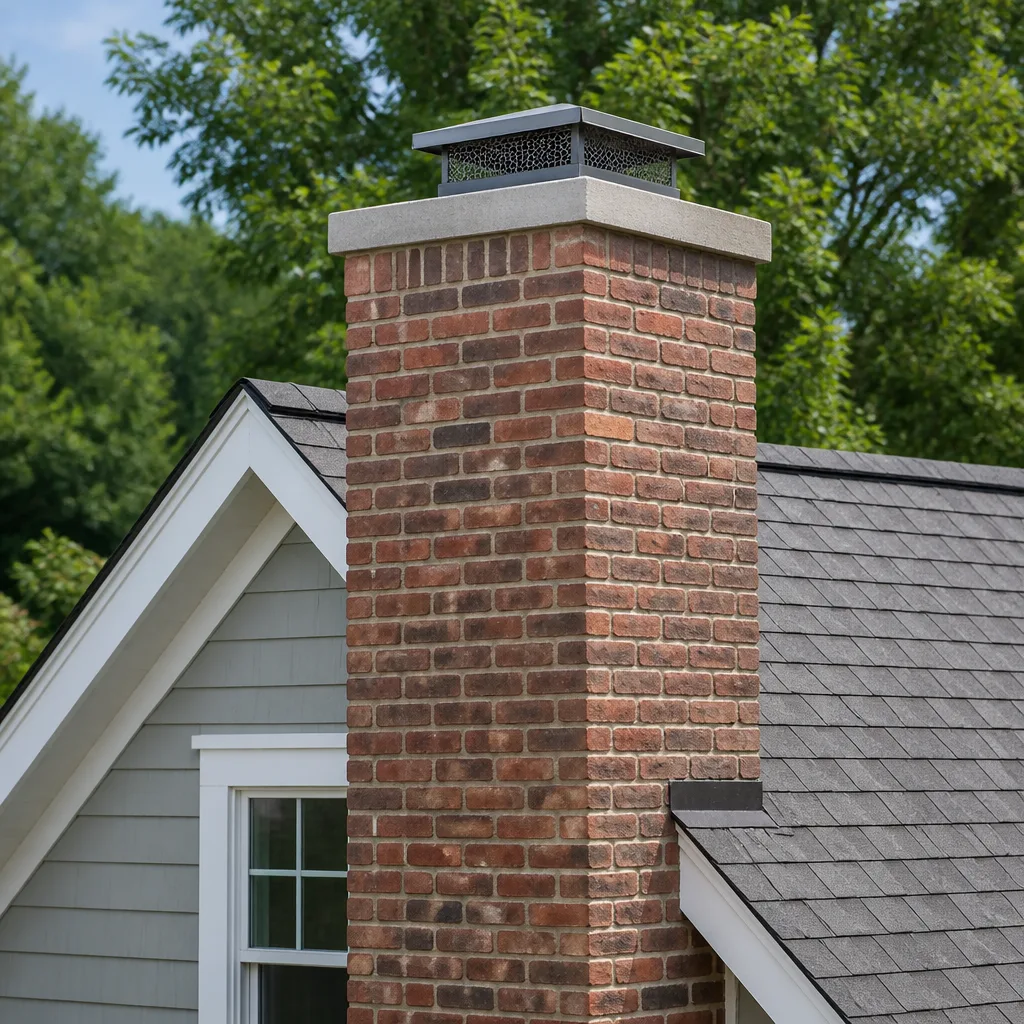
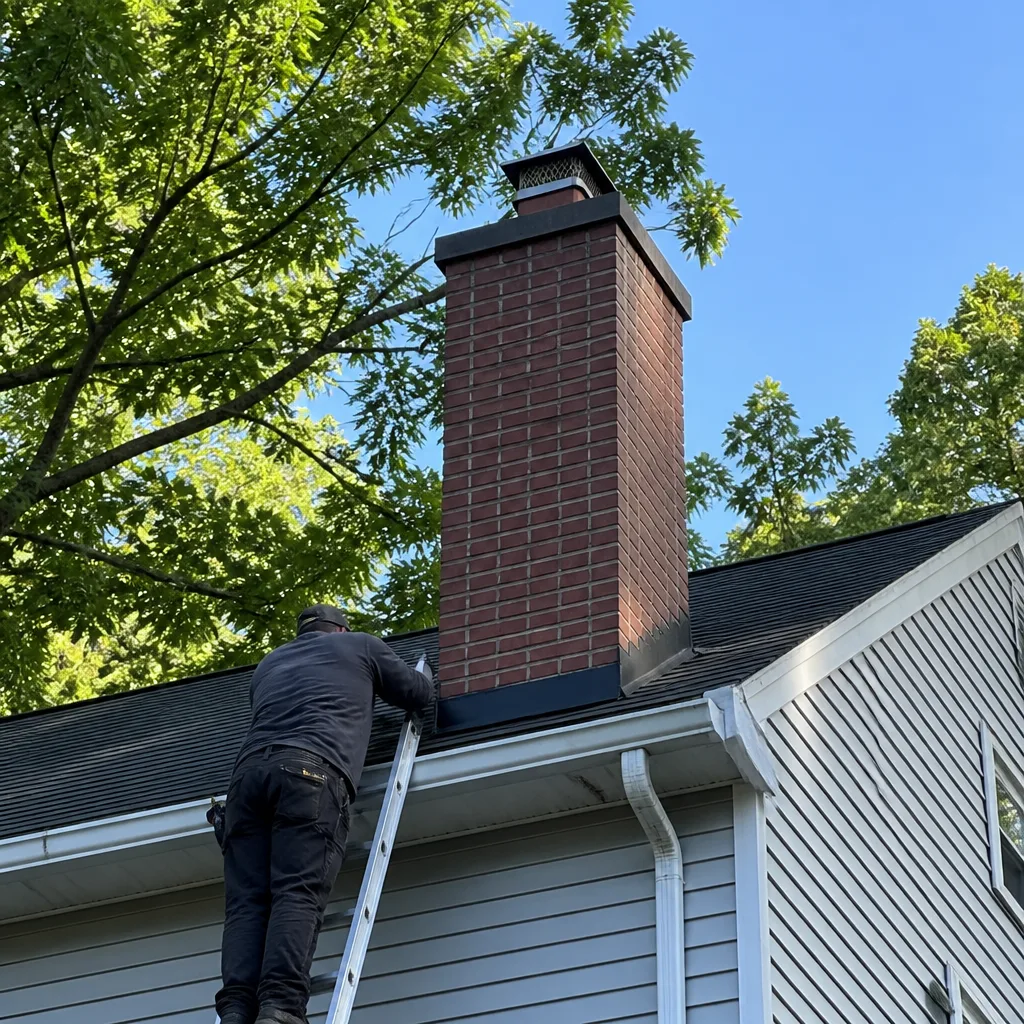
Level 1 sweep and inspection to the NFPA 211 annual standard - flue, crown, cap, and flashing checked and photographed
Chimney sweep logs do not sweep chimneys. They loosen some creosote - which then falls where a brush and vacuum still have to collect it.
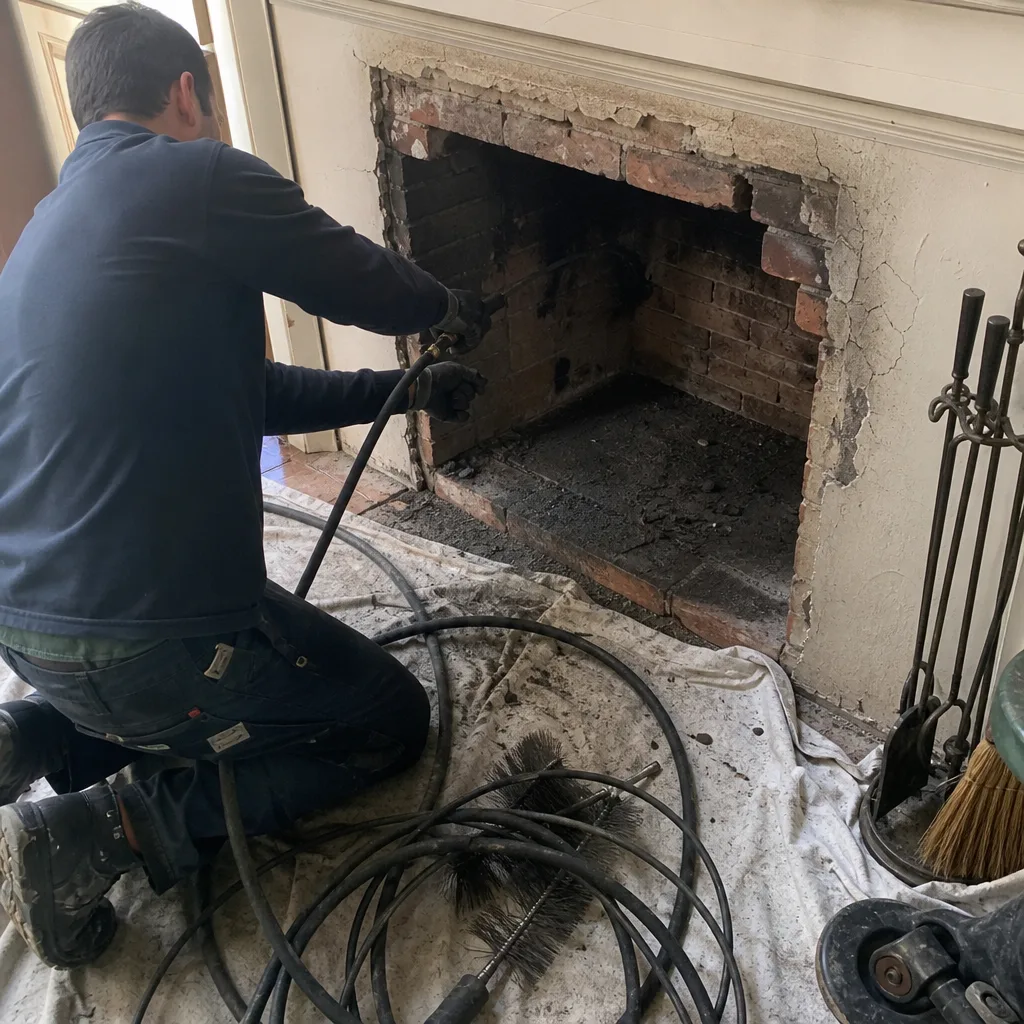 Before
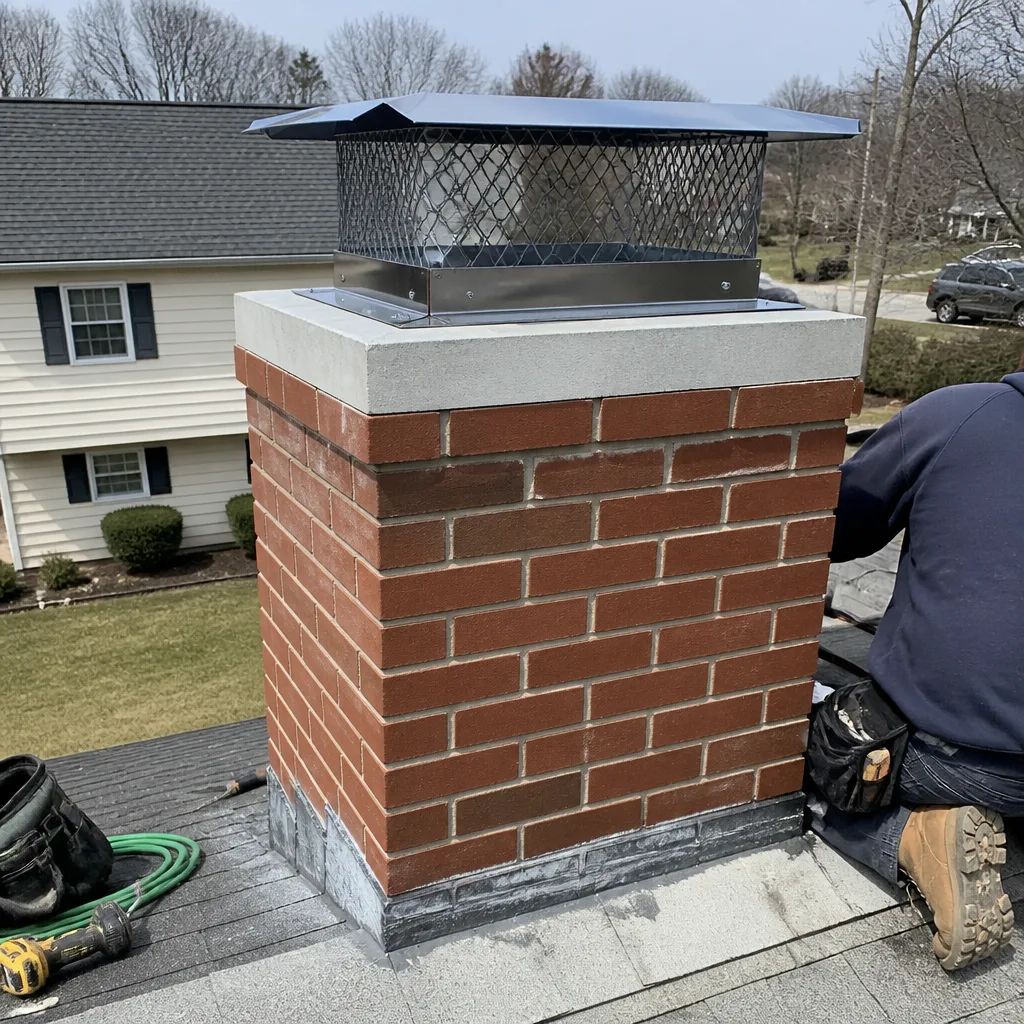 After
After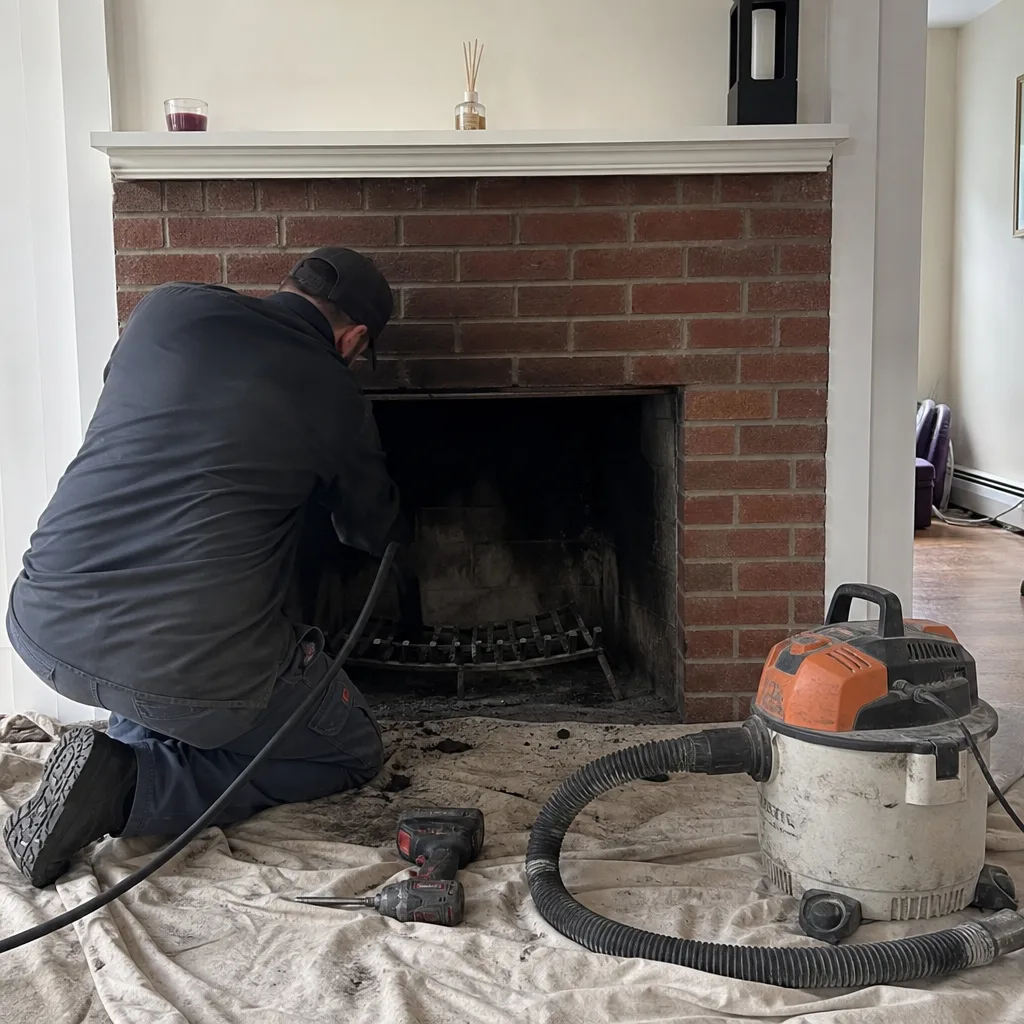 Before
 After
After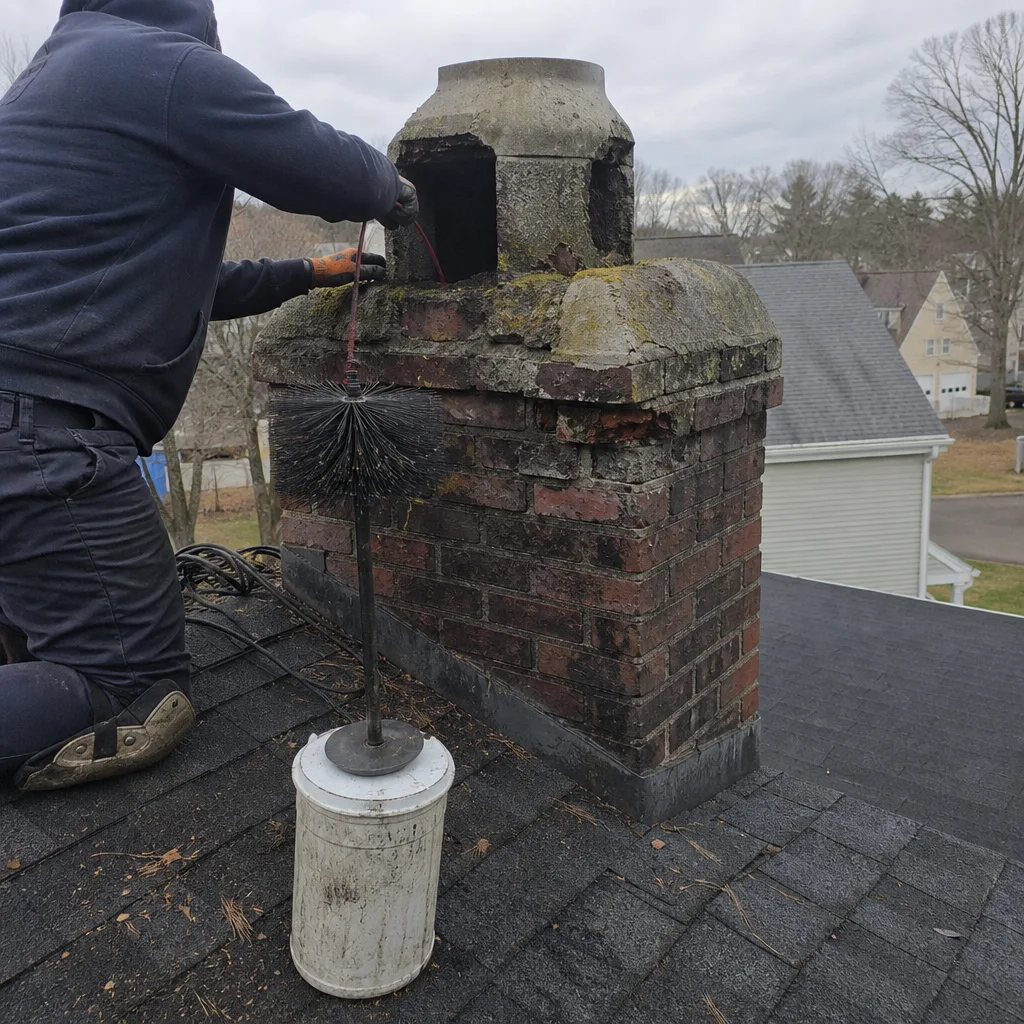 Before
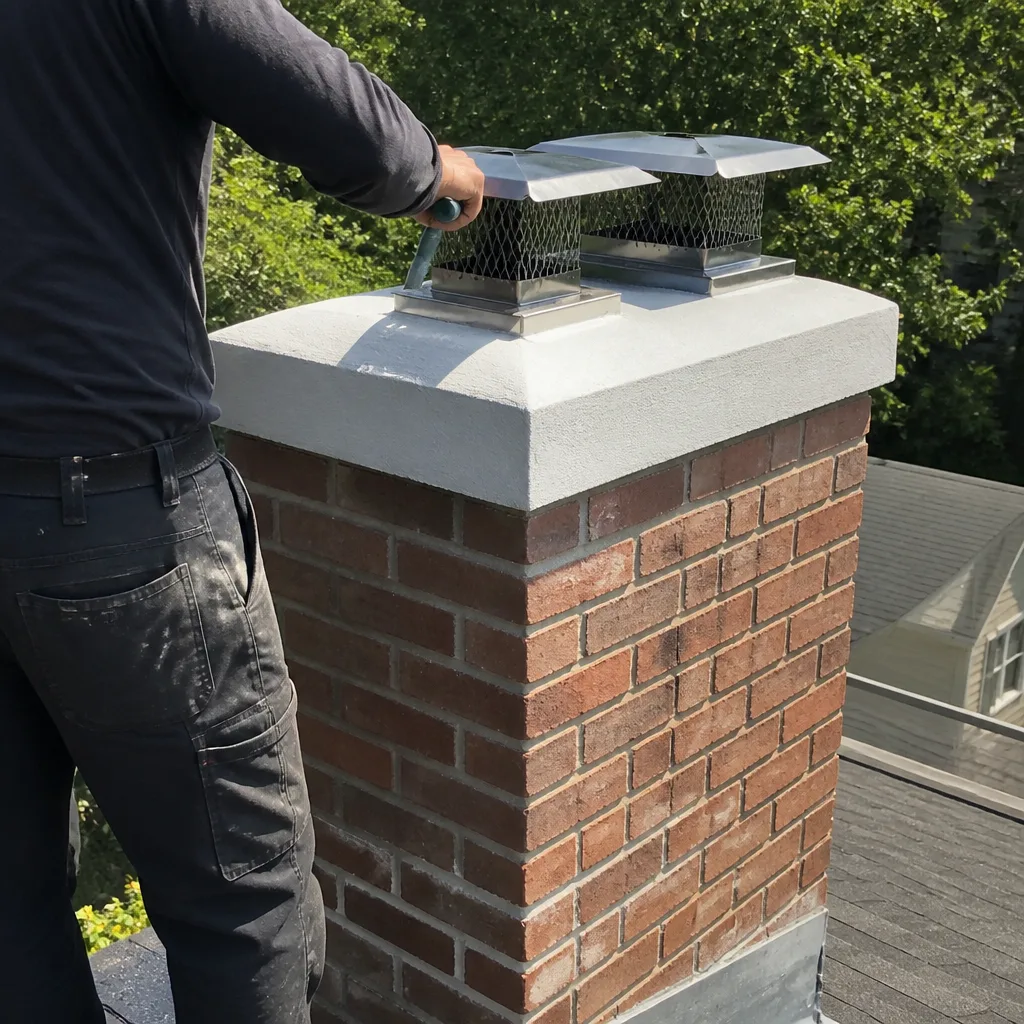 After
AfterChimney Cleaning Warning Signs: A Hamden Homeowner’s Reference Guide
The most dangerous chimney condition, a cracked flue tile leaking combustion gases into living spaces, produces no smoke, no smell from the fireplace, and no visible damage from the ground. In Hamden’s neighborhoods, from the historic homes near Whitneyville to the post-war capes in Spring Glen, we’ve seen homeowners live with this hazard for years because the warning signs masquerade as ordinary household annoyances: a musty bedroom on the second floor, a carbon monoxide detector that chirps more than it should, a damper that sticks every November. This guide translates every symptom into plain language, what it means, how urgent it is, and whether you need to stop using your fireplace tonight or simply note it for your next annual inspection. For more guides & resources, see our blog.
Quick Answer
The warning signs that your Hamden chimney needs professional attention fall into three urgency levels: stop using the fireplace immediately for carbon monoxide alerts, visible gaps in the flue liner, or post-fire damage; schedule within 30 days for white efflorescence on exterior brick, persistent damp odors, or a damper that won’t fully seal; note for annual inspection for minor soot accumulation, slight draft variation with wind direction, or hairline crown cracks without water intrusion. Most serious chimney hazards present indirectly through household symptoms rather than obvious fireplace malfunction.
Table of Contents
- Interior Symptoms That Trace Back to Your Chimney
- Exterior Visual Signs on Hamden’s Older Brick Chimneys
- What Different Creosote Stages Look and Smell Like
- Five Things to Check After Any Chimney Fire
- The Three-Tier Urgency System for Every Symptom
- Common Mistakes to Avoid
- When to Call a Professional
- Frequently Asked Questions
Interior Symptoms That Trace Back to Your Chimney
Homeowners in Hamden’s older housing stock, particularly the pre-1950s homes in Mount Carmel and the brick colonials along Whitney Avenue, often describe symptoms that their doctors, HVAC technicians, and even general contractors fail to connect to the chimney. The flue system penetrates multiple floors, terminates above the roofline, and interacts with the building’s pressure envelope in ways that produce surprising indoor effects.
Unexplained Carbon Monoxide Detector Triggers
A carbon monoxide detector that sounds in the middle of the night, then stops, then sounds again weeks later, is often tracking a flue liner breach or a blocked chimney that only backdrafts under specific conditions. Cold, still nights in Hamden’s winter, when the house is tight and the furnace and water heater are both cycling, create the worst pressure differentials. The combustion gases don’t spill continuously; they pulse in when the conditions align.
What to check: Note which detector triggers, what time, and what appliances were running. If the detector near the chimney chase or on the floor above the fireplace triggers more than others, that’s a directional clue. Replace the detector first, rule out battery issues, but don’t dismiss a pattern. A Level-2 camera inspection with photos you can see and a plain-English verdict will reveal whether the flue liner has gaps, whether the chimney is properly sized for your current heating equipment, and whether the connection between furnace and flue has deteriorated.
Musty Odors in Upper Rooms During Summer
Hamden’s humid summers, particularly July and August when the dew point climbs, activate moisture that has penetrated the chimney structure during the heating season. A musty smell in a second-floor bedroom that shares a wall with the chimney chase almost always indicates water intrusion through the crown, deteriorated flashing, or porous brick that has absorbed runoff from the roof valley above.
The smell intensifies on humid days because the moisture is already trapped in the masonry; high ambient humidity prevents evaporation and activates mold growth on the interior surfaces. This is not a ventilation problem you can solve with a dehumidifier. The water source is structural, and it will continue degrading the mortar and, in many Hamden homes with unlined or partially lined chimneys, the interior framing.
Damp Spots on Interior Walls Adjacent to the Chimney Chase
A water stain that appears on the wall beside the chimney, typically rectangular and following the chase outline, indicates that water is entering at the roofline and traveling down the exterior of the flue tile or liner, then finding a path through the chase wall at a mortar joint or framing penetration. In homes where the chimney was built without a proper cricket or saddle behind it, roof runoff concentrates against the uphill side and overwhelms the flashing.
These stains often appear in late winter or early spring in Hamden, after freeze-thaw cycles have opened new paths in the crown or cap. The stain may dry and seem to resolve, but the structural damage continues. We’ve opened chimney chases in Spring Glen homes where the interior framing was rotted to the point of requiring structural repair, yet the homeowner had noted only a “small water spot that comes and goes.”
Damper That Sticks or Won’t Fully Seal
A damper that requires force to open, or that won’t close completely and leaves a visible gap, has either corroded, warped from heat exposure, or been obstructed by fallen debris from deteriorated flue tile or masonry. The gap matters even when the fireplace is not in use: it creates a continuous chimney effect that draws conditioned air out of the house year-round, and it admits outdoor air, humidity, and animal intrusion.
In Hamden’s climate, a stuck-open damper costs more in heating and cooling than most homeowners estimate. More critically, it prevents the damper from functioning as a safety barrier if a chimney fire occurs. A damper that cannot fully close is a damper that cannot contain a fire event.
Key interior symptoms summary:
- Carbon monoxide detector pattern: correlate with appliance use and time of day
- Summer musty odors near chimney chase: indicates active water intrusion, not humidity
- Wall stains following chase outline: roof-level water entry, likely crown or flashing
- Sticking or gapping damper: mechanical failure with safety and efficiency consequences
Exterior Visual Signs on Hamden’s Older Brick Chimneys
Hamden’s building stock includes thousands of brick chimneys constructed between 1920 and 1960, many with soft, porous brick that was never intended to withstand freeze-thaw cycling without a proper crown and cap. The exterior tells a story that the interior cannot, but only if you know what to look for and how to read it.
Spalling Face Brick
Spalling is the flaking, popping, or crumbling of the brick face, caused by water entering the brick body, freezing, and expanding. In Hamden, spalling accelerates after winters with frequent freeze-thaw cycles, which describes most recent winters. The brick face separates in curved, shell-like pieces, exposing the softer interior.
Spalling is not cosmetic. Each spalled brick has reduced structural capacity, and the cycle continues inward until the brick requires replacement. On a chimney shoulder or above the roofline, where the structure is exposed to the worst weather, spalling can progress to the point where the chimney leans or the flue liner loses lateral support. We’ve rebuilt chimney shoulders in Mount Carmel where spalling had progressed through multiple wythes of brick and the homeowner had assumed “it just needs pointing.”
White Efflorescence Patterns
Efflorescence, the white powdery deposit on brick surfaces, is salt crystallization from water moving through the masonry and evaporating at the surface. The pattern of efflorescence indicates where water is entering and how it is traveling. A vertical streak below a cap joint suggests water entering at that specific point and running down. A broad, diffuse band across the face suggests general porosity or failed mortar joints over a wide area. Concentration at the base of the chimney, above the roofline, often indicates a failed crown that is saturating the top courses.
In Hamden’s older chimneys, we’ve learned to read efflorescence like a map. A thin, clean line at a specific mortar joint often pinpoints a single failure that can be addressed with targeted repointing. A thick, recurring band that returns after cleaning indicates systemic water management failure requiring crown rebuilding, cap replacement, or waterproofing with a vapor-permeable treatment.
Mortar Erosion Depth
The depth of mortar joint erosion is a direct measure of chimney condition and can be assessed with a common house key. Insert the key into a horizontal mortar joint above the roofline. If the key penetrates more than one-quarter inch, the joint has eroded beyond the point where surface repointing is sufficient. If the key penetrates to the depth of the key blade, the joint is fully eroded and water is entering the wall cavity.
Hamden’s pre-war chimneys often have lime-based mortar that erodes more quickly than Portland cement mortar but is also more forgiving to repair. The key test, performed at multiple points around the chimney above the roofline, gives a rapid condition assessment that correlates well with what we find during detailed inspection.
Crown Cracks and Deterioration
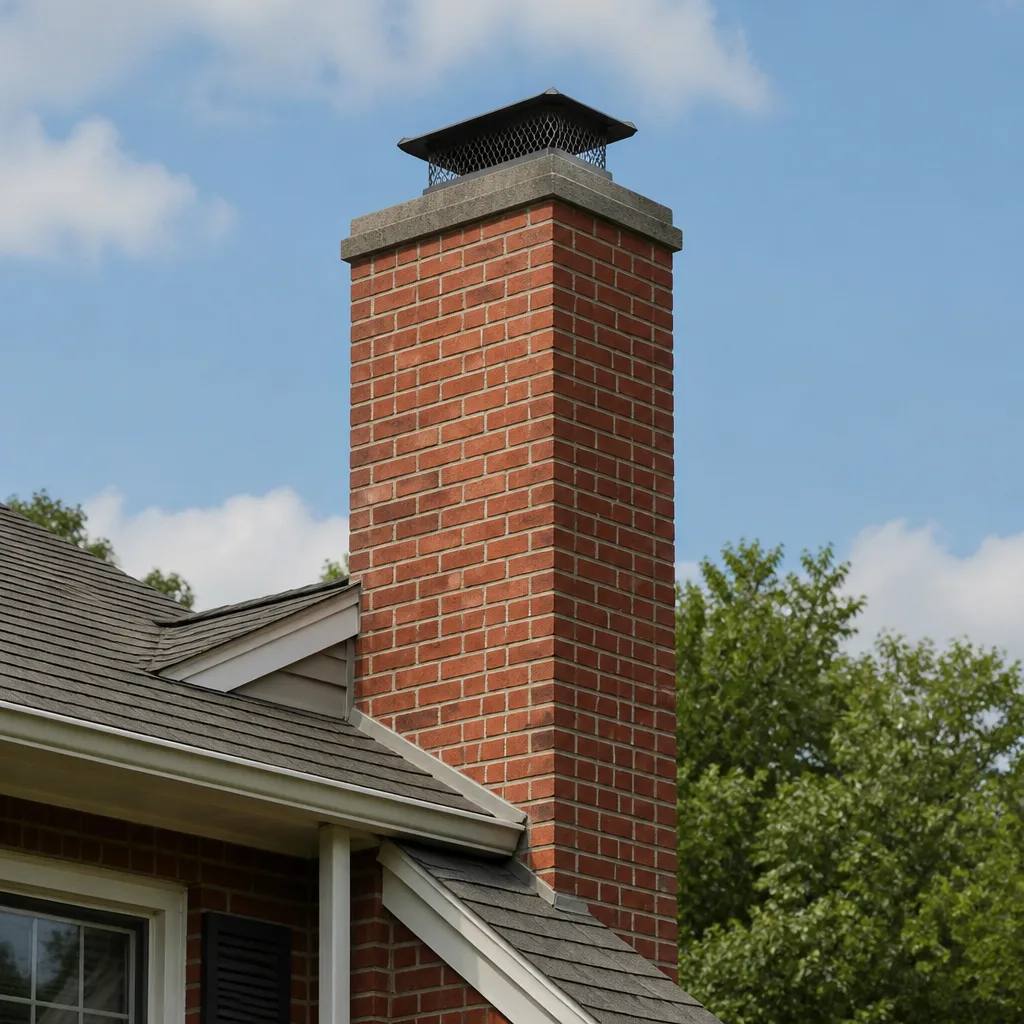
The concrete crown at the top of the chimney is the primary water management element. A proper crown overhangs the brick by at least two inches, has a drip edge underneath, and slopes away from the flue. Cracks in the crown, particularly those that run parallel to the flue or that form a pattern radiating from the center, allow water directly into the chimney structure.
In Hamden, we’ve found that crown cracks wider than one-eighth inch typically extend through the full crown thickness and will not be resolved by surface sealing. The thermal expansion differential between the concrete crown and the flue tile beneath it eventually overcomes any surface treatment. A cracked crown requires either rebuilding with proper expansion joint material or, in cases where the flue liner is also deteriorated, full chimney cap and crown replacement with a properly engineered system.
Exterior inspection checklist for Hamden homeowners:
- Walk the property after rain: note any water staining on the chimney body below the roofline
- From ground level with binoculars: scan for spalled brick faces, particularly on the south and west exposures that receive the most freeze-thaw cycling
- At the roofline: look for efflorescence patterns and use the key test on accessible mortar joints
- At the crown: note crack width, pattern, and whether the crown overhangs the brick properly
- At the cap and flashing: check for visible gaps, rust streaks, or displaced elements
What Different Creosote Stages Look and Smell Like
Creosote accumulation is the most common reason homeowners call for chimney sweeping, but not all creosote is a cleaning problem. The stage of creosote determines whether sweeping is sufficient or whether the condition has progressed to requiring rebuilding or relining. Understanding what you’re seeing and smelling from the firebox opening helps you communicate accurately with a sweep and assess whether the estimate you’re receiving matches the actual condition. For a deeper dive, read The Complete Guide to Chimney Cleaning in Hamden.
Stage 1: Sooty, Flakey Deposits
Stage 1 creosote is a light, powdery or flaky deposit, typically black or dark brown, that brushes away easily. It smells like campfire smoke when the fireplace is in use, a normal, expected odor. From the firebox opening, you’ll see a matte black coating on the firebrick and damper underside that wipes off with a finger. This is the condition that annual sweeping is designed to address.
In Hamden, where many homeowners burn seasoned hardwood from local suppliers, Stage 1 is the normal annual accumulation. A proper sweep with professional-grade brushes and vacuum equipment removes it completely. The Chimney Cleaning & Sweep in Hamden that we perform includes a post-sweep camera inspection to confirm that the flue is clean to bare tile or liner surface.
Stage 2: Shiny, Hardened Tar-Like Deposits
Stage 2 creosote has begun to condense and harden into a glossy, tar-like layer that cannot be brushed away with standard sweeping equipment. It smells acrid and sharp, a chemical odor that lingers in the house after the fire is out. From the firebox, you’ll see a dark, reflective surface that looks wet even when dry. Attempting to scrape it with a screwdriver or similar tool produces gouges but does not remove the bulk deposit.
Stage 2 is not a cleaning problem. It is a burning behavior problem that has progressed to requiring chemical treatment or mechanical removal with specialized chains or rotary equipment. More critically, Stage 2 indicates that the chimney system is operating outside proper parameters, typically because of burning unseasoned wood, restricted air supply, or a flue that is oversized for the appliance. Simply removing the deposit without addressing the underlying condition guarantees rapid recurrence. In our experience across Hamden homes, Stage 2 that has built up over multiple seasons often conceals deteriorated flue tile beneath it, revealed only during the removal process.
Stage 3: Glazed, Puffy, or Honeycombed Deposits
Stage 3 creosote is the most dangerous accumulation. It appears as a thick, hardened layer that may be glossy, puffy, or have a honeycombed structure from repeated heating and cooling cycles. It smells strongly of asphalt or roofing tar, and the odor penetrates the house even when the fireplace is cold. From the firebox, the flue opening may appear significantly narrowed, and the deposit surface may show cracks or bubbles from internal gas expansion during burning.
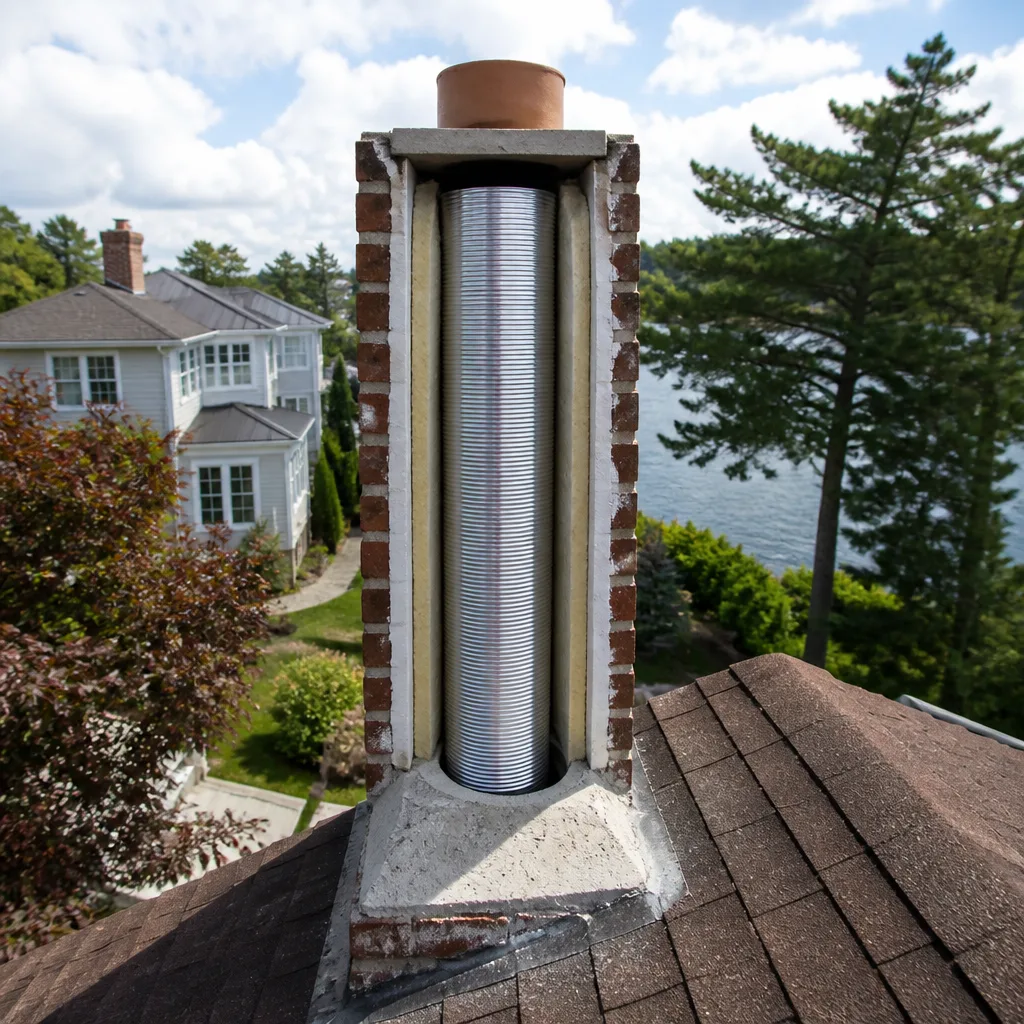
Stage 3 is a rebuilding problem, not a sweeping problem. The deposit is essentially a fuel load adhered to the flue surface, with ignition temperature significantly lower than the temperatures reached during normal fireplace operation. Removal requires aggressive mechanical or chemical methods that often damage the underlying flue tile. In Hamden’s older chimneys with clay flue tile, we’ve found that Stage 3 removal frequently reveals cracked, spalled, or missing tiles that require relining with a stainless steel system such as DuraFlex or a cast-in-place HeatShield application.
The critical distinction: a sweep who quotes standard sweeping prices for Stage 2 or Stage 3 creosote is either planning to perform incomplete removal or does not recognize the condition. A proper assessment requires camera inspection to determine the stage before work begins. Our Level-2 camera inspections end with photos you can see and a plain-English verdict, so you understand what stage exists and why the recommended approach matches it.
Five Things to Check After Any Chimney Fire
A chimney fire is often mistaken for normal fireplace noise. The characteristic sounds, a loud roaring or rumbling, sometimes accompanied by sparks or dense smoke from the top of the chimney, may last only a few minutes. Homeowners sometimes report “the fireplace was really drafting hard that night” without recognizing what occurred. Any of these events requires immediate assessment before the fireplace is used again.
- Inspect the exterior chimney for new damage. Walk outside and look for cracks in the mortar joints, displaced bricks, or a cracked or displaced chimney cap. The thermal shock of a chimney fire expands the flue tile rapidly; if the tile cracks, the resulting pressure can displace exterior masonry. In Hamden’s older chimneys with multiple wythes of brick, we’ve seen exterior cracks appear that were not present before the fire event.
- Check the damper operation and condition. Open and close the damper fully. Note if it now binds, squeals, or fails to seal. The intense heat of a chimney fire warps steel dampers and can crack cast iron units. A damper that no longer seals allows continuous air leakage and cannot function as a safety barrier.
- Look for debris in the firebox. Pieces of flue tile, fragments of creosote, or unusual ash accumulation may indicate that the flue liner has been damaged and material has fallen. Any hard, ceramic-like fragments are likely flue tile and confirm liner damage. Do not use the fireplace until a camera inspection confirms liner integrity.
- Inspect adjacent walls and ceilings for heat damage. Feel the wall surfaces near the chimney chase for warmth long after the fire is out, and look for blistered paint, discolored wallpaper, or new cracks. These indicate that heat has penetrated the chimney structure and reached the building framing, a condition that can progress to pyrolysis of combustible materials even without an open flame.
- Verify smoke detector and carbon monoxide detector function. Test all detectors in the house. A chimney fire can damage the flue liner in ways that do not produce immediate symptoms but create ongoing combustion gas leakage. Detectors that fail to test properly, or that trigger unexpectedly in the days following, require immediate professional assessment of the chimney and heating system.
After any suspected chimney fire, the fireplace must not be used until a Level-2 inspection with camera documentation confirms flue liner integrity. The Chimney Repair in Hamden that we provide includes full documentation of fire damage for insurance purposes, with photos and a written verdict that satisfies most carrier requirements.
The Three-Tier Urgency System for Every Symptom
Homeowners need a decision framework, not just a list of problems. We’ve organized every symptom into three tiers based on what we’ve observed across four decades of Hamden chimney work, as detailed in our DIY vs Professional Chimney Cleaning: The Hamden Homeowner’s Decision Guide. This system helps you decide whether to call tonight, schedule within the month, or simply note for your next annual inspection.
Tier 1: Stop Using the Fireplace Immediately
These conditions present active, immediate hazards. The fireplace and any connected heating appliances must not be operated until professional assessment is complete.
- Carbon monoxide detector triggering with correlating appliance use, particularly when the pattern points to the chimney-served equipment
- Visible gaps, cracks, or missing sections in the flue liner observed from the firebox opening or during any inspection
- Any event suspected to be a chimney fire, regardless of apparent damage
- Smoke entering the living space during normal fireplace operation, indicating blocked flue or severe downdraft condition
- Animal intrusion with nesting material visible, creating immediate fire and blockage hazard
- Structural displacement: chimney leaning, visible separation from the building, or loose masonry that could fall
Tier 2: Schedule Within 30 Days
These conditions indicate active deterioration that will progress and may become hazardous, but do not present immediate life safety risk if the fireplace is not used.
- White efflorescence patterns that are new or expanding, indicating active water intrusion
- Spalling brick faces on the chimney exterior, particularly if accelerating
- Mortar erosion exceeding one-quarter inch on multiple joints above the roofline
- Damper that sticks, won’t seal, or shows visible corrosion or warping
- Musty odors in upper rooms during humid weather, indicating water penetration into the chase
- Crown cracks wider than one-eighth inch, or cracks that show evidence of water penetration
- Stage 2 creosote accumulation confirmed by visual or odor indicators
Tier 3: Note for Annual Inspection
These conditions warrant monitoring and documentation but do not require immediate action if the fireplace is otherwise performing normally.
- Minor soot accumulation consistent with normal seasonal use, without odor or performance change
- Slight draft variation with wind direction, common in Hamden’s exposed hilltop locations
- Hairline crown cracks without evidence of water intrusion, to be monitored for progression
- Minor mortar erosion less than one-quarter inch, without associated spalling or efflorescence
- Firebrick in the firebox with minor surface cracking, without displacement or falling material
- Chimney cap with surface rust but intact structure and mesh
The boundary between Tier 2 and Tier 3 often depends on age and context. A hairline crown crack on a ten-year-old chimney with a properly constructed crown is Tier 3. The same crack on a sixty-year-old chimney in Hamden’s freeze-thaw climate, where the crown was poured without proper reinforcement or overhang, is Tier 2 because the probability of rapid progression is high. Our inspections include this contextual assessment, documented with photos you can see and a plain-English verdict.
Common Mistakes to Avoid
- Assuming a clean firebox means a clean flue. The firebox is visible and easily brushed; the flue liner above is not. We’ve inspected Hamden chimneys where the firebox was spotless and the flue above was coated with Stage 3 creosote. The firebox condition has no diagnostic value for the flue condition.
- Treating efflorescence as cosmetic. Power-washing or brushing away white deposits without addressing the water source accelerates deterioration by driving water deeper into the masonry. Efflorescence is a symptom of a water management failure that requires structural repair.
- Using the fireplace “just once more” after a suspected chimney fire. The thermal shock of even a small chimney fire can crack flue tile in ways that are not visible from below. That “one more fire” can be the one that allows combustion gases into wall cavities or ignites pyrolyzed framing.
- Hiring based on the lowest sweep price without confirming what’s included. A low-priced sweep that does not include camera inspection cannot verify flue condition. In Hamden’s competitive market, we’ve seen homeowners pay for sweeping that left Stage 2 creosote in place because the sweep lacked the equipment or knowledge to recognize it.
- Ignoring neighborhood-specific risk factors. Homes in Hamden’s low-lying areas near the Mill River experience higher ambient humidity that accelerates mortar deterioration. Homes on exposed ridges, such as parts of Mount Carmel, face more severe wind-driven rain and freeze-thaw cycling. Generic maintenance schedules don’t account for these local conditions.
- Delaying repair because “the chimney has been like that for years.” Chimney deterioration is nonlinear. Years of slow mortar erosion can reach a tipping point where freeze-thaw cycling opens rapid pathways for water, and the condition degrades dramatically in a single winter. The “it’s been fine” reasoning fails precisely when the failure mode accelerates.
- Accepting a repair recommendation without photo evidence. Any condition that warrants repair should be visible to you. A sweep who describes serious damage but cannot or will not show you the camera image is asking for trust that hasn’t been earned. Our Level-2 inspections produce photos you can see, with the technician explaining each image in plain English before any work is authorized.
When to Call a Professional
Call a certified chimney professional when any Tier 1 symptom appears, when Tier 2 symptoms are new or worsening, or when you cannot confidently classify a symptom yourself. Not sure who to trust? Follow How to Hire a Chimney Cleaning Contractor in Hamden: A Step-by-Step Guide. The cost of an inspection is modest compared to the cost of delaying, and a proper inspection provides documentation that protects your home value and insurance position.
Hearthstone Chimney Co. offers free estimates in Hamden. Our Level-2 camera inspections include photos you can see and a plain-English verdict. We’re background-checked, uniformed, and complete most jobs in a single visit. No-hassle upfront pricing means the number on the estimate is the number on the invoice. Call (475) 369-1614 to schedule. A live person answers every call, 24 hours a day, 7 days a week.
Frequently Asked Questions
A standard chimney sweep and Level-1 inspection in Hamden typically ranges from $150 to $300, depending on accessibility, flue configuration, and the amount of creosote accumulation. A Level-2 inspection with camera documentation, recommended for real estate transactions, suspected damage, or any Tier 1 or Tier 2 symptom, ranges from $250 to $450. Our $89 Seasonal Tune-Up, available during designated periods, includes basic sweep and inspection for qualifying systems. Call (475) 369-1614 for an exact quote, estimates are free.
You need a new liner when the existing liner is damaged, improperly sized, or absent, and when the appliance served requires a listed liner system for safe operation. Cracked flue tile, missing tile sections, or a chimney with no liner at all are not conditions that can be managed with cleaning or repair. In Hamden’s older homes, we’ve found unlined chimneys serving modern, high-efficiency appliances that cannot draft safely without a properly sized stainless steel liner such as DuraFlex or a cast-in-place HeatShield application. The decision should always be based on camera inspection evidence you can see, not on a verbal recommendation. Call (475) 369-1614 for a documented assessment.
The National Fire Protection Association recommends annual inspection, with sweeping as needed based on creosote accumulation. In Hamden, where the heating season runs from October through April and many homeowners supplement with wood burning, annual sweeping is the prudent standard for frequently used fireplaces. Oil and gas flues should be inspected annually for soot buildup, corrosion, and proper draft, though they may not require sweeping every year if operating cleanly. The specific interval depends on fuel type, burning habits, and appliance efficiency. A camera inspection reveals whether the interval can be extended or should be shortened. Call (475) 369-1614 to discuss your specific system.
Skipped maintenance leads to creosote accumulation that increases fire risk, water intrusion that degrades masonry and framing, and liner deterioration that allows combustion gases into living spaces. In Hamden’s climate, the progression is typically faster than homeowners expect because freeze-thaw cycling accelerates masonry damage once water penetration begins. A chimney that would have required modest repointing after five years of neglect often requires partial rebuild after seven. The cost multiplier between maintenance and repair is substantial, but the safety multiplier is more significant. Carbon monoxide exposure from a degraded flue system can occur without warning symptoms. Call (475) 369-1614 to schedule before the next burning season.
A homeowner can perform the exterior visual inspection described in this guide, checking for spalling, efflorescence, mortar erosion, and crown condition from ground level or a safe ladder position. Interior flue inspection requires specialized camera equipment and training to interpret what the camera reveals. We do not recommend that homeowners attempt to access the flue or roof-level chimney components themselves. The fall risk from roof access is substantial, and misinterpretation of flue conditions is common without experience. Our Fireplace Services in Hamden include comprehensive inspection with documentation. Call (475) 369-1614 to schedule professional assessment.
The 90-Day Done Right Promise means that if any work we perform is not right, we make it right, backed in writing with no paperwork and no arguing. It is governed by our K.E.Y.S. values code: Krafted right, Every time, Your home first, Standing behind it. The promise applies to all work performed by Hearthstone Chimney Co. technicians and is in effect for 90 days from completion. We do not require you to prove the defect, only to notify us. This promise reflects our intention to be serving Hamden for decades to come, a company that plans to be in town in thirty more years acts accordingly. Call (475) 369-1614 with any concern.
Hamden follows the Connecticut State Building Code, which adopts the International Residential Code with state amendments. Chimney repairs and rebuilds require permits when structural elements are modified or when the flue liner is replaced. The code requires that liners be listed for the appliance served and properly sized. In Hamden’s historic districts, exterior chimney modifications may also require review for compatibility with historic character. We handle permit applications as part of our repair and rebuild services, and we work exclusively with professional-grade materials from DuraFlex, HeatShield, Gelco, Olympia Chimney, Famco, and Copperfield that meet or exceed code requirements. Call (475) 369-1614 to discuss your specific project.
The Bottom Line
Chimney warning signs are indirect by nature, a musty bedroom, a sticking damper, a white stain on brick that seems to return each spring. The skill is in reading these symptoms correctly: knowing which mean stop tonight, which mean schedule this month, and which simply mean note for the annual visit. In Hamden’s older housing stock, with chimneys built across a century of varying construction practices, there is no substitute for systematic inspection with camera documentation and a plain-English verdict. The Hearthstone Chimney Co. home page describes our full range of services, or call (475) 369-1614 to speak with a live person any hour of any day. We’ll be there when we say, we’ll show you what we find, and we’ll stand behind the work. Done right, and we stand behind it.
Written by Russell Haines, Owner at Hearthstone Chimney Co., serving Hamden since 2014.