
Last updated September 10, 2026
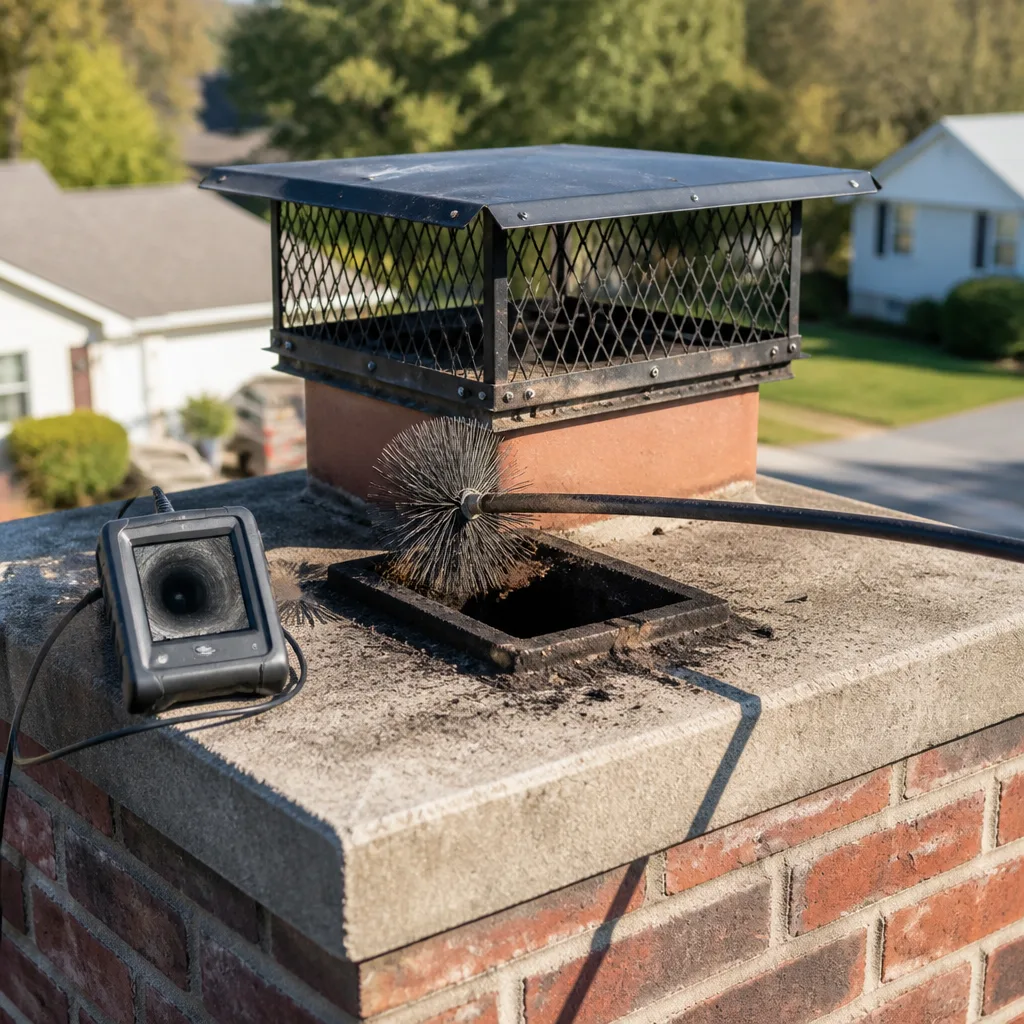
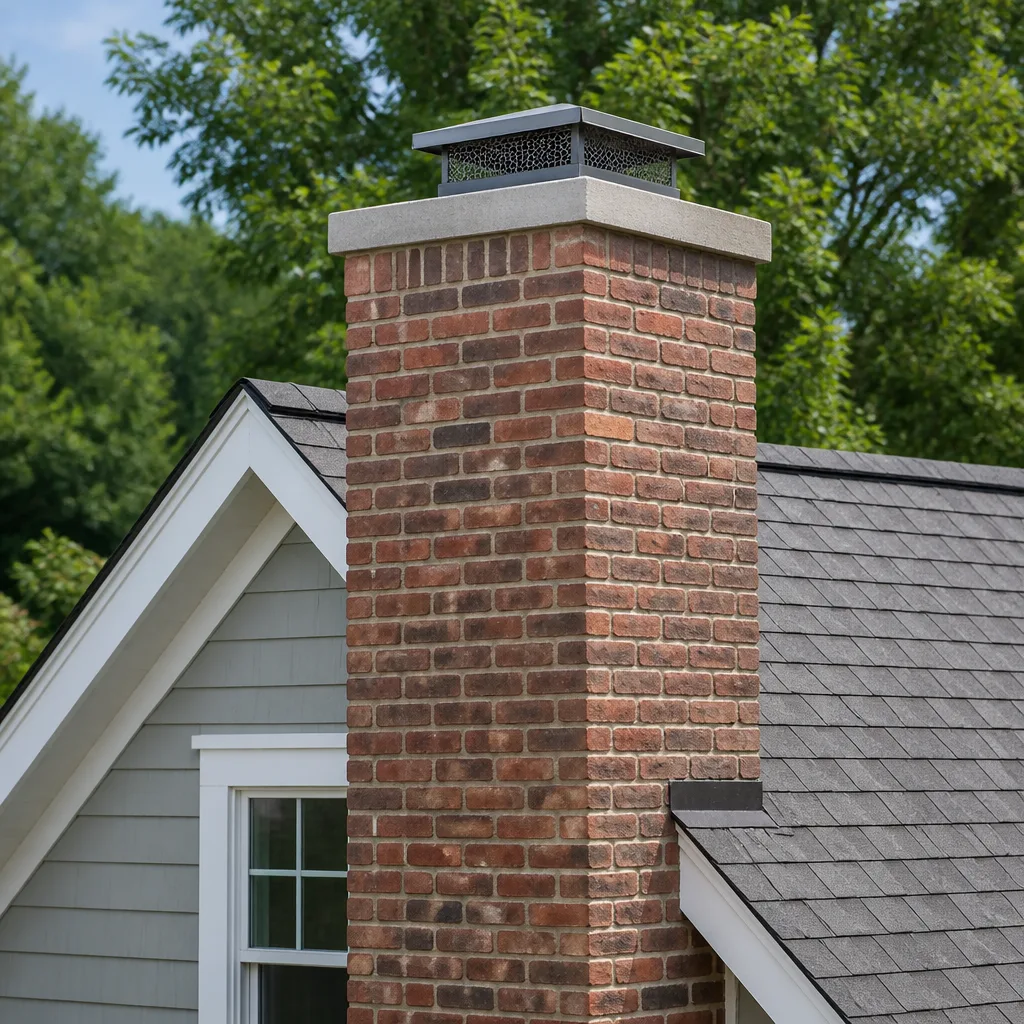
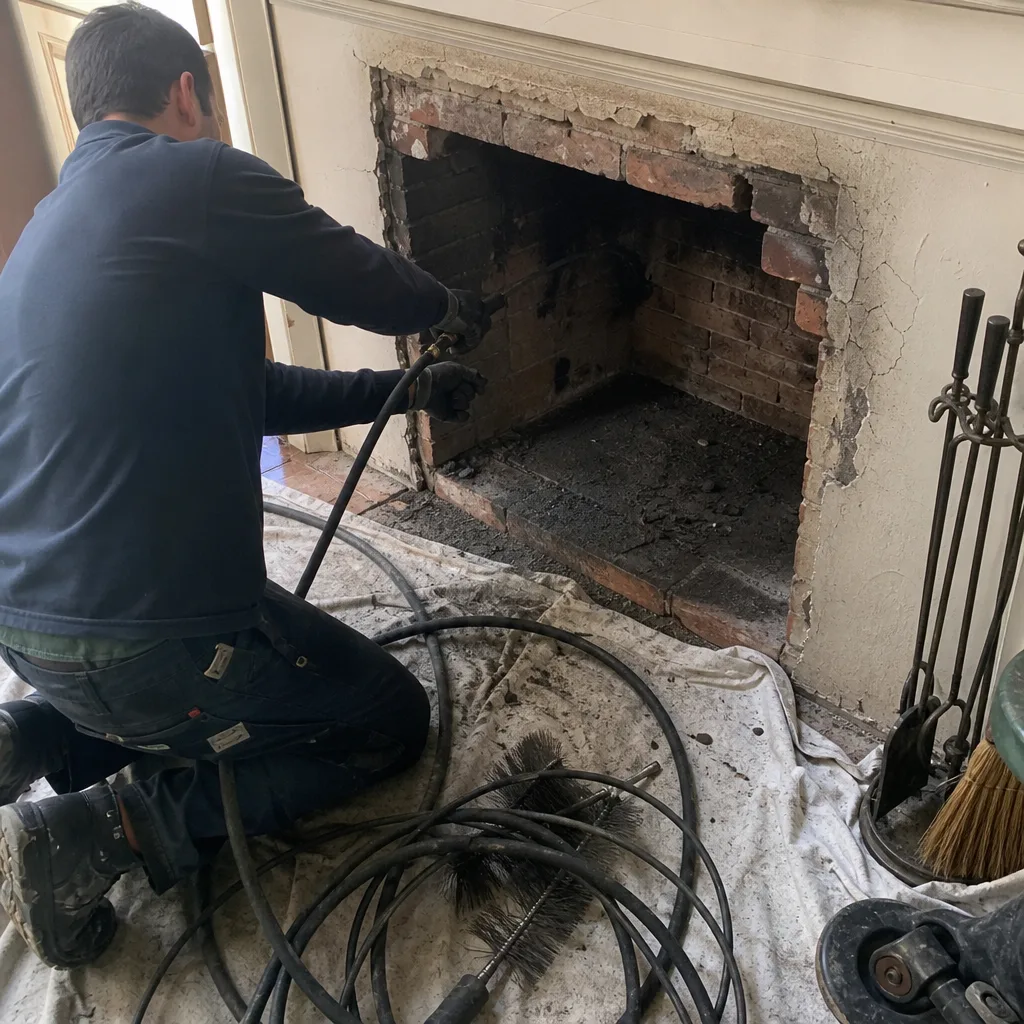
Level 1 sweep and inspection to the NFPA 211 annual standard - flue, crown, cap, and flashing checked and photographed
Chimney sweep logs do not sweep chimneys. They loosen some creosote - which then falls where a brush and vacuum still have to collect it.
 Before
 After
After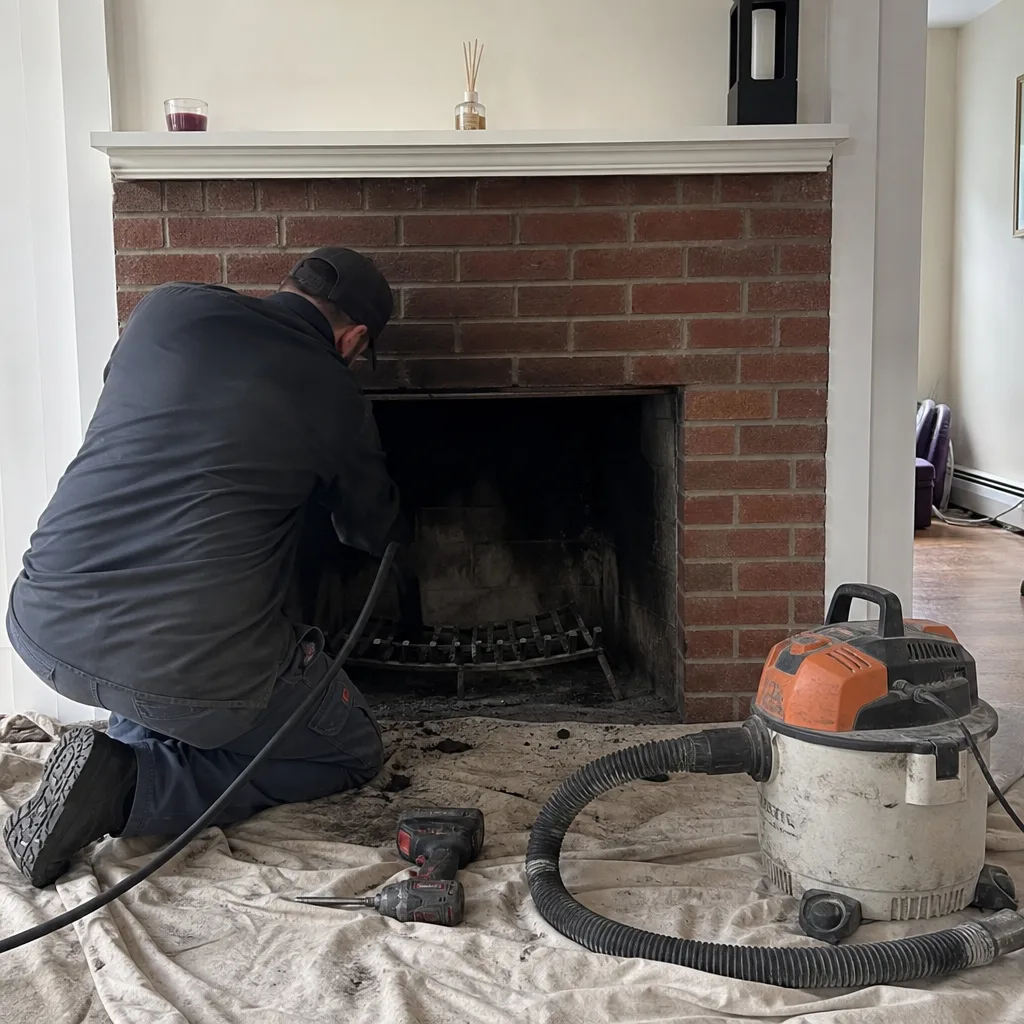 Before
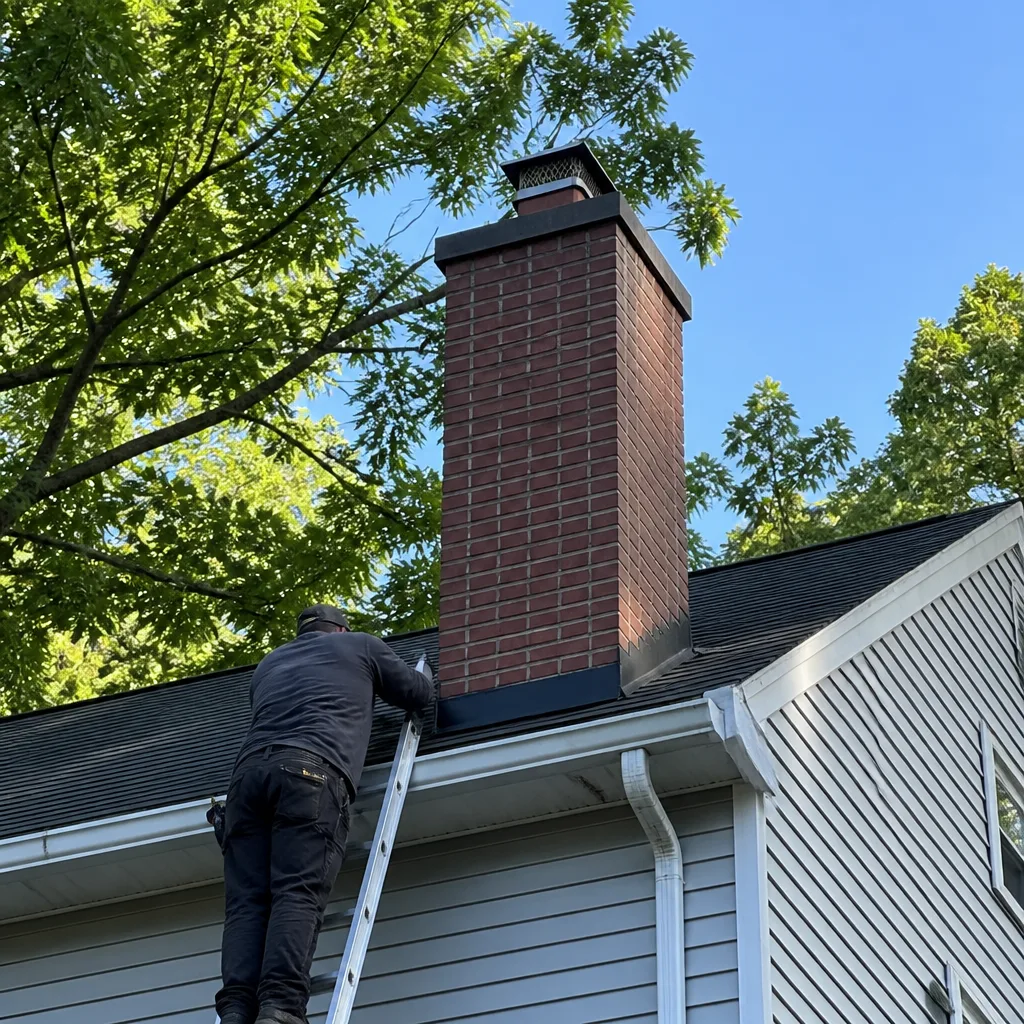 After
After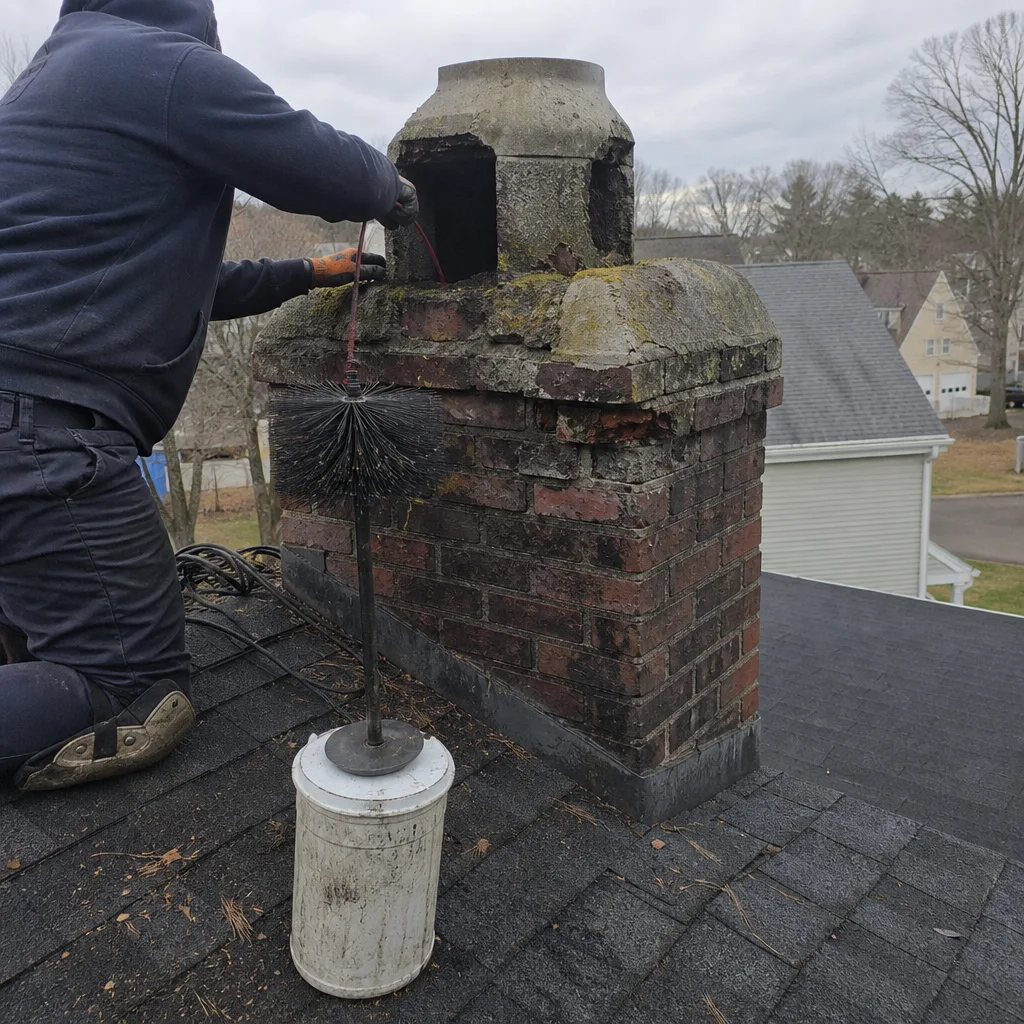 Before
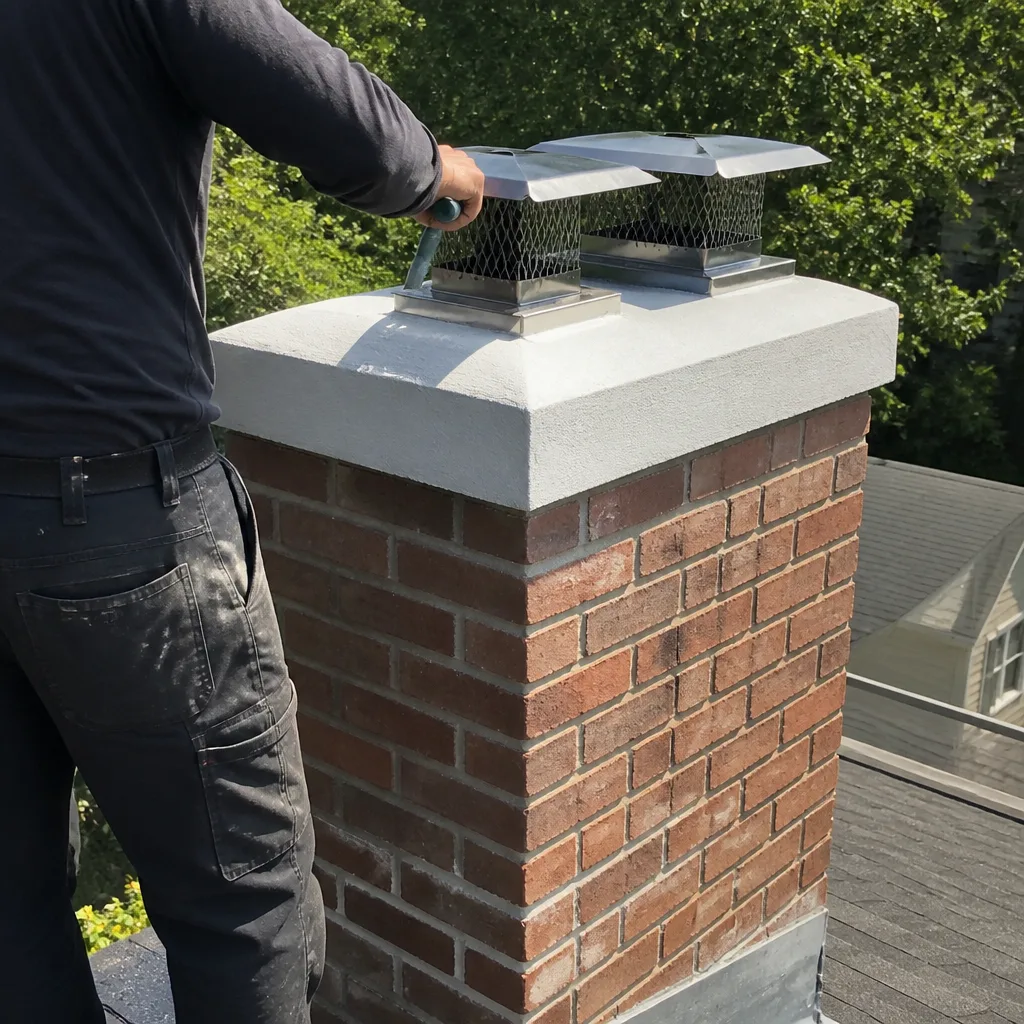 After
AfterThe Complete Guide to Chimney Cleaning in Hamden
The CSIA reports that 27% of home heating fires involve chimneys - and the majority trace back not to missed cleanings, but to incomplete ones where a technician cleaned the flue but ignored the firebox, smoke chamber, or liner joints. In Hamden, where neighborhoods like Spring Glen, Whitneyville, and Mount Carmel are filled with pre-1970 homes, this incomplete approach is especially risky. Older flue tiles, ghost liners from oil-to-gas conversions, and clay-heavy Connecticut soil that accelerates freeze-thaw damage mean a quick brush-and-go can leave dangerous conditions untouched. This guide maps the full chimney system so Hamden homeowners know what thorough cleaning actually involves, from the hearth to the cap, and complements our seasonal chimney cleaning care for Hamden resources.
Quick Answer
Professional chimney cleaning in Hamden, Connecticut typically costs between $189 and $349 for a standard Level 1 sweep with inspection, and should include the firebox, smoke chamber, flue liner, and a photo-documented condition report - though as our DIY vs Professional Chimney Cleaning guide explains, the true cost of cutting corners can be far higher. Most Hamden homes built before 1970 need a Level 2 camera inspection to check for cracked flue tiles, liner joint gaps, and creosote pockets in the smoke chamber that standard brushing misses. A complete cleaning takes 45 to 90 minutes and should leave you with photos you can see and a plain-English verdict on whether your system is safe to use.
Table of Contents
- What Complete Chimney Cleaning Actually Includes
- Why Hamden’s Older Housing Stock Changes Everything
- Level 1 vs. Level 2 vs. Level 3 Inspection: Which One Do You Need?
- How to Read a Photo-Documented Inspection Report
- The Hidden Problem: Oil-to-Gas Conversions and Ghost Liners
- The Smoke Chamber: The Most Skipped, Most Dangerous Zone
- How Hamden’s Freeze-Thaw Cycles Attack Your Chimney
- What Chimney Cleaning Should Cost in Hamden
What Complete Chimney Cleaning Actually Includes
A proper chimney cleaning is not a single action. It is a systematic inspection and removal of combustible deposits across every zone of the chimney system. In our 42 years of work in Connecticut, we’ve seen too many homeowners pay for a “sweep” that consisted of a rotating brush run up the flue and nothing more. That leaves four out of five zones unchecked.
Here is what complete cleaning covers:
- The firebox. This is where the fire burns. Ash, cracked firebrick, and deteriorated mortar joints collect here. We remove all ash and debris, inspect the firebrick for spalling (surface flaking from heat stress), and check the grate and ash dump for proper function.
- The smoke chamber. The area above the damper and below the flue liner. This is where smoke mixes and is funneled into the flue. It is also where creosote forms thick, porous deposits that ignite easily. Most cleaning companies skip this entirely because it requires hand work in a tight space.
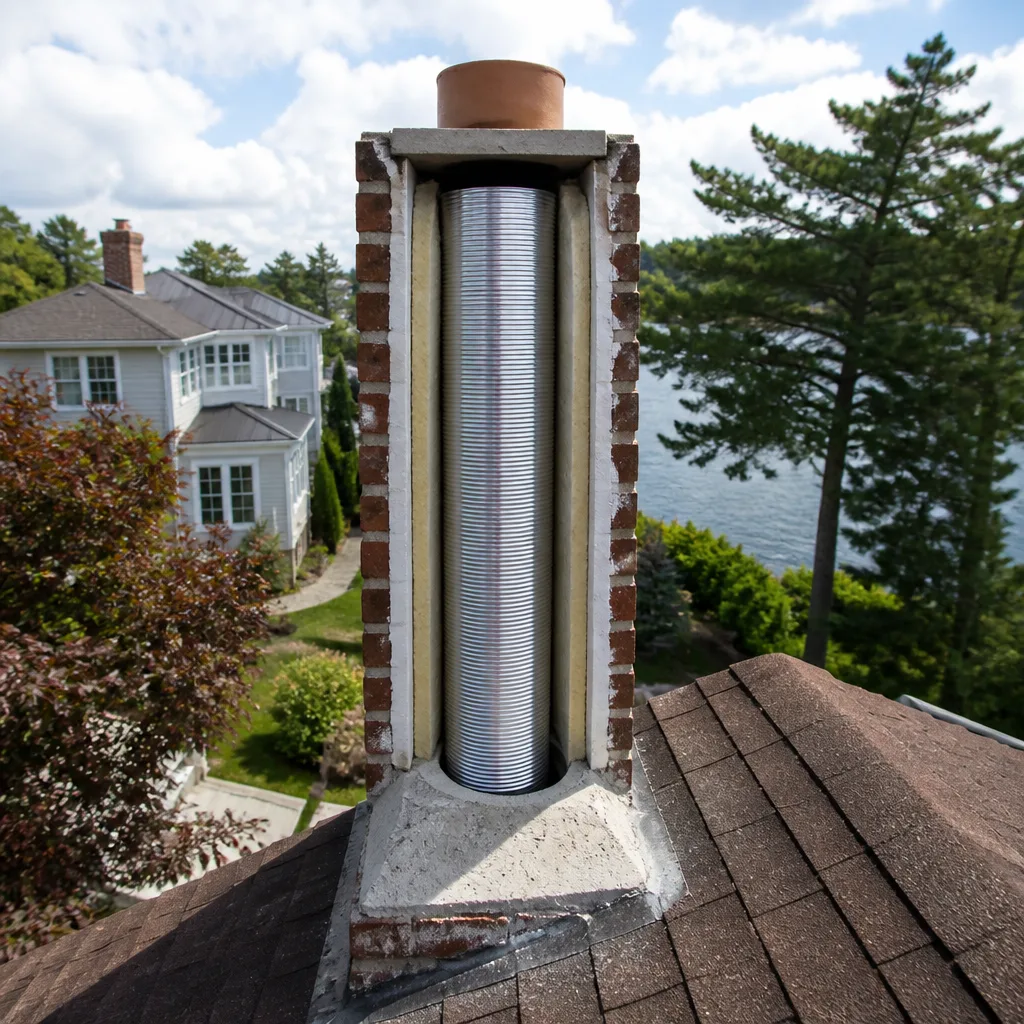
- The flue liner. The vertical passage that carries smoke and gases out of the home. We use rotating brushes sized to your liner’s diameter, combined with industrial HEPA vacuum collection, to remove glazed creosote and soot without damaging clay tiles or stainless steel.
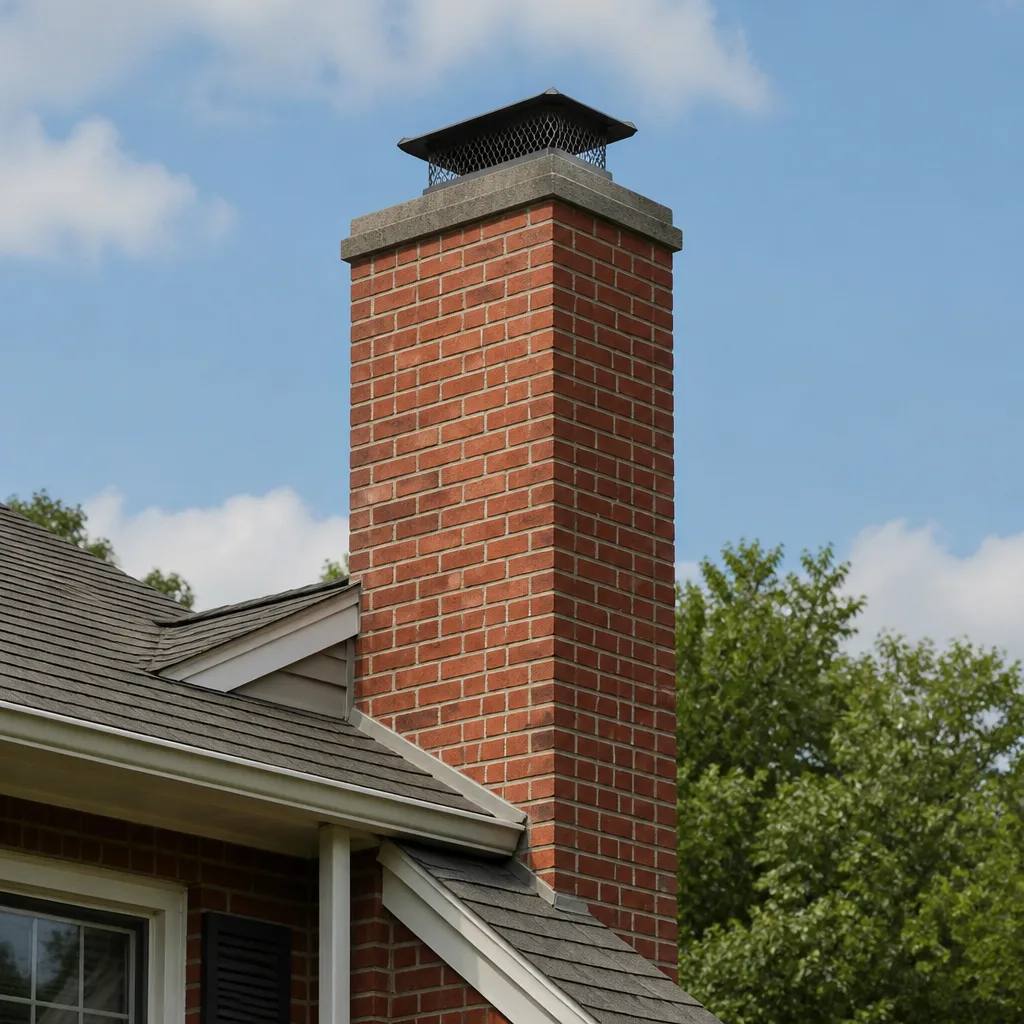
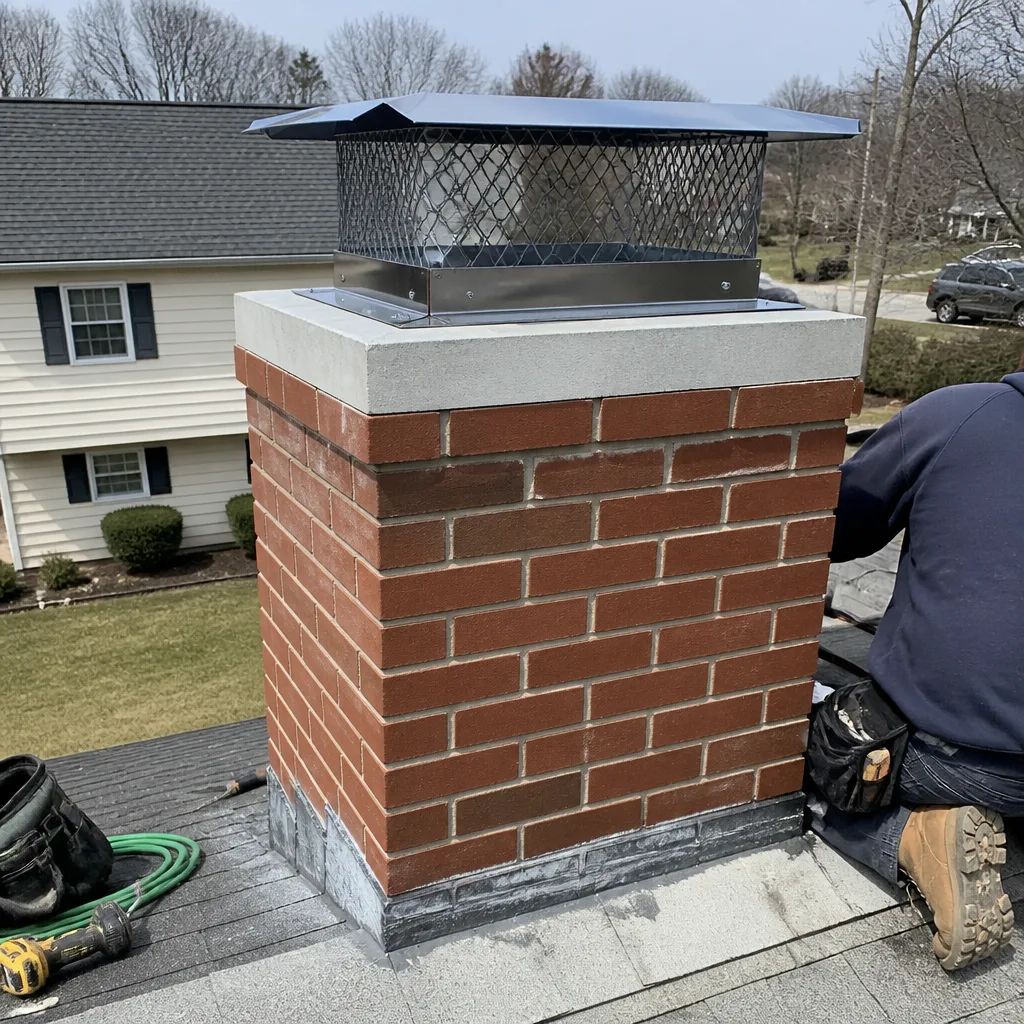
- The chimney crown. The concrete or mortar top that sheds water away from the flue. We inspect for cracks, deterioration, and proper overhang. A cracked crown lets water into the chimney structure, causing freeze-thaw damage every winter.
- The chimney cap and flashing. The cap keeps rain, animals, and debris out of the flue. The flashing seals the joint between chimney and roof. Both are inspected for rust, separation, and proper clearance.
Each zone connects to the others. A cracked crown lets water into the flue liner. A damaged liner lets heat into the smoke chamber. Creosote in the smoke chamber can ignite and damage the liner from below. Cleaning one zone while ignoring the others is like changing one tire on a car with a bent frame.
At Hearthstone Chimney Co. home, our sweeps document every zone with photos and a plain-English verdict. You see what we see. There is no trust-me language, no pressure to buy services you cannot verify.
Why Hamden’s Older Housing Stock Changes Everything
Hamden’s residential neighborhoods were largely built between 1920 and 1970. Drive through Spring Glen, Whitneyville, or Mount Carmel and you’ll see the pattern: center-hall Colonials, Cape Cods, and raised ranches with original masonry fireplaces and chimneys that have seen forty to eighty years of heating seasons.
This age matters for three specific reasons that affect how your chimney must be cleaned and inspected.
Original clay flue tiles become brittle with thermal cycling. Every fire heats the tiles; every night they cool. Over decades, this expansion and contraction causes hairline cracks that standard brushing can enlarge if done aggressively. In Hamden’s older homes, we regularly see flue tiles that were cracked by a previous sweep who used an oversize brush or excessive force. A cracked flue tile is not always visible from below. It requires camera inspection to identify.
Mortar joints between tiles deteriorate. The refractory mortar used in original construction was never designed to last a century. It erodes, creating gaps where creosote accumulates and where combustion gases can leak into the chimney structure. In a home on Circular Avenue in Whitneyville, we found liner joints so deteriorated that smoke was seeping into a bedroom wall cavity. The homeowner had no idea until our camera showed the gap.
Original construction standards were lower. Many Hamden chimneys were built without liners at all, or with single-wythe brick (one brick thick) that offers little insulation or protection. These chimneys require more careful inspection and more frequent evaluation than modern construction.
The clay-heavy soils in Hamden and the broader Quinnipiac Valley also contribute to foundation settling, which can stress chimney structures and create separation between the chimney and the house. We check for this structural movement during every inspection, because a leaning or separated chimney is a safety issue that no amount of flue brushing will address.
For homeowners in these older neighborhoods, we recommend a Chimney Cleaning & Sweep in Hamden that includes Level 2 camera inspection at minimum, not the basic Level 1 visual check that suffices for newer construction.
Level 1 vs. Level 2 vs. Level 3 Inspection: Which One Do You Need?
The Chimney Safety Institute of America (CSIA) defines three levels of inspection. Understanding the difference protects you from paying for more than you need, or worse, paying for less and missing a serious problem.
Level 1 Inspection
A visual examination of readily accessible portions of the chimney exterior, interior, and connecting appliance. No tools are used to open or remove components. This is appropriate when:
- The appliance or venting system is not being changed
- You are continuing to use the same fuel type
- The chimney has been regularly maintained with no known problems
In Hamden, a Level 1 is rarely sufficient for homes built before 1970, because the “readily accessible” standard does not include camera views of flue liner condition or smoke chamber deposits.
Level 2 Inspection
A more detailed examination that includes everything in Level 1, plus inspection of accessible attics, crawl spaces, and basements, and video scanning of the flue liner interior. This is required when:
- Any change is made to the appliance or fuel type
- The home is being sold or transferred
- There has been a chimney fire, weather damage, or seismic event
- The chimney has not been inspected in over a year
For Hamden homeowners, we consider Level 2 the baseline standard. It is the only level that reveals cracked flue tiles, liner joint gaps, creosote buildup patterns, and animal nesting in the flue. Our Level 2 inspections end with photos you can see and a plain-English verdict on each zone of the system.
Level 3 Inspection
An inspection that includes removal of components or building materials to gain access to concealed areas. This is required only when a Level 1 or 2 inspection reveals a hazard that cannot be fully evaluated without access to hidden construction.
Examples include removing drywall to inspect chimney framing after a fire, or dismantling a crown to evaluate the top of a masonry flue. Level 3 is not routine maintenance. It is diagnostic, performed when specific evidence points to a concealed problem.
Our recommendation for Hamden: If your home was built before 1970, if you have changed from oil to gas heat, if you are buying a home, or if you have not had a camera inspection in the past two years, schedule a Level 2. See How to Hire a Chimney Cleaning Contractor in Hamden for help choosing the right professional. It is the inspection that tells you what is actually happening inside your chimney, not what appears to be happening from the hearth.
How to Read a Photo-Documented Inspection Report
A proper inspection report should be something you can understand without a dictionary and trust without taking the technician’s word. Here is what to look for, zone by zone, and what each finding means for your safety and your budget.
Firebox Zone
What clean looks like: Ash and debris removed. Firebrick surfaces intact, no spalling or missing mortar. Grate sits level. Ash dump door opens and closes. Hearth extension meets or exceeds 18 inches of noncombustible material in front of the opening.
Yellow flags: Minor firebrick spalling, small mortar gaps. These can be monitored or repaired with refractory mortar. Not urgent unless deterioration is accelerating.
Red flags: Missing firebrick, cracked hearth, damaged ash dump. These require repair before the fireplace is used again.
Smoke Chamber Zone
What clean looks like: Smooth parged surface, no creosote deposits, proper slope funneling smoke into the flue. Damper operates freely and seals when closed.
Yellow flags: Rough parging, minor creosote staining. Should be cleaned and possibly resurfaced with a product like HeatShield, which we apply to smooth the chamber and improve draft.
Red flags: Thick creosote deposits, unparched corbelled brick, gaps at the damper frame. These are fire hazards and draft problems that require immediate attention.
Flue Liner Zone
What clean looks like: Uniform surface, no cracks, no gaps at joints, no creosote glazing. Proper sizing for the appliance being vented.
Yellow flags: Minor staining, slight joint gaps. Monitor annually, consider repair if gaps widen.
Red flags: Cracked tiles, spalled surfaces, open joints, improper sizing. These require liner repair or replacement. We use stainless steel liners from Olympia Chimney and DuraFlex, sized precisely to your appliance.
Crown and Cap Zone
What clean looks like: Intact crown with proper slope and overhang, functional cap with intact mesh, no rust or debris accumulation.
Yellow flags: Minor crown cracks, slightly rusted cap. Seal cracks with crown sealant, replace cap if rust is advancing.
Red flags: Deteriorated crown, missing or damaged cap, improper flashing. Water intrusion causes accelerated deterioration of the entire chimney structure.
A report without photos is a report you cannot verify. At Hearthstone, every Level 2 inspection includes dated, labeled photographs of each zone, with annotations explaining what you are seeing. You receive the report by email, and we review it with you by phone or in person if you prefer. No surprises, no trust-me.
The Hidden Problem: Oil-to-Gas Conversions and Ghost Liners
Beginning in the 1970s and continuing through the 1990s, thousands of Hamden homes converted from oil to natural gas heating. These conversions were often done by HVAC contractors who focused on the boiler or furnace and paid little attention to the chimney that vented it.
The result is a category of problem we call “ghost liners” - oversized flues that once served oil equipment but now vent lower-temperature gas appliances. Here is why this matters for cleaning and safety.
Oil combustion produces higher flue gas temperatures that help carry moisture out of the chimney. Gas combustion produces lower temperatures and more water vapor. When a gas appliance vents into a flue sized for oil, the gases move slowly and cool quickly. Moisture condenses on the flue walls. That moisture mixes with combustion byproducts to form acidic condensate that deteriorates clay tiles and mortar joints.
Even when the fireplace is not being used, this moisture problem continues in the heating season. We have inspected Hamden chimneys where the flue liner was visibly deteriorated from condensate damage, yet the homeowner assumed the chimney was fine because they rarely used the fireplace.
The other common issue is the abandoned oil vent connection. When the oil burner was removed, the thimble (the opening where the vent pipe entered the chimney) was often left open or poorly sealed. This creates a draft problem, a potential carbon monoxide pathway, and an entry point for moisture and pests.
During cleaning and inspection, we check for:
- Flue sizing relative to the connected appliance (per NFPA 211 standards)
- Condition of abandoned thimbles and vent connections
- Evidence of condensate staining or deterioration
- Proper liner material for gas venting (stainless steel, not clay tile, for many installations)
In a 1960s ranch on Ridge Road, we found a gas boiler venting into an unlined, oversized flue with a deteriorated oil thimble still open to the basement. The homeowner had lived there fifteen years and never known. Our camera inspection revealed the problem, and we installed a properly sized stainless steel liner with a sealed thimble plate.
If your Hamden home was converted from oil to gas and the chimney was never evaluated for proper venting, schedule a Level 2 inspection. The cleaning is secondary until we know the chimney is properly configured for the appliance it now serves.
The Smoke Chamber: The Most Skipped, Most Dangerous Zone
The smoke chamber is the area above the fireplace damper and below the flue liner. It is shaped like an inverted funnel, designed to compress smoke and gases and direct them into the narrow flue. In most Hamden homes built before 1970, this chamber is constructed of corbelled brick - brick stepped inward to form the funnel - and may or may not have been parged (coated with smooth mortar) to create an even surface.
Here is why this zone matters more than most homeowners realize, and why most cleaning companies skip it entirely.
Creosote accumulates heavily in smoke chambers. The turbulent airflow, cooler temperatures, and rough brick surfaces create ideal conditions for creosote deposition. Because the chamber is above the damper and below the flue, it is not reached by standard flue brushes. It requires hand work with specialized tools, often in cramped space.
Rough or corbelled surfaces create creosote pockets. These are thick, porous deposits that ignite easily and burn intensely. A smoke chamber fire can reach temperatures that damage the flue liner above and crack the firebox below.
The smoke chamber is the path for carbon monoxide if the flue is blocked. A deteriorated or improperly constructed smoke chamber can allow gases to spill into the home even when the flue is partially open.
NFPA 211 requires that smoke chambers be “parged smooth” to reduce turbulence and creosote accumulation. Most older Hamden chimneys do not meet this standard. During our inspections, we evaluate smoke chamber condition and recommend parging when needed.
We use HeatShield for smoke chamber resurfacing. It is a cerfractory sealant (ceramic-refractory) that is applied to create a smooth, insulated surface that improves draft and reduces creosote accumulation. The application is done from below, without dismantling the chimney, and is appropriate for chambers that are structurally sound but rough or deteriorated.
A smoke chamber with thick creosote deposits is not a maintenance item to defer. It is a fire hazard that should be addressed before the next burning season. If your previous chimney sweep did not mention your smoke chamber, ask why. Or better, call us for a Chimney Repair in Hamden evaluation that includes this critical zone.
How Hamden’s Freeze-Thaw Cycles Attack Your Chimney
Connecticut’s climate is hard on masonry. Hamden sees average winter lows in the teens, with frequent freeze-thaw cycles as temperatures fluctuate above and below 32 degrees. Every cycle is an expansion and contraction event that stresses mortar, brick, and concrete.
The chimney is especially vulnerable because it is the highest point of the house, exposed on all sides, and often constructed with materials that absorb moisture.
Here is the mechanism: Rain or melting snow enters small cracks in the crown, mortar joints, or brick faces. When temperatures drop, that water freezes and expands by about 9%. The expansion forces the crack wider. The next thaw allows more water to enter. The next freeze widens it further. Over a single winter, a hairline crack can become a structural gap.
Hamden’s clay-heavy soils compound this problem. Clay expands when wet and contracts when dry, causing foundation movement that stresses chimney structures. We see more chimney separation and leaning in Hamden and the broader New Haven County area than in regions with sandier, more stable soils.
What this means for cleaning and maintenance:
- Annual inspection is not conservative; it is necessary to catch crown and mortar deterioration before freeze-thaw cycles accelerate it
- Cleaning should include evaluation of the crown as a water-shedding component, not just the flue as a venting component
- Cap installation or replacement is preventive maintenance that pays for itself by keeping water out of the flue
- Any crack or gap found in fall should be repaired before winter freeze-thaw begins
We install caps from Gelco and Famco, selected for proper mesh sizing, durable construction, and compatibility with your flue dimensions. A proper cap is not decorative. It is a functional component that extends chimney life by years.
In our experience, Hamden homeowners who defer crown and cap maintenance end up needing rebuilds that cost ten times what preventive care would have. The $200 cap you delay becomes the $3,000 rebuild you cannot avoid.
What Chimney Cleaning Should Cost in Hamden
Pricing for chimney cleaning in Hamden varies with the scope of work, the condition of the system, and the level of inspection included. Be wary of prices that seem too low to cover proper time and documentation. Be equally wary of prices that seem inflated without clear justification.
Here is what you should expect to pay for standard services in the Hamden market:
| Service | Typical Range | What It Includes |
|---|---|---|
| Level 1 sweep and inspection | $189 - $249 | Visual inspection, flue brushing, firebox cleaning, basic debris removal |
| Level 2 sweep with camera inspection | $289 - $349 | Everything in Level 1, plus video flue scan, smoke chamber evaluation, photo report |
| Smoke chamber parging (HeatShield) | $800 - $1,400 | Resurfacing of rough or deteriorated smoke chamber to NFPA 211 standard |
| Stainless steel liner installation | $2,800 - $4,500 | Insulated or uninsulated liner, properly sized, with warranty |
| Crown repair or rebuild | $450 - $1,200 | Crack sealing, partial rebuild, or full crown replacement with proper slope and overhang |
| Cap installation | $225 - $475 | Properly sized cap with mesh, installed with secure mounting |
These ranges reflect Hamden’s market and our experience with local homes. Your actual cost depends on chimney height, accessibility, liner diameter, and the specific condition we find. We provide no-hassle upfront pricing - the number on the estimate is the number on the invoice. No surprises.
Hearthstone’s standing offers include $50 off any repair over $250, a free second opinion on any written estimate, an $89 seasonal tune-up, and a permanent 5% senior and veteran discount. These are not limited-time promotions. They are our standard pricing for homeowners who value a square deal.
For Fireplace Services in Hamden that include cleaning, inspection, and repair as needed, call us at (475) 369-1614. We’ll give you an exact quote for your specific chimney, not a generic range.
Common Mistakes to Avoid
- Hiring based on the lowest price alone. In Hamden, we’ve cleaned up after $99 sweeps that left creosote in the smoke chamber, cracked flue tiles with a too-large brush, and never produced a written report. The money saved is lost many times over when problems are missed.
- Assuming no fireplace use means no maintenance needed. Even unused chimneys deteriorate from moisture, freeze-thaw, and animal intrusion. Gas appliances vent through these chimneys year-round. Annual inspection is warranted regardless of fireplace frequency.
- Accepting a verbal report with no photos. A technician who says “looks fine” without documentation is asking for trust they have not earned. Insist on dated, labeled photographs of each zone.
- Ignoring the smoke chamber. If your sweep does not mention evaluating or cleaning this zone, they are not doing complete work. Ask directly: “Did you inspect the smoke chamber?” If they hesitate, find another sweep.
- Deferring crown or cap repairs. These are water-management components. Every season of delay allows more moisture into the structure, accelerating deterioration and increasing eventual repair cost.
- Using the chimney after a known problem without re-inspection. If you’ve had a chimney fire, a lightning strike, or earthquake tremor, do not use the chimney until a Level 2 inspection confirms it is safe. Hidden damage can make the next fire catastrophic.
- Failing to verify proper flue sizing after fuel conversion. Oil-to-gas conversions in Hamden’s older neighborhoods are common and commonly mishandled. An improperly sized flue is a carbon monoxide risk and an efficiency loss.
When to Call a Professional
Call a certified chimney professional if you notice any of the following: visible creosote flakes in the firebox, a strong smoky odor when the damper is closed, white staining (efflorescence) on exterior brick, pieces of tile or mortar in the firebox, water in the firebox after rain, or a damper that sticks or will not fully close. These are not cosmetic issues. They are symptoms of conditions that worsen with use and delay.
Also call before the burning season begins if your chimney has not been inspected in the past twelve months, if you have changed appliances or fuel types, or if you are purchasing a home and want an independent evaluation of chimney condition.
Hearthstone Chimney Co. offers free estimates in Hamden. A live person answers every call, 24 hours a day, 7 days a week. There is no voicemail, no callback queue, no app. Call (475) 369-1614 and we’ll schedule a time that works for you, arrive when we say, and leave you with photos you can see and a plain-English verdict you can trust.
Frequently Asked Questions
A professional chimney sweep in Hamden typically costs between $189 and $349, depending on whether you need a basic Level 1 cleaning or a Level 2 inspection with camera evaluation of the flue liner and smoke chamber. Older homes in neighborhoods like Spring Glen or Mount Carmel usually need the Level 2 service because of aging flue tiles and potential liner deterioration. Call (475) 369-1614 for an exact quote - estimates are free.
The National Fire Protection Association recommends annual inspection, with cleaning as needed based on creosote accumulation. In Hamden, where many homes burn wood for supplemental heat through long winters, most fireplaces need sweeping every year. Gas appliance chimneys should be inspected annually even if they appear clean, because moisture and condensate damage can occur without visible soot. We send reminder postcards each fall to our Hamden customers - no pressure, just a prompt before the season begins.
You need a new liner only if the existing one is damaged, improperly sized, or missing altogether. A cracked clay tile liner cannot be cleaned back to safety; the cracks allow heat and combustion gases into the chimney structure. An oversized flue venting a gas appliance will condense moisture regardless of cleanliness. Our camera inspection shows you the actual condition. If the liner is sound, we clean it and you are set for the season. If it is not, we explain why and show you the photos. No recommendation without evidence you can see.
Skipped cleaning allows creosote to accumulate. Stage 1 creosote is flaky and brushes off easily. Stage 2 is tar-like and requires more aggressive removal. Stage 3 is glazed, hard, and highly combustible - it cannot be removed with standard brushing and is the leading cause of chimney fires. Beyond fire risk, accumulated creosote restricts flue airflow, causing poor draft, smoke backup, and carbon monoxide hazard. In Hamden’s older chimneys, skipped maintenance also means missed detection of deteriorating mortar, cracked crowns, and water intrusion that leads to structural damage.
We do not recommend DIY chimney cleaning for Hamden homeowners. The work requires proper tools, HEPA containment for soot and creosote dust, and camera equipment to evaluate liner condition that cannot be seen from below. More importantly, working on a roof to inspect the crown and cap involves fall risk, and aggressive brushing of aging clay tiles can cause damage that makes the chimney less safe. A professional sweep costs less than a single emergency room visit and provides documentation that protects your insurance coverage and home value.
Spring and early summer are ideal. The burning season is over, so we can evaluate the full winter’s accumulation. Scheduling is easier than in fall, when everyone remembers their chimney at once. And any needed repairs - crown work, liner installation, smoke chamber parging - can be completed before the next burning season begins. That said, we clean and inspect chimneys year-round in Hamden. If you are using your fireplace now and have not had it inspected, call today rather than waiting.
The Bottom Line
Chimney cleaning in Hamden is not a single task but a system evaluation. The pre-1970 homes common in Spring Glen, Whitneyville, and Mount Carmel require careful handling of aging flue tiles, camera inspection to find hidden damage, and attention to zones like the smoke chamber that quick brush-and-go services ignore. Connecticut’s freeze-thaw cycles and clay-heavy soils accelerate deterioration of crowns, mortar, and chimney structure. Oil-to-gas conversions left many chimneys with improperly sized flues that collect moisture and deteriorate even when fireplaces go unused.
A thorough cleaning includes the firebox, smoke chamber, flue liner, crown, and cap, documented with photos and explained in plain English. It costs between $189 and $349 for standard service, with repairs priced upfront and warranted in writing. Anything less leaves dangerous conditions in place and gives false confidence.
We’ve been serving Hamden and surrounding communities for over 42 years. Our technicians are background-checked and uniformed. Our phones are answered by a live person, 24 hours a day, every day. Our work is backed by the 90-Day Done Right Promise - in writing, no arguing. Done right, and we stand behind it.
Call (475) 369-1614 for a free estimate. We’ll be there when we say, show you what we find, and give you a square deal with no surprises on the bill.
Written by Russell Haines, Owner at Hearthstone Chimney Co., serving Hamden since 2014.