
Last updated September 10, 2026
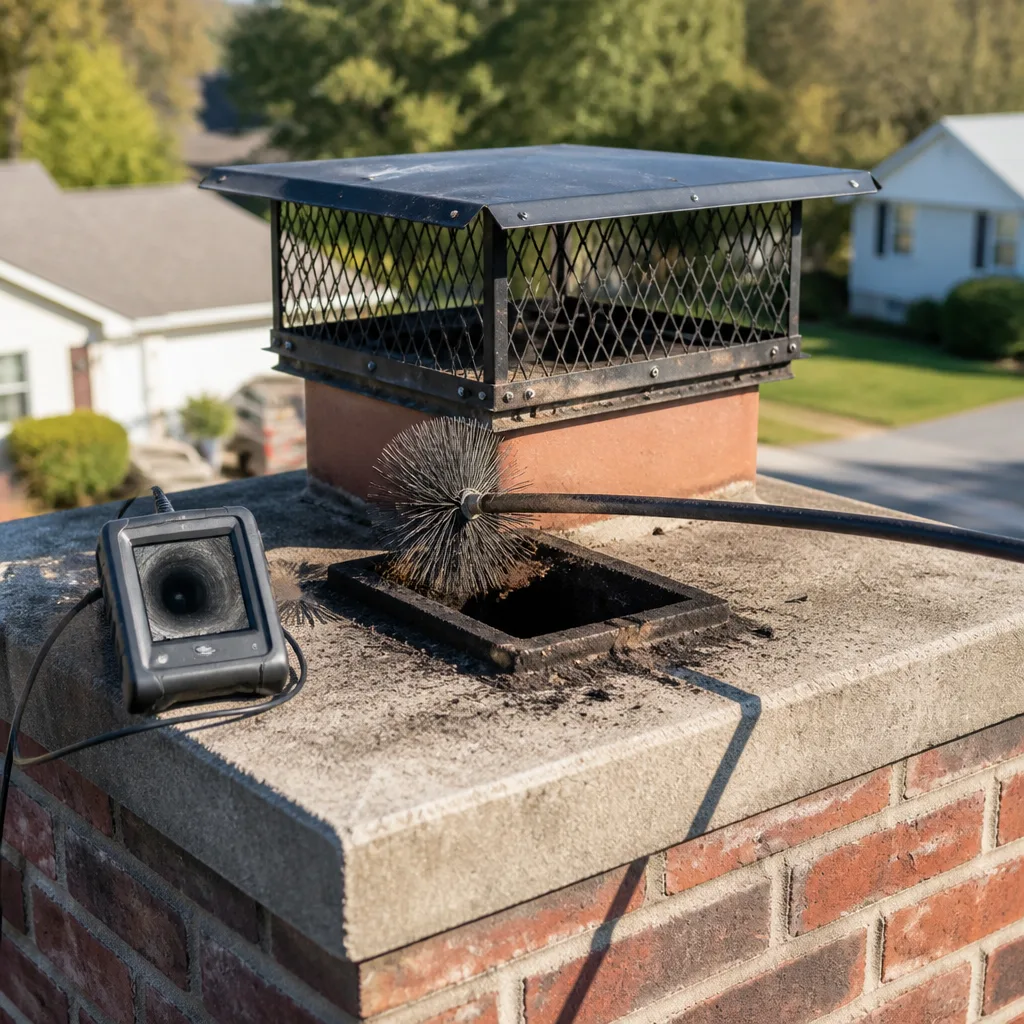
Level 1 sweep and inspection to the NFPA 211 annual standard - flue, crown, cap, and flashing checked and photographed
Chimney sweep logs do not sweep chimneys. They loosen some creosote - which then falls where a brush and vacuum still have to collect it.
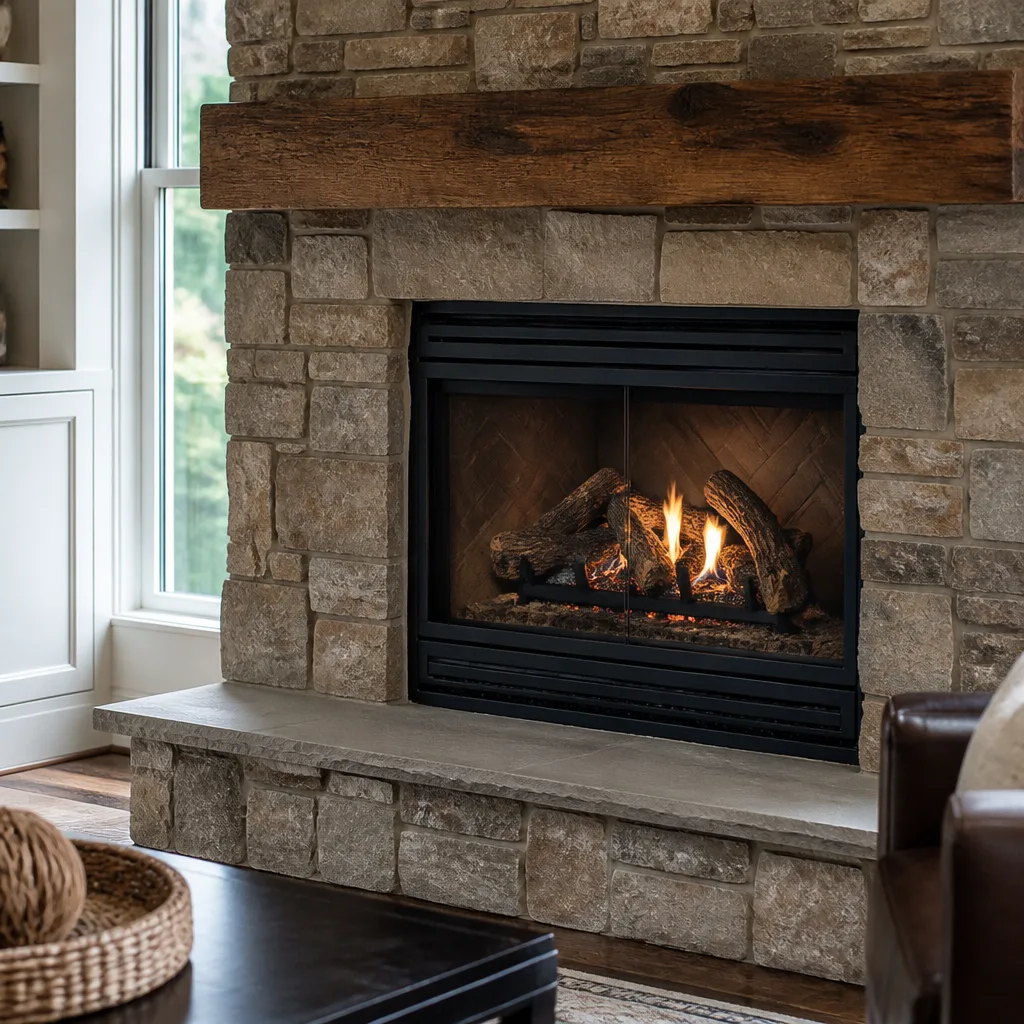
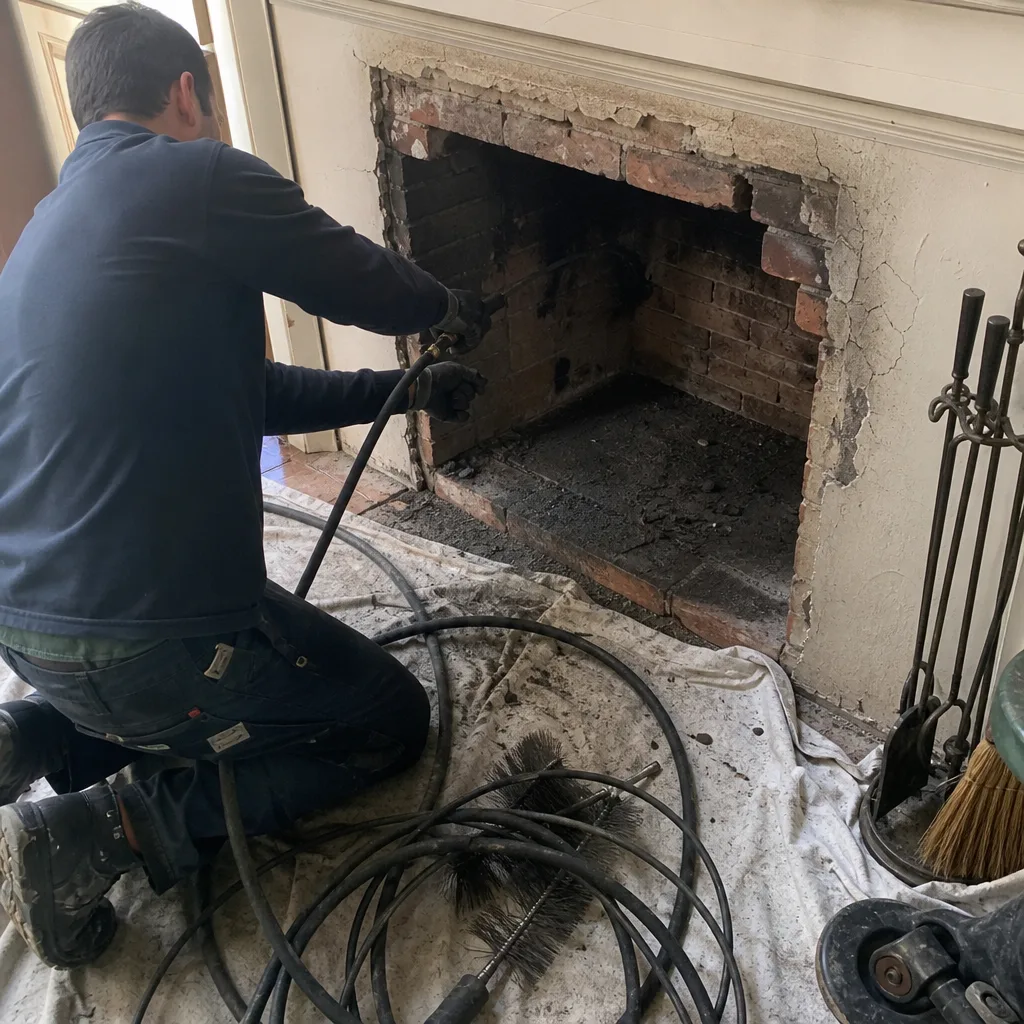 Before
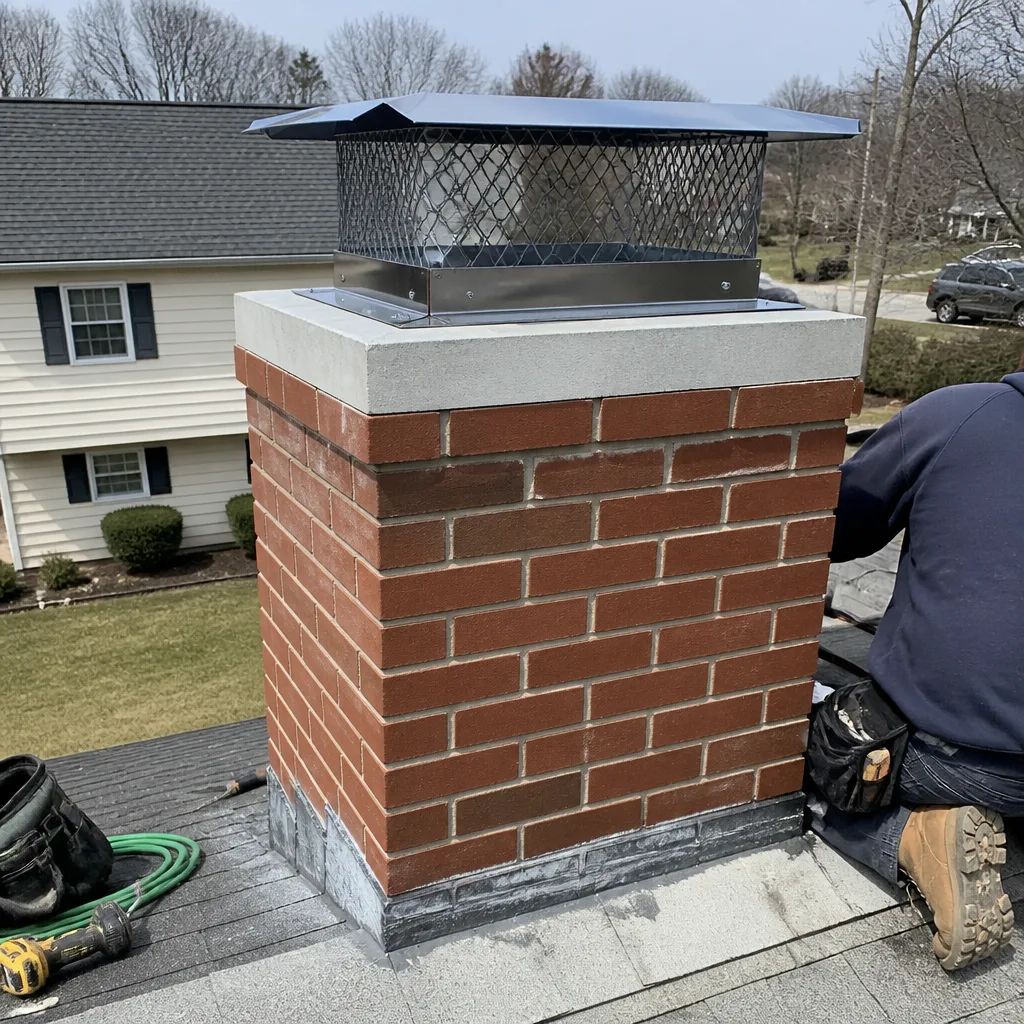 After
After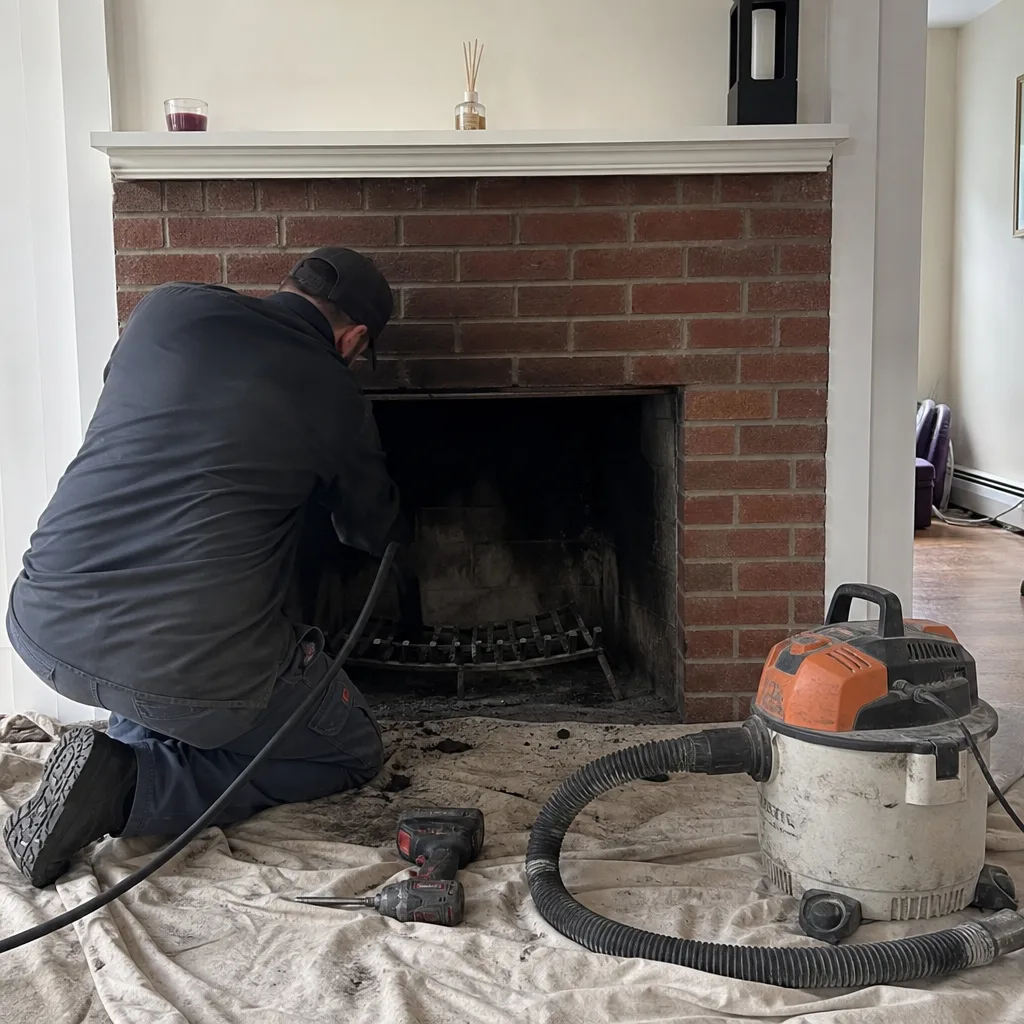 Before
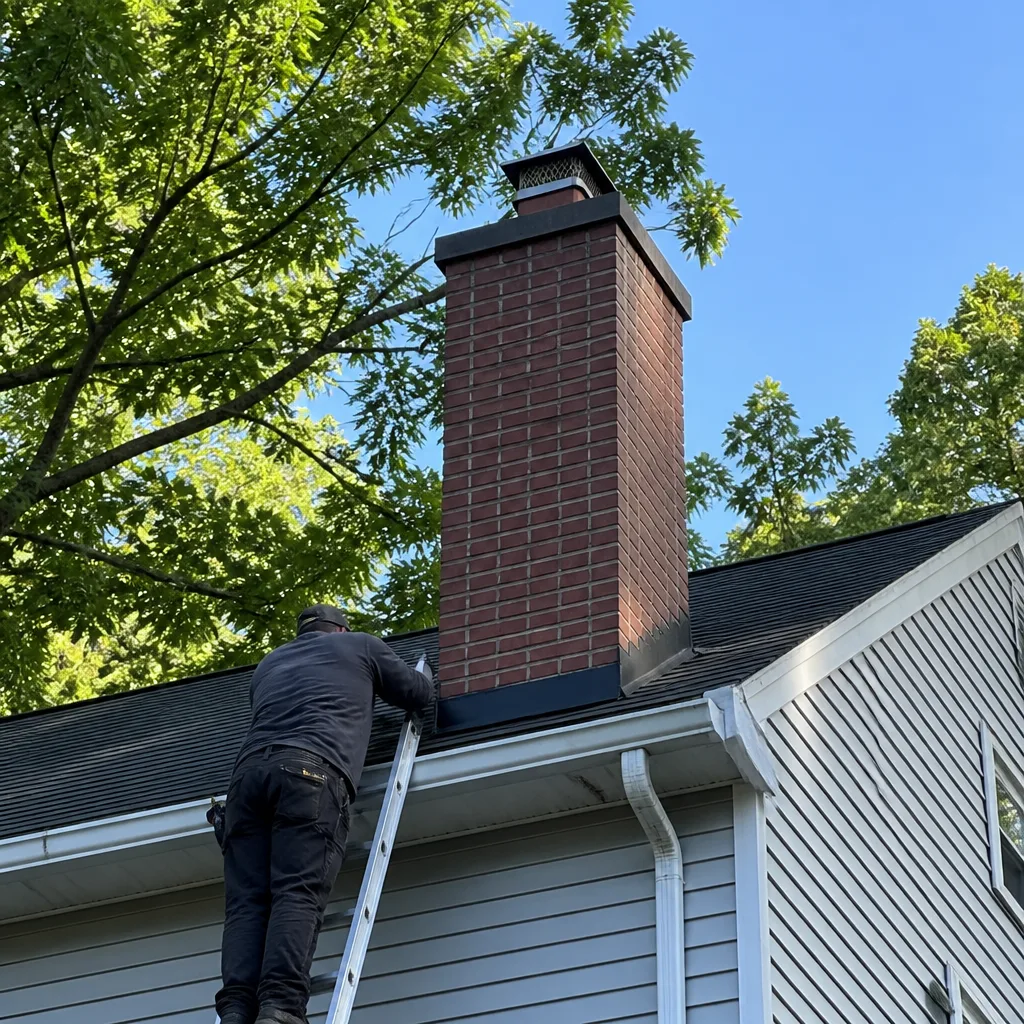 After
After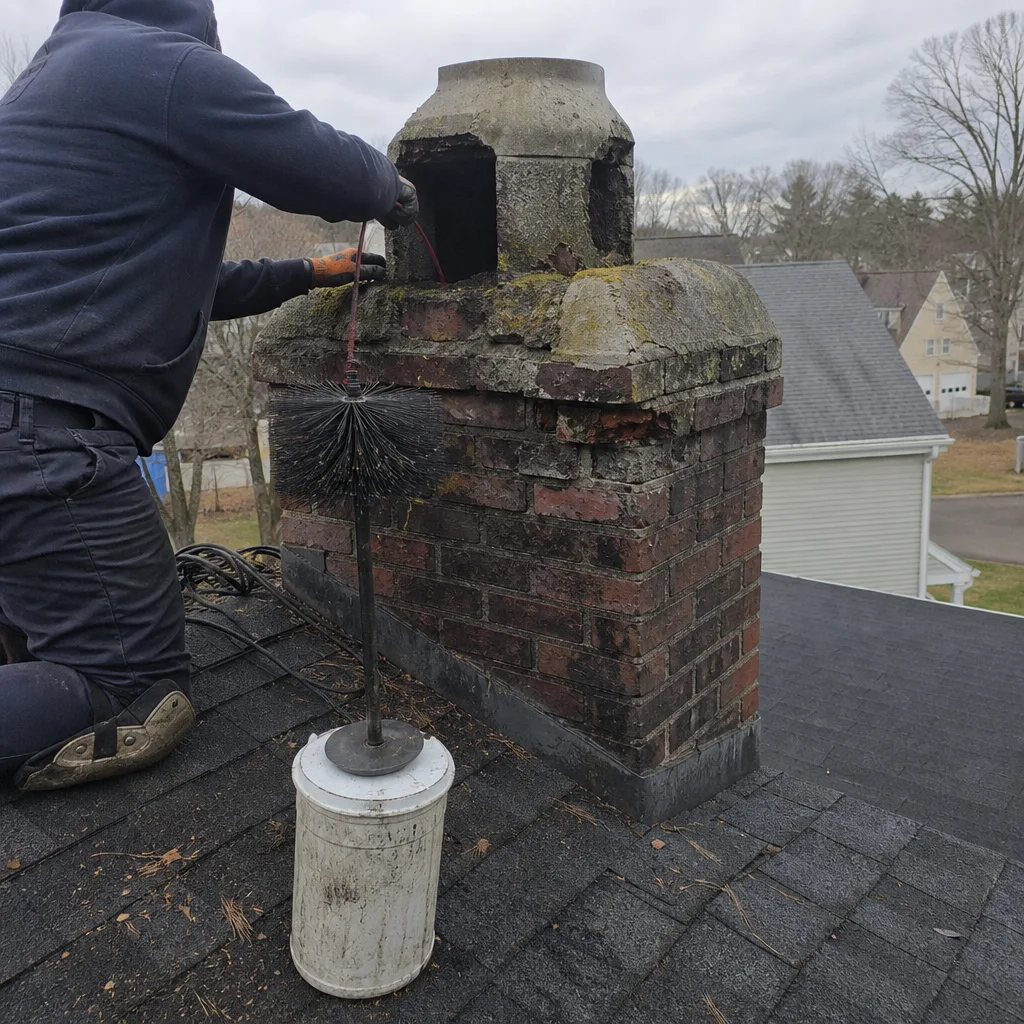 Before
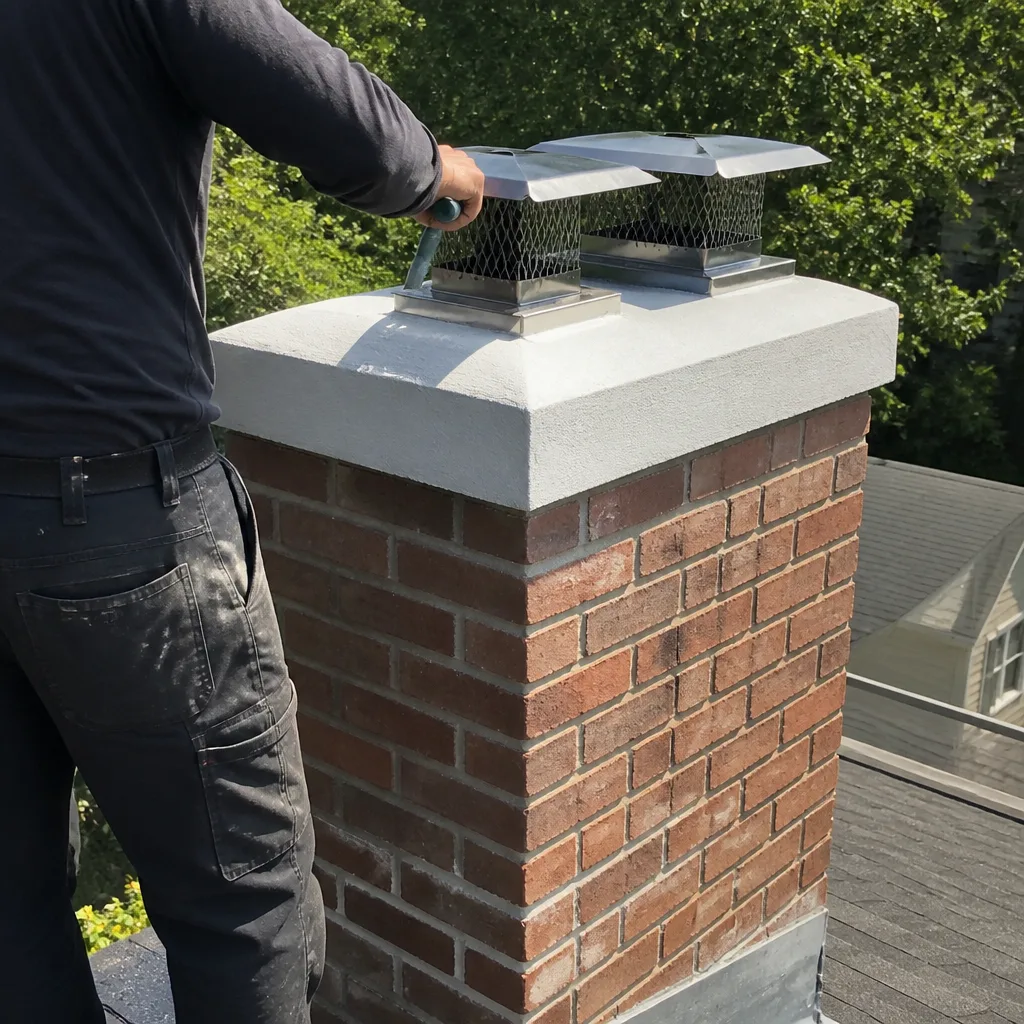 After
AfterChimney Cleaning & Sweep Maintenance Checklist for Hamden Homeowners
Here’s a counter-intuitive fact: the easiest chimney problem for a homeowner to spot - a smoky fireplace - is often the last symptom to appear, long after damage has already been accumulating in places you can’t see from the hearth. In Hamden, where our freeze-thaw cycles run from October through April and coastal moisture rides in on Long Island Sound breezes, chimneys deteriorate from the inside out. Most published checklists blur the line between what you can safely check yourself and what requires a professional’s mirror, camera, or probe. This guide draws that line clearly, item by item, so you know when to pick up the phone for our Chimney Cleaning & Sweep services and when to simply keep watching.
Quick Answer
Hamden homeowners should complete a three-part chimney maintenance checklist annually: exterior visual checks (cap, crown, flashing) each spring; interior operational checks (damper, firebox, odor) each August; and a professional Level-1 or Level-2 sweep and inspection each September before heating season begins. Document everything with dated smartphone photos for year-over-year comparison and insurance records.
Table of Contents
- Exterior Checks You Can Do Yourself
- Interior Checks You Can Do Yourself
- What Requires a Professional Inspection
- Connecticut Seasonal Trigger Points
- Documenting Your Chimney’s Baseline
- Manufacturer Warranty Compliance
- Insurance Record-Keeping Requirements
- Your Annual Maintenance Schedule
Exterior Checks You Can Do Yourself
Stand at the curb with binoculars, or climb a sturdy ladder to roof level if you’re comfortable doing so safely. We’re not talking about walking the roof - that’s where the line starts. These checks take fifteen minutes and cost nothing.
What to Look For
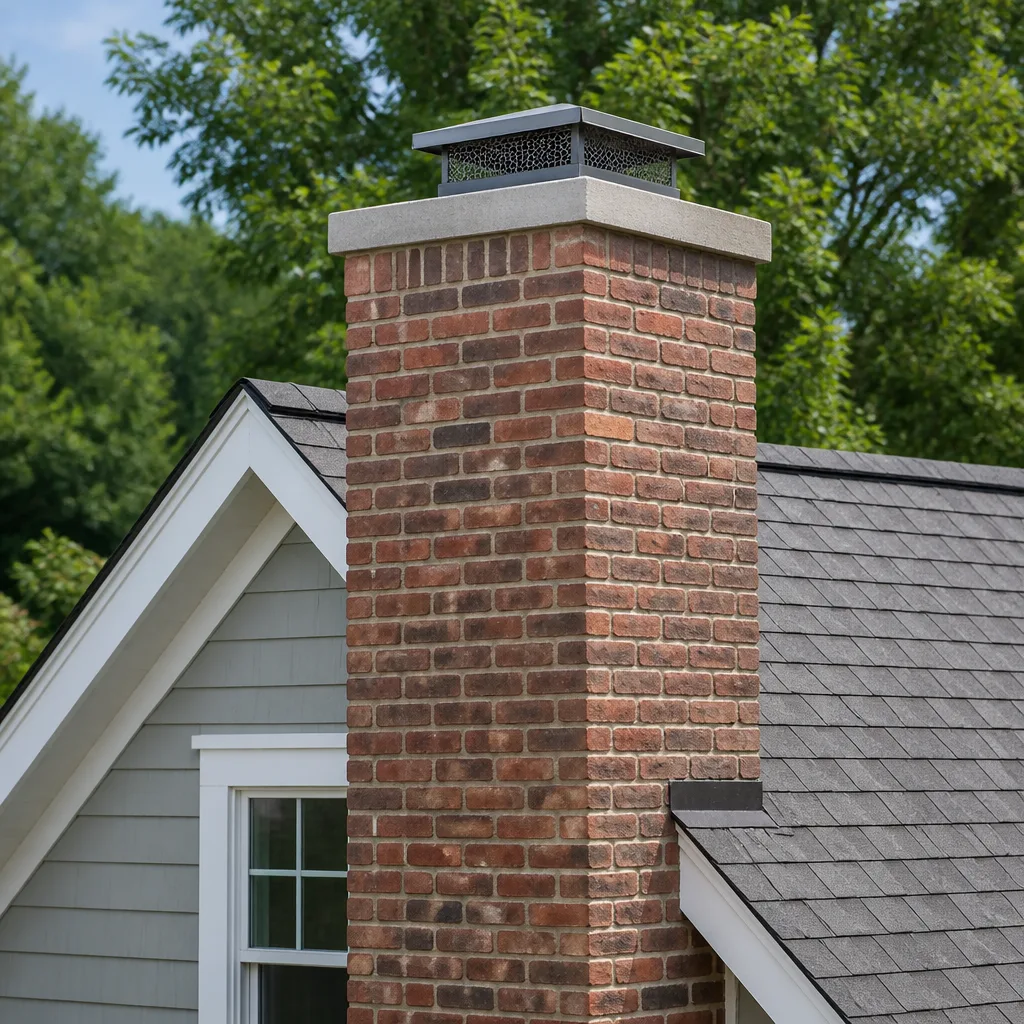
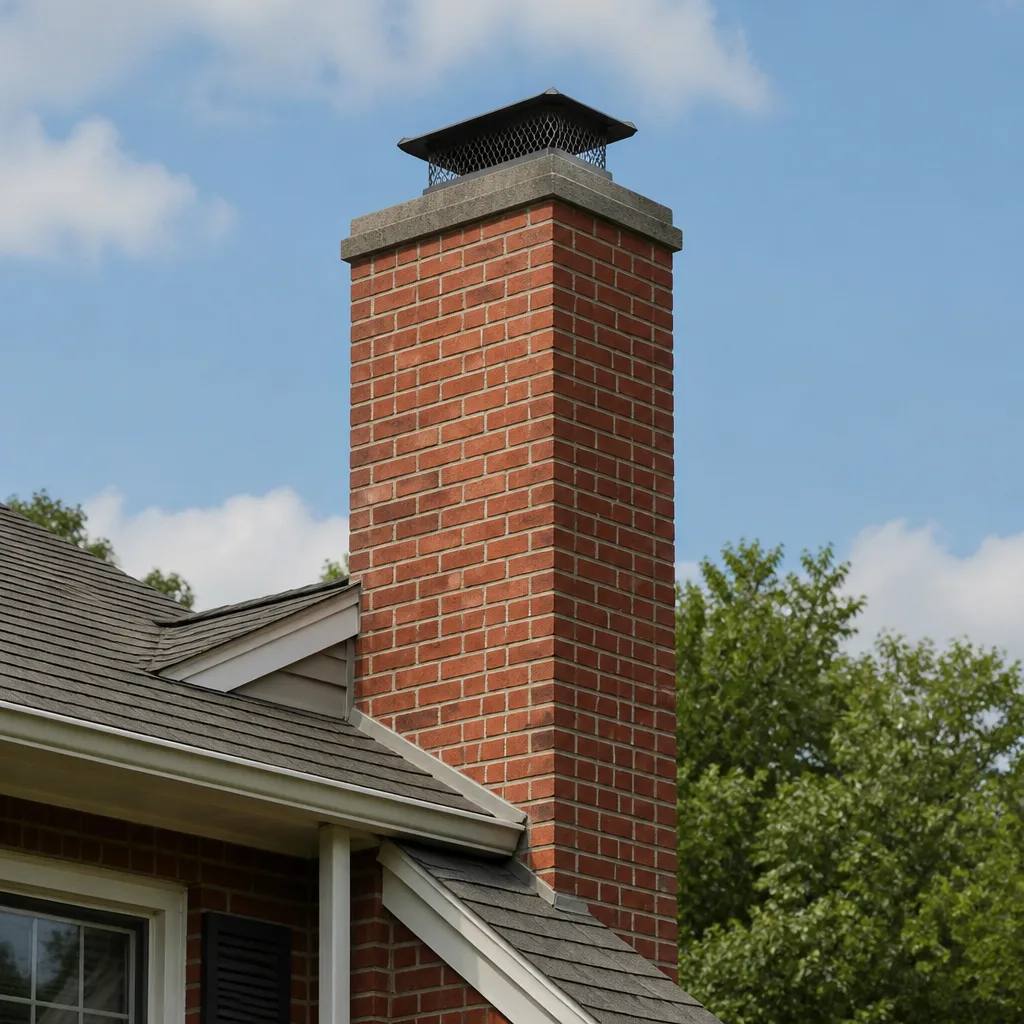
- Cap condition: Is it present, securely attached, and free of rust holes? In Hamden, we see caps torn loose by nor’easter winds that funnel up the Quinnipiac River valley. A missing cap invites rain, squirrels, and starlings.
- Crown integrity: Look for hairline cracks, spalling (flaking concrete), or pooling water. The crown is the concrete slab that seals the chimney top between the flue liner and the brick edge. Water that gets past a cracked crown freezes, expands, and turns small cracks into structural failures over two or three Hamden winters.
- Flashing seal: The metal where chimney meets roof should lie flat with no lifted edges, gaps, or dried caulk beads. Spring inspections in Hamden often reveal flashing damage from ice dam backup - common in the Whitneyville and Spring Glen neighborhoods where mature trees shade roofs and melt patterns are irregular.
- Brick and mortar: Look for missing mortar joints, efflorescence (white powder), or bricks that sound hollow when tapped. The sandy loam soils in parts of Hamden settle unevenly, stressing chimney foundations differently than bedrock areas like Mount Carmel.
- Chase cover (prefab chimneys): These stamped-metal tops rust from the inside out. Look for reddish staining on the exterior chase siding below the cover - it means water is already getting through.
Document each finding with a dated photo. Store them in a dedicated album on your phone. We’ll explain why this matters in the documentation section below.
When to Stop
If you see leaning, large cracks in the masonry, or separation from the house, do not attempt further inspection yourself. These indicate structural issues that require professional evaluation. Similarly, if your chimney serves a fireplace on an upper floor with no visible exterior support, leave all exterior evaluation to a sweep with proper ladder safety equipment.
Interior Checks You Can Do Yourself
These checks happen from inside your home, require no tools beyond a flashlight, and reveal operational problems before they become safety hazards.
Damper Operation
Open and close the damper fully. It should move smoothly without grinding or sticking. A damper that won’t seal completely wastes heat all winter; one that won’t open fully sends smoke into your living room. In Hamden’s older homes - particularly the cape cods and colonials built in the 1950s and 1960s along Ridge Road and Benham Street - throat dampers often rust closed from summer humidity. A stuck damper is not a DIY repair; the mechanism is above the firebox and often requires a sweep’s reach tools.
Firebox Inspection
With the damper open and daylight above, examine the firebox walls and floor. Look for:
- Cracked or missing firebrick
- Crumbled mortar between firebricks
- Metal components (grates, andirons) that have warped from overheating
- Staining patterns: black soot is normal; white or tan residue indicates moisture intrusion; rust streaks suggest a failing flue liner
Firebrick replacement is within skilled homeowner capability if you source proper refractory brick. Mortar repair inside the firebox requires specialized refractory cement, not standard masonry mix. When in doubt, have a sweep evaluate it.
Odor Detection
Hamden’s humid summers - particularly July and August when dew points climb into the upper 60s - produce the classic “chimney smell” that drives calls to our office. The odor is creosote reacting with summer moisture. It’s not dangerous by itself, but it signals significant creosote buildup that will ignite if not removed before the first fall fire. If you smell chimney odor in August, schedule a sweep. Don’t wait for September when every sweep in New Haven County is booked two weeks out.
Smoke Chamber Visibility
Shine a flashlight up past the damper. You should see a smooth, tapered passage leading to the flue. If you see exposed brick, rough corbelling, or significant soot buildup, note it. The smoke chamber is the most overlooked component in homeowner inspections, yet it’s where many chimney fires begin. Proper parging (smoothing) of the smoke chamber is specialized work requiring access from the top or bottom with proper scaffolding.
What Requires a Professional Inspection
This is where most checklists fail homeowners. They either imply that visual checks are sufficient, or they suggest that any concerned homeowner can probe a flue with a flashlight and mirror. Neither is true. The following require equipment, training, and access that homeowners should not attempt to replicate.
Level-1 Inspection: Annual Minimum
A Level-1 inspection, as defined by the National Fire Protection Association (NFPA) Standard 211, includes examination of readily accessible portions of the chimney exterior, interior, and connecting appliances. The sweep uses a flashlight and mirror to check the flue from below, and visual examination from the roof or ladder for the exterior. This is the baseline annual service for chimneys with no changes in use or condition.
At Hearthstone Chimney Co., our Level-1 service includes the sweep itself - mechanical brushing of the flue to remove creosote deposits - plus the inspection, and we finish with photos you can see and a plain-English verdict on what we found.
Level-2 Inspection: When Circumstances Change
Level-2 inspections are mandatory upon sale of a property, after chimney fire or lightning strike, after seismic event, or when changing appliance type (wood to gas, or vice versa). They include everything in Level-1 plus camera inspection of the flue interior, accessible portions of the attic and basement, and evaluation of clearances to combustibles.
Our Level-2 camera inspections use high-resolution video to document flue liner condition, joint separation, and creosote glazing that brushing alone cannot remove. The homeowner receives the video file and a written report with still images. In Hamden’s condo conversions and inherited family homes - common in the Mix Avenue and Hamden Plains areas - Level-2 inspections often reveal liner damage from decades of over-firing or previous owners’ DIY “improvements.”
Level-3 Inspection: Suspected Hidden Hazard
Level-3 involves demolition of building materials to access concealed portions of the chimney. This is rare and only undertaken when a serious hazard is suspected but cannot be confirmed otherwise. We have performed three Level-3 inspections in Hamden in the past decade, all revealing previously concealed fire damage from chimney fires the owners never knew occurred.
Specific Professional-Only Checks
| Component | What We Check | Why Homeowners Shouldn’t |
|---|---|---|
| Flue liner interior | Camera scan for cracks, gaps, spalling | Requires specialized camera, lighting, and interpretation training |
| Smoke chamber parging | Thickness and integrity of refractory coating | Requires top-down access and proper respiratory protection |
| Attic clearances | Chimney framing contact, proper insulation | Attic work involves fall and electrical hazards |
| Combustible clearances | Measured distances to walls, mantels, surrounds | Requires knowledge of code tables and measurement protocols |
| Chimney draft performance | Manometer or digital gauge testing | Requires calibrated equipment and interpretation |
Connecticut Seasonal Trigger Points
Chimney maintenance in Hamden follows a rhythm set by our climate, not by arbitrary calendar dates. Understanding these triggers prevents both dangerous delays and unnecessary anxiety.
September: Pre-Heating-Season Sweep
The ideal window is Labor Day through October 15. By September, summer humidity has dropped, creosote odors have alerted attentive homeowners to buildup, and sweep schedules still have availability. Waiting until the first cold snap means joining the rush of homeowners who lit a fire, smelled something wrong, and panicked rather than following The Complete Guide to Chimney Cleaning in Hamden. In 2023, our first frost in Hamden came October 20. Every year, we take calls October 21 from homeowners who cannot get an appointment before Thanksgiving.
October through April: Active Burning Season Monitoring
During burning season, watch for these specific changes:
- Performance changes: A fireplace that previously drafted well but now smokes back into the room may indicate partial flue blockage from creosote buildup, bird nest, or structural damage from a previous over-firing.
- Visible sparking: Sparks exiting the chimney top in quantity suggest creosote glazing that has ignited. This is a chimney fire in progress, even if contained. Call the fire department, then call a sweep before using the fireplace again.
- Exterior ice formation: Icicles or ice buildup on the chimney exterior indicate excessive moisture condensation, usually from a liner too large for the appliance or a blocked cap causing backpressure.
March: Post-Storm Cap and Flashing Check
Hamden’s position northwest of Long Island Sound exposes us to nor’easter winds that strengthen as they rise over the coastal ridge. After each significant March storm, check your cap and flashing from ground level. We’ve replaced caps in the Spring Glen neighborhood after winds that registered 45 mph at Tweed New Haven Airport but gusted to 60+ on exposed ridgelines.
May: Spring Moisture Inspection
After the final freeze-thaw cycle, examine exterior masonry for new cracks or spalling. The expansion of freezing water in porous brick is the single greatest cause of chimney deterioration in Connecticut. A crack that opens in March and is sealed by June prevents the progressive damage that requires rebuilds. In our experience, Hamden homeowners who perform this May check and address findings promptly add ten to fifteen years to their chimney’s service life.
July: Gas Appliance Service Window
Gas fireplaces and inserts require annual service, but July and early August are ideal. Technicians have availability, parts arrive quickly, and you’ll be ready for the first cool evening without the September rush. This service is separate from chimney sweeping and focuses on burner operation, valve safety, and venting integrity.
Documenting Your Chimney’s Baseline
The most powerful tool in chimney maintenance is one you already own: your smartphone. For more guides & resources, explore our blog. Gradual deterioration escapes notice when you see the chimney daily. Year-over-year photographic comparison reveals changes that a single inspection might dismiss as minor.
How to Build Your Baseline Record
- Establish consistent vantage points: Take photos from the same three locations every year - curb view, roof or ladder level, and firebox interior with damper open. Mark the ground positions with landscape features you can replicate.
- Use consistent lighting: Midday, overcast sky provides the most honest rendering of masonry color and crack visibility. Avoid direct sun that washes out detail or deep shadow that conceals it.
- Include scale references: Place a coin or ruler near cracks before photographing. A crack that grows from 1/16 inch to 3/16 inch in two years is significant. Without scale, both photos look like “a crack.”
- Date and annotate immediately: Use your phone’s photo editing to add text notes while memory is fresh: “cap slightly loose, north side,” “new efflorescence below crown,” “damper sticks at 3/4 open.”
- Store separately from general photos: Create a dedicated album or cloud folder. General camera rolls become unsearchable within months.
What to Compare Year Over Year
Specific changes to watch for in your photo comparisons:
- Crown cracks that lengthen, widen, or branch
- Mortar joints that recede or develop new gaps
- Brick faces that spall or change color
- Flashing that lifts or separates from roofing
- Firebox stains that expand or change color
- Damper corrosion that progresses
When you hire a professional, share your photo history. A sweep who sees three years of progressive crown cracking can recommend crown sealant with confidence, or identify when the damage has progressed beyond sealant to requiring rebuild. Without that history, every inspection starts from zero, and conservative recommendations may delay necessary work.
Manufacturer Warranty Compliance
Homeowners rarely realize that their gas insert or wood stove warranty contains explicit maintenance requirements. Failure to document compliance voids coverage when you need it most.
Gas Insert and Stove Requirements
Major manufacturers - including those whose venting components we install from Olympia Chimney and Famco - require annual professional service for warranty validity. The specific requirements vary:
- Venting system inspection: Must be performed by a qualified technician with documentation of findings. Homeowner visual checks do not satisfy this requirement.
- Burner and control service: Requires specific tools and combustion analysis equipment. DIY cleaning of visible surfaces is permitted; disassembly of gas controls is not and voids warranty if attempted.
- Glass and gasket replacement: Some manufacturers specify authorized parts only. Using generic gaskets or glass rated for lower temperatures voids coverage and creates fire risk.
We maintain current warranty documentation for all brands we service. When we perform annual maintenance on your gas appliance, we provide the service record that satisfies manufacturer requirements and protects your coverage.
Wood-Burning Appliance Requirements
EPA-certified wood stoves and inserts have similarly strict requirements. The catalytic combustor, if equipped, requires inspection and potential replacement at manufacturer-specified intervals - typically every 12,000 hours of operation or 5-7 years for Hamden’s typical part-time burners. The Copperfield and DuraFlex components we install carry specific cleaning and inspection protocols that we document with each service.
Critical point: installation by non-certified technicians voids most warranties regardless of subsequent maintenance. When purchasing a new appliance, verify that your installer carries proper certification from the manufacturer or the Chimney Safety Institute of America (CSIA).
Insurance Record-Keeping Requirements
Connecticut homeowners face tightening insurance documentation requirements, driven by national wildfire-related losses and reinsurance market contraction. Your chimney maintenance records increasingly matter at policy renewal or claim time.
What Insurers Now Request
We have assisted Hamden homeowners with documentation for three major carriers in the past two years. Common requirements include:
- Proof of annual professional inspection within 12 months of policy renewal
- Documentation of any repair work, with contractor license and insurance verification
- Photos of chimney condition at time of inspection
- Confirmation that appliance installation met NFPA 211 and local code
Some carriers now require Level-2 inspection documentation for homes with wood-burning appliances older than ten years, regardless of apparent condition. This reflects actuarial data showing that undetected liner deterioration is a leading cause of structure fires in older homes.
Building Your Insurance File
Create a physical or digital folder containing:
- Annual inspection reports with sweep company letterhead, technician name, and date
- Photo documentation from inspections (your own baseline photos plus professional photos)
- Repair invoices with detailed scope of work
- Appliance manuals and warranty cards
- Installation documentation for any new appliance or liner
At Hearthstone Chimney Co., we provide inspection reports formatted for insurance submission, including our Connecticut license number, technician certification, and detailed findings with photos. We have served Hamden homeowners through claims processes where documentation made the difference between coverage and denial.
Your Annual Maintenance Schedule
Combine the seasonal triggers, documentation practices, and professional requirements into a single repeatable calendar. Adapt this to your specific heating habits and appliance type.
| Month | Task | Who Performs | Documentation |
|---|---|---|---|
| March | Post-storm exterior check; schedule any needed cap or flashing repair | Homeowner; professional if repair needed | Photos; repair invoice |
| May | Spring moisture inspection; compare to prior year photos | Homeowner | Updated photo album |
| July | Gas appliance service (if applicable) | Professional | Service report for warranty file |
| August | Interior operational check; note any odors or damper issues | Homeowner | Photo of firebox condition |
| September | Professional sweep and Level-1 or Level-2 inspection | Professional | Inspection report; photos; invoice |
| October | Final pre-season check; verify cap secure, wood supply dry | Homeowner | Confirming photo |
| January | Mid-season performance check; monitor for draft changes | Homeowner | Note any changes in burning log |
This schedule assumes primary heating by wood or gas fireplace. Homes with occasional decorative use can extend professional sweep intervals to every two years for gas, or every cord of wood burned for wood appliances, per NFPA 211 guidance. We recommend annual inspection regardless of use frequency in Hamden’s climate, where moisture damage progresses independently of burning hours.
Common Mistakes to Avoid
- Assuming no smell means no problem. Creosote buildup produces odor only when moisture activates it. A dry flue can hold dangerous deposits without any homeowner-detectable sign until ignition occurs.
- Using the wrong cleaning product. Standard masonry sealers trap moisture inside brick, accelerating freeze-thaw damage. Crown sealant must be specifically formulated for chimney crowns, not generic concrete sealer. We use professional-grade materials from HeatShield and Gelco for crown and flue applications.
- Ignoring the prefab chimney. Metal prefab chimneys require different maintenance than masonry. The chase cover rusts, the termination cap corrodes, and the manufactured firebox has specific clearance requirements. Hamden’s 1970s and 1980s split-levels in the Hamden Hills area are full of neglected prefab units.
- DIY flue cleaning with household tools. A brush on a pole from the hardware store cannot apply the proper pressure or reach the full flue length. More dangerously, it cannot inspect what it cleans. You may dislodge creosote that falls into a smoke chamber you cannot see, creating a fire hazard.
- Waiting for the “chimney sweep” weather. There is no such thing. September appointments in Hamden book 2-3 weeks out. October appointments book 4-5 weeks out. The sweep who can come tomorrow in November is either overstaffed for good reason, or cutting corners you don’t want cut.
- Neglecting to transfer documentation at home sale. Connecticut law requires disclosure of known chimney defects, but buyers increasingly request maintenance records. A complete file increases sale price and prevents post-sale disputes. We provide transferable inspection histories for our Hamden clients.
When to Call a Professional
Call a sweep immediately if you experience smoke backing into the room, a loud roaring sound from the chimney during use, visible flames at the chimney top, or if your carbon monoxide detector alarms during fireplace operation. These are not diagnostic puzzles; they are emergencies requiring professional evaluation before next use.
Call for scheduled service if your annual inspection is due, if you’ve purchased a home and have no maintenance history, if you’re changing appliance type, or if your year-over-year photo comparison shows any change in crown, mortar, or liner condition. In Hamden, chimney repair and maintenance should address our specific climate challenges: coastal moisture, freeze-thaw cycles, and mature-tree debris loads that differ from inland Connecticut markets.
Hearthstone Chimney Co. offers free estimates in Hamden. Call (475) 369-1614. A live person answers, 24 hours a day, every day. We’ll schedule a time that works, show up when we say, and leave you with photos you can see and a plain-English verdict on what your chimney needs now, what it will need soon, and what can wait.
Frequently Asked Questions
A standard Level-1 chimney sweep and inspection in Hamden typically ranges from $200 to $350, depending on roof access difficulty, flue condition, and whether the fireplace is wood-burning or gas. Level-2 inspections with camera evaluation run higher, generally $350 to $550, and are recommended for real estate transactions or when changing appliance types. Hearthstone Chimney Co. provides no-hassle upfront pricing - the number on the estimate is the number on the invoice. Call (475) 369-1614 for an exact quote; estimates are free.
The National Fire Protection Association recommends annual inspection, with sweeping as needed based on creosote accumulation. For Hamden homeowners burning wood as primary heat, this means annual sweeping. Occasional users can often extend to every two years, but given our coastal moisture and freeze-thaw climate, we recommend annual inspection even for minimal-use chimneys to catch moisture damage early. Gas fireplaces require annual service of the appliance itself, though the venting system may need less frequent sweeping if properly maintained.
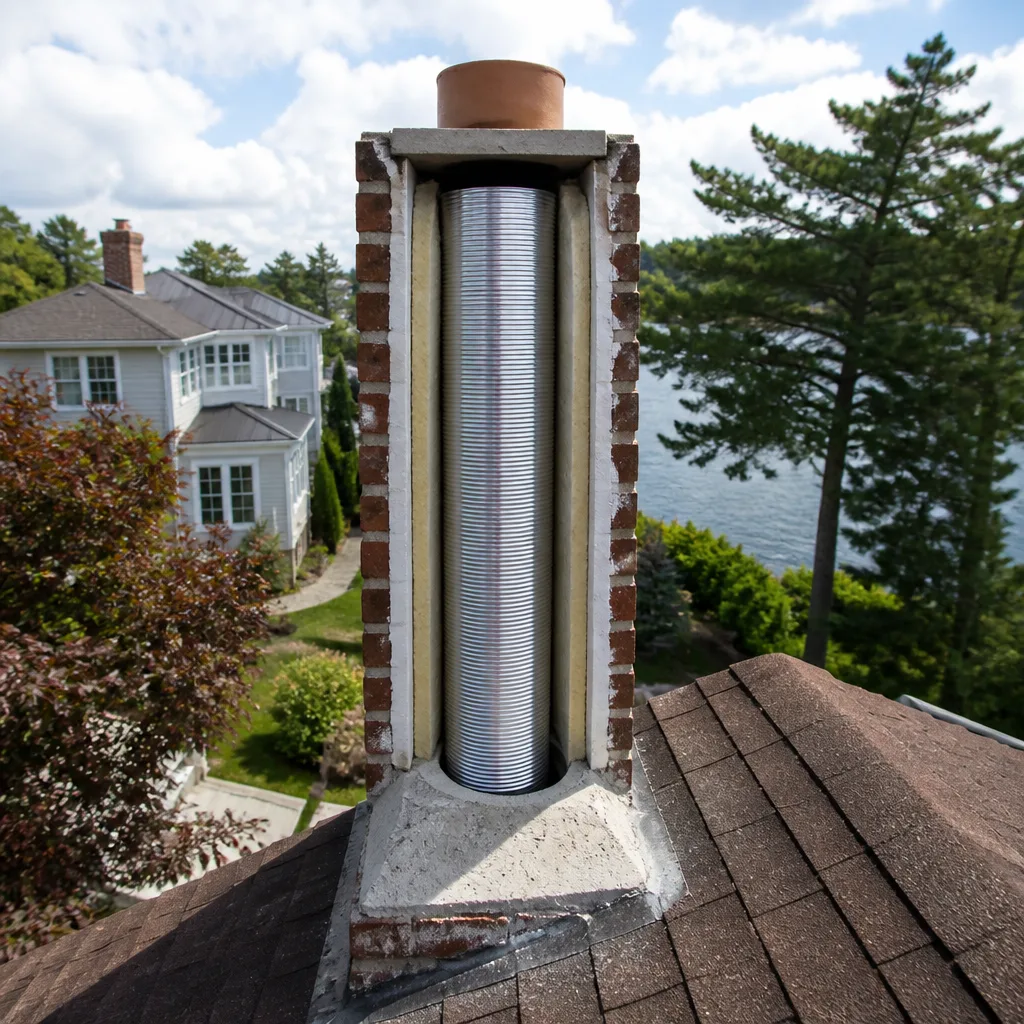
You need a new liner when the existing one is damaged, improperly sized, or missing - and only when documented evidence supports that finding. We never recommend liner replacement without camera inspection photos you can see yourself. Common indicators include visible cracks or gaps in tile liners, flaking or spalling of stainless steel, or combustion gases leaking into surrounding masonry. In Hamden’s older homes, unlined chimneys are still common; these require liner installation for any solid-fuel use under current code. If a sweep recommends liner work without showing you camera evidence, get a second opinion. Hearthstone Chimney Co. provides free second opinions on any written estimate.
Skipped maintenance leads to three predictable outcomes, in order of severity: progressive moisture damage that eventually requires rebuild rather than repair; creosote accumulation that ignites and damages the flue liner, requiring costly replacement; and in the worst case, structure fire or carbon monoxide intrusion causing injury or death. The first two are expensive. The third is irreversible. In Hamden, where many homes have chimneys original to 1950s-1970s construction, deferred maintenance typically results in $3,000-$8,000 rebuilds that annual sweeping and minor repair would have prevented. Call (475) 369-1614 to schedule before small problems become large ones.
You can perform the homeowner checks described in this guide: exterior visual inspection, damper operation, firebox examination, and photo documentation. We do not recommend DIY flue cleaning. Proper cleaning requires brushes sized to your specific flue diameter, extension rods that reach the full height, and most critically, inspection capability to evaluate what the brushing revealed. Without inspection, you may leave dangerous glazing or dislodge deposits that create blockages. The fireplace services we provide include proper cleaning with documented results.
A sweep is the physical cleaning - mechanical brushing to remove creosote and debris. An inspection is the evaluation of structural and operational condition. They are distinct services, though we perform them together as standard practice. A sweep without inspection is incomplete; an inspection without sweeping may miss conditions concealed by soot buildup. In Hamden, where our climate produces both heavy creosote in wood-burning systems and corrosion in gas systems, the combined service is the only approach that ensures safety.
We maintain a permanent 5% discount for seniors and veterans, applied to all services. We also offer $50 off any repair over $250, a seasonal $89 tune-up special, and free second opinions on any written estimate from another company. These are standing offers, not limited-time promotions. Mention when you call (475) 369-1614 and we’ll apply what saves you most.
The Bottom Line
Effective chimney maintenance in Hamden requires knowing what you can check yourself and what demands professional evaluation. Perform your exterior and interior checks on the seasonal schedule outlined here, document everything with dated photos, and schedule professional service each September before heating season. Keep records for warranty compliance and insurance requirements. When you need a sweep, choose one who shows you evidence, explains it plainly, and stands behind the work in writing. Done right - and we stand behind it.
Written by Russell Haines, Owner at Hearthstone Chimney Co., serving Hamden since 2014.